




Cooper Gallery, University of Dundee
13 November – 19 December 2020
by JANET McKENZIE
The conceptual and the subjective, arguably the most vital components of contemporary art practice, connect in drawing more forcibly and more appropriately than in any other form of art. Drawing as an autonomous activity is created from numerous new perspectives, enabling artists to exploit the infinite potential of the discipline using traditional materials, found objects, digital imaging, or the entire exhibition space of a gallery. From the late 1960s, the materiality of the art object was fundamentally reassessed. Drawing had long represented a private and curiously unfettered position compared with painting or sculpture, which had always possessed a more public position. Yet, at the same time, “drawings”, in conceptual terms, could leave the page, and leave behind their status of preparatory study or sketch, and walk in to the landscape, as the work of Richard Long illustrates. If Paul Klee famously, “took a line for a walk”, on paper, conceptual or land artists in the 70s took drawing for a walk in to the wider world. Diagrams of performances, or installations further extended the definition of drawing.
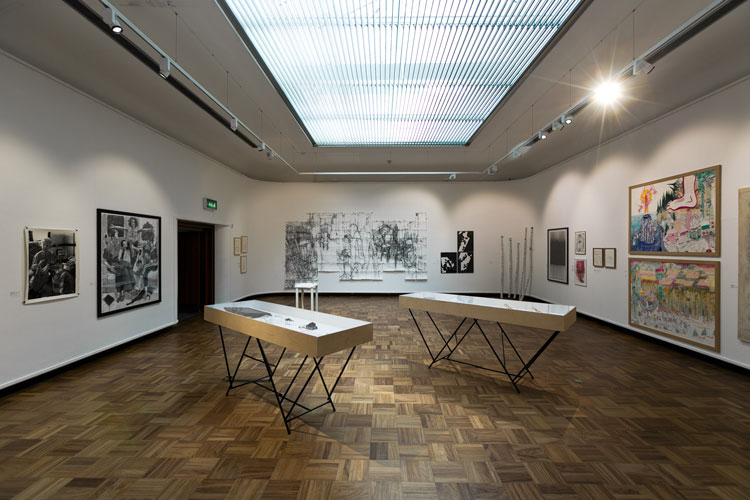
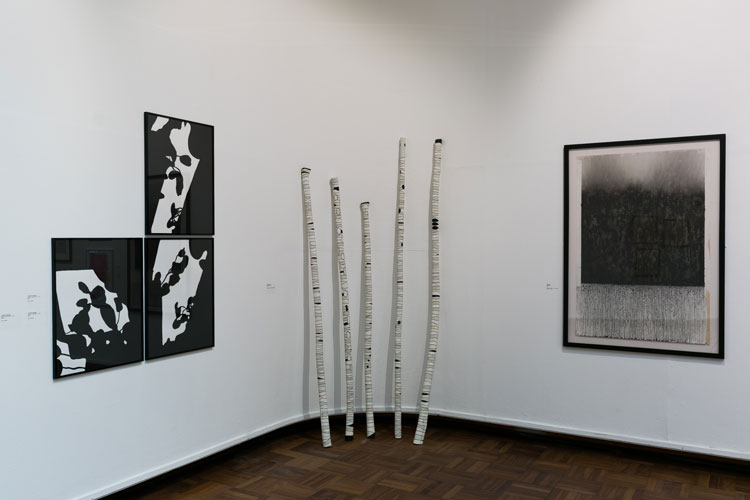
Trinity Buoy Wharf Drawing Prize 2020, installation view Cooper Gallery. 2020. Photo: Eoin Carey. Courtesy Cooper Gallery DJCAD and Trinity Buoy Wharf Drawing Prize.
To mark 25 years since the UK’s leading drawing prize was established, this year’s Trinity Buoy Wharf Prize has become international. The founding director, Professor Anita Taylor, established the prize (with Paul Thomas) in 1994, as the Rexel Derwent Open Drawing Exhibition; between 1996 and 2000, it became the Cheltenham Open Drawing Exhibition and, from 2001-17, it was known as the Jerwood Drawing Prize and supported by the Jerwood Charitable Foundation. Key universities have hosted the prize: Wimbledon School of Art later Wimbledon College of Art (University of the Arts London); Bath Spa University and, this year, the University of Dundee, where Taylor has recently been appointed the dean of Duncan of Jordanstone College of Art and Design.
The Cooper Gallery, Dundee, opened its doors to the exhibition this month following its first iteration at Drawing Projects UK Trowbridge, Wiltshire. The exhibition was selected by Sophia Yadong Hao, the principal curator at the Cooper Gallery, the artist Ian McKeever RA and Frances Morris, the director of Tate Modern. The 71 drawings by 56 artists were selected from 4,274 works submitted by 2,119 artists and makers from 42 countries. The winning entries will be announced at an Awards Ceremony at Trinity Buoy Wharf in London in January, 2021. As well as first and second prizes and a student prize, there is a working drawing prize, which this year attracted 217 submissions by 109 practitioners. The Working Drawing prize was judged by Ian Blatchford, the director of the Science Museum, London, the architect Piers Gough and Sophie McKinlay, director of programme at the V&A Dundee.
During the Covid-19 pandemic, the immediacy and directness of drawing has assumed a poignant status, enabling innermost experiential impulses to be examined and marginalised voices to be heard. Key to the importance of drawing at the level of global culture is its ability to express and explore ideas with great precision, strength and subtlety. The Trinity Buoy Wharf Drawing Prize exists at a moment where we can more fully grasp the implications of the act of drawing and appreciate the importance of mark-making and the value of authentic human touch. Many of the drawings in this year’s prize are in response to the cataclysmic nature of the pandemic, to personal fear and the communal weight of loss.
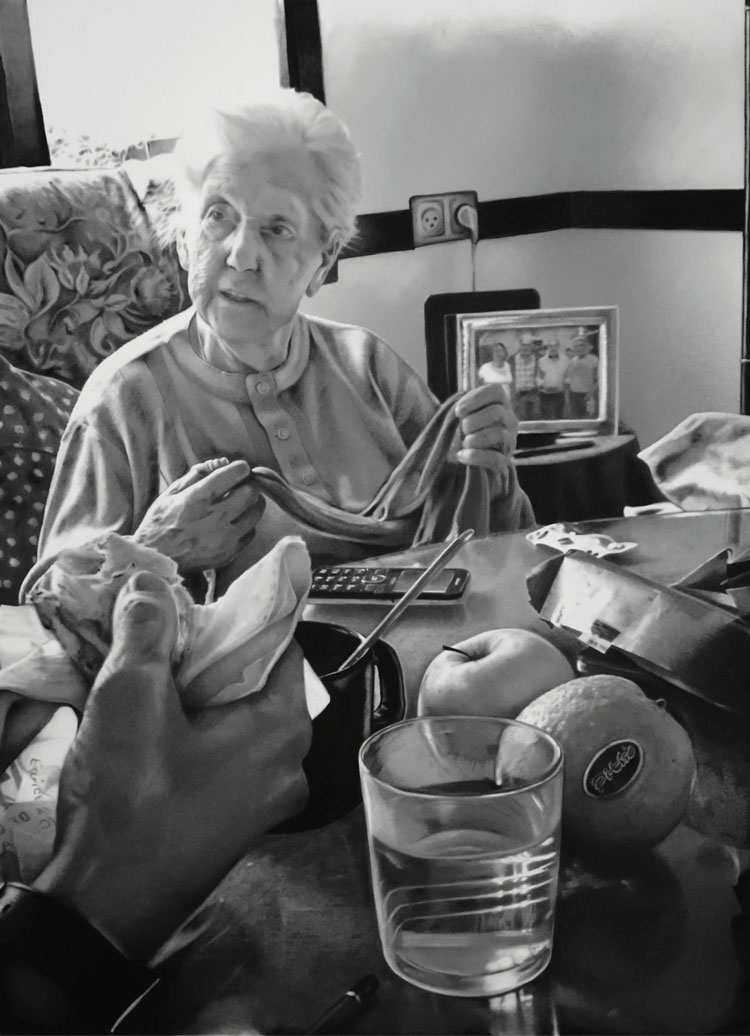
Lucy Anderson, Abueli – Conversations with Grandson, 2020. Courtesy the artist and Trinity Buoy Wharf Drawing Prize.
Abueli – Conversations With Grandson (2020), by the Amsterdam-based artist Lucy Anderson (b1983, UK), captures a tender moment in time that emphasises the vulnerability of the elderly, their vital role within families and their acute isolation in lockdown. The artist says her image is: “A conversation between two separate generations during the Covid-19 pandemic in Spain. A lady, who is not only 96, but also lived through the Spanish civil war, the second world war, the turbulent Spanish postwar period and most recently Covid-19.” The quotidian scene is reassuring and moving.
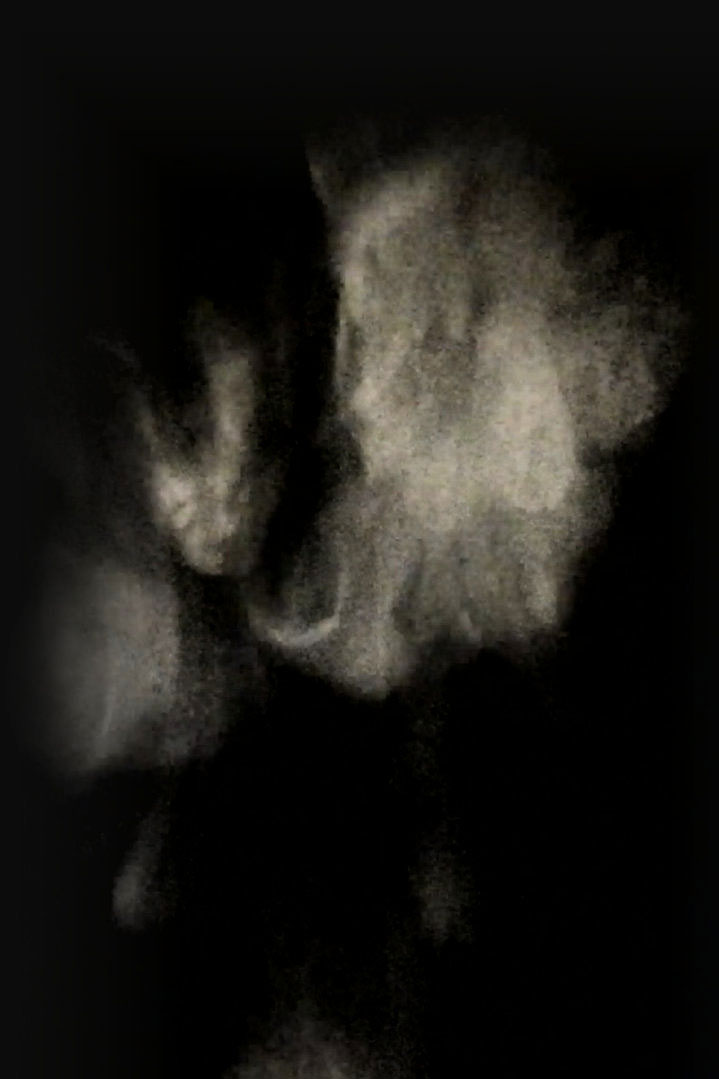
Iain Andrews, Breath Drawing (XIX), 2020. Courtesy the artist and Trinity Buoy Wharf Drawing Prize.
Breath Drawing (XIX) is a three-and-half-minute film by Iain Andrews (b1974, Birmingham). An ethereal and abstract piece, produced this year during lockdown while he was living with his father-in-law, it explores the notion of breath as being the essence of life, but also the carrier of disease.
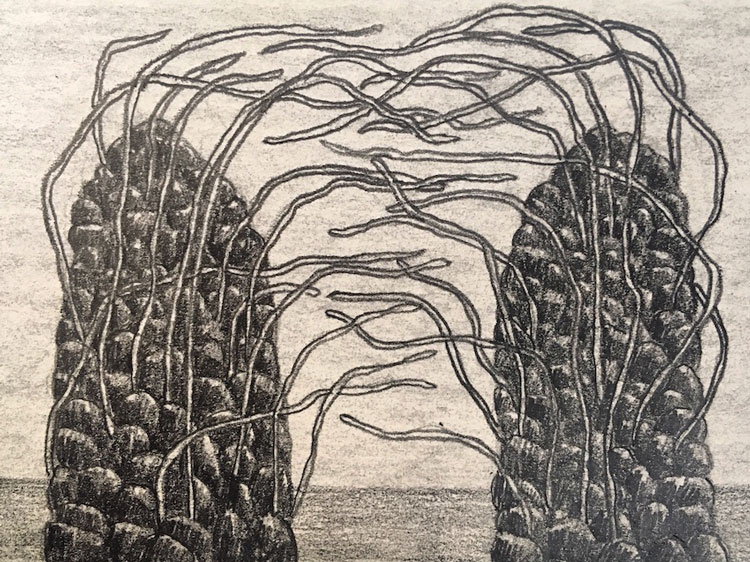
Andy Black, Small Heaps. Courtesy the artist and Trinity Buoy Wharf Drawing Prize.
Andy Black (b1975, Wales) made a series of tiny (8 x 12cm) pencil drawings. Small Heaps is one of the 200 images derived from a range of sources, including the landscape, topiary and architecture. He says: “I use these forms to construct drawings of imagined exterior spaces. I think of these drawings as gardens, cities, stages – ambiguous territories where these forms can pile up, multiply, or interact.”
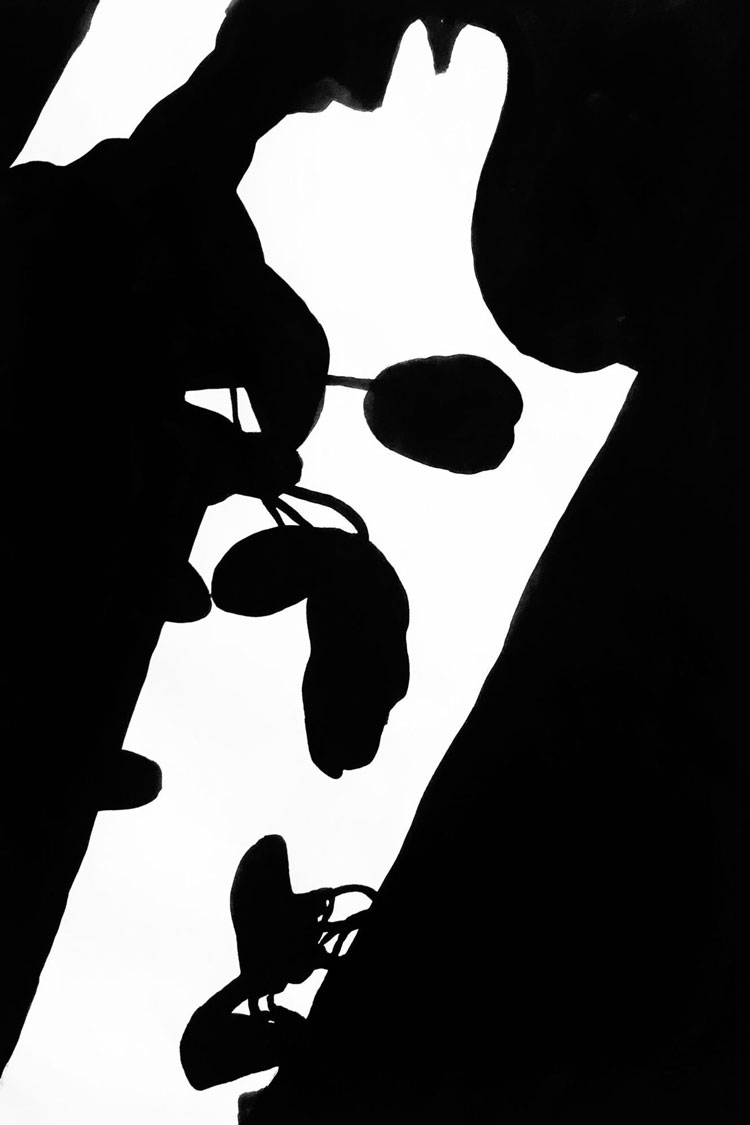
Yutavia George, Beyond Confinement 1-6, 2020. Courtesy the artist and Trinity Buoy Wharf Drawing Prize.
Beyond Confinement 1-6, a series of works by the French-based artist Yutavia George (b1991, Nassau, Bahamas), came about during her enforced solitude, when streetlight and sunlight were the only visitors to her Parisian apartment. She says: “Beyond Confinement 1-6 capture time, along with indoor and outdoor objects whose opaqueness were highlighted by light during March to May 2020. The environment affects my work; using performative components. This series is time and process-based, seeking to trace the present while providing windows, which question the future.”
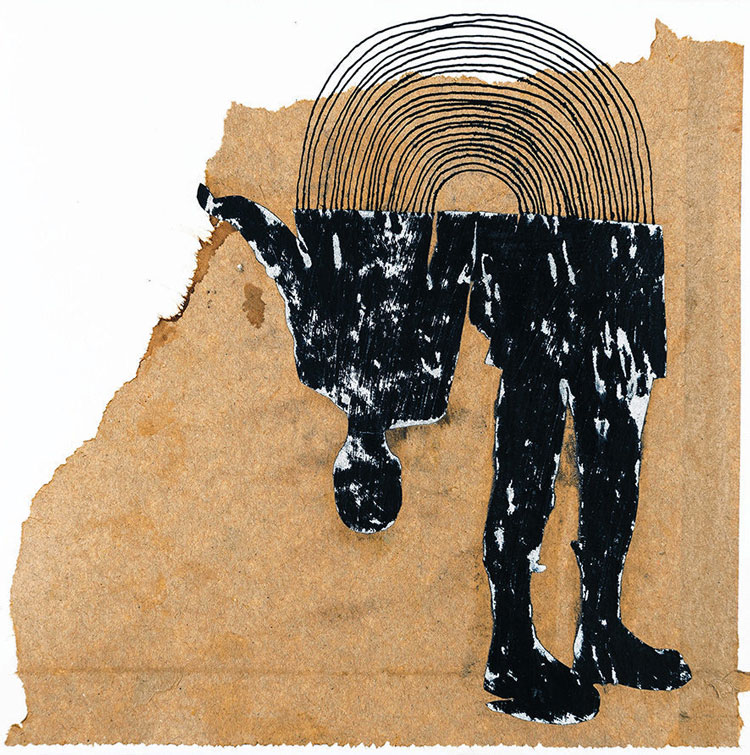
Nicola Grellier, No Backbone 229, 2020. Courtesy the artist and Trinity Buoy Wharf Drawing Prize.
The Canadian artist Nicola Grellier (b1966, Toronto) trained in the UK and lives in Stroud. Her work in ink and collage, No Backbone 229 (2020), is one of 366 drawings made over a year – from midsummer 2019 to midsummer 2020 – that explore “physical touch, habitual behaviour, ageing and deterioration, the difficulties and absurdities of communication and language, human relationships and, occasionally, something about politicians”. A field rich in extremes and conflict (Covid, Brexit and Trumpism), it is a great feat to have persevered for the whole year. Like the entirety of works in the exhibition, Grellier’s series simultaneously alludes to momentous and intimate experience.
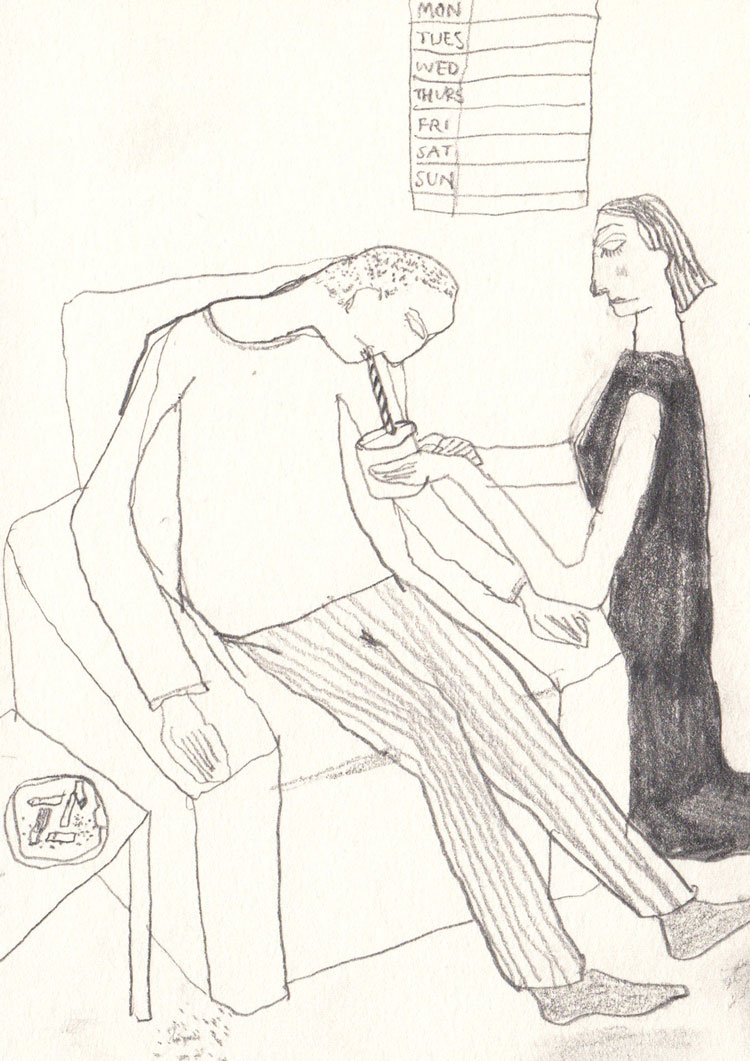
Nancy Haslam-Chance, Tea, 2020. Courtesy the artist and Trinity Buoy Wharf Drawing Prize.
Illness, the fear of mortality, the overbearing stresses of the healthcare system at one end of the spectrum and the dedication of carers and family members who put their lives on hold to nurse and support those who have caught coronavirus are evoked by Nancy Haslam-Chance (b1992, Bradford) in three drawn images: Tea, Teeth and Pendant Alarm, all made this year. Focusing on her job as a carer, she explores the relationships formed with her clients, and the mixture of reward and loneliness that the role invariably combines: “I am interested in the practicalities of these relationships; my clients require support and it is my job to support them. Yet within these practicalities there are moments of intimacy, tenderness and companionship.”
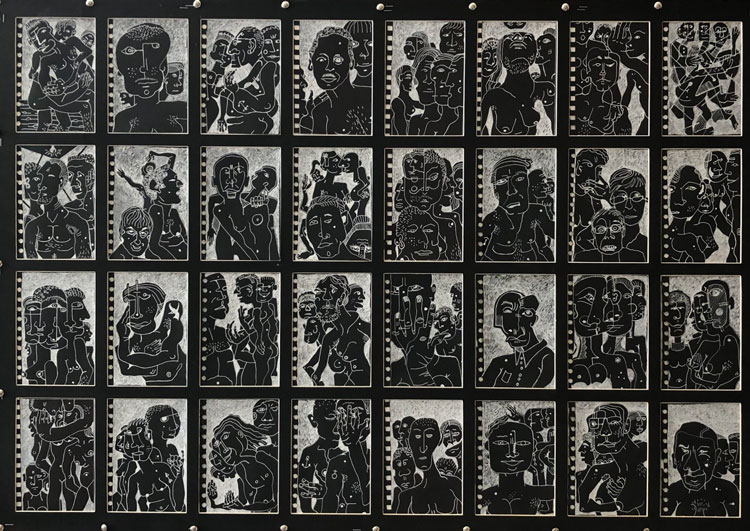
Sandy Kendall, Untitled, 2019. Courtesy the artist and Trinity Buoy Wharf Drawing Prize.
The constant presence of television in our lives is given form through a sequence of drawings that began as a single image made from faces on TV. Untitled (2019), by Sandy Kendall (b1955, Basingstoke, Hampshire), is made up of 32 images in gel pen on black paper, assembled in a muti-aperture mount to resemble old movie strips.
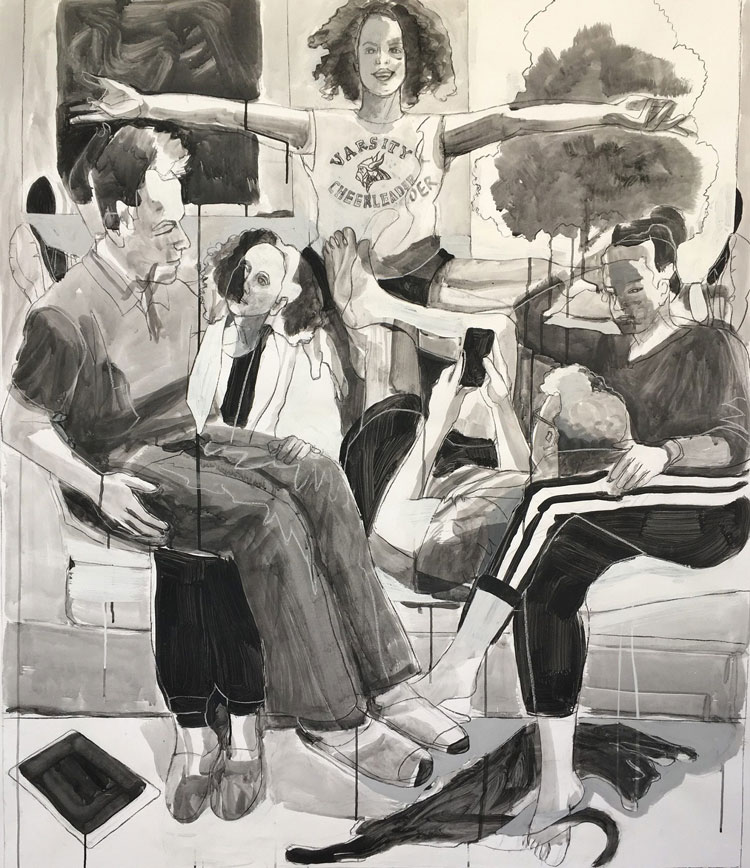
Helena McGrath, Closer 2, 2020. Courtesy the artist and Trinity Buoy Wharf Drawing Prize.
Closer 2 (2020), by Helena McGrath (b1968, London), explores family dynamics under lockdown. Unprecedented restrictions on personal space and movement reveal bonds and tensions, where the family unit inhabits the sofa (or a rocky boat?), pushing against the edges of the picture plane. Ruth Richmond (b1956, Ipswich) also explores family dynamics and the impact of the pandemic by using wooden poles to represent members of her immediate family in an understated minimal installation.
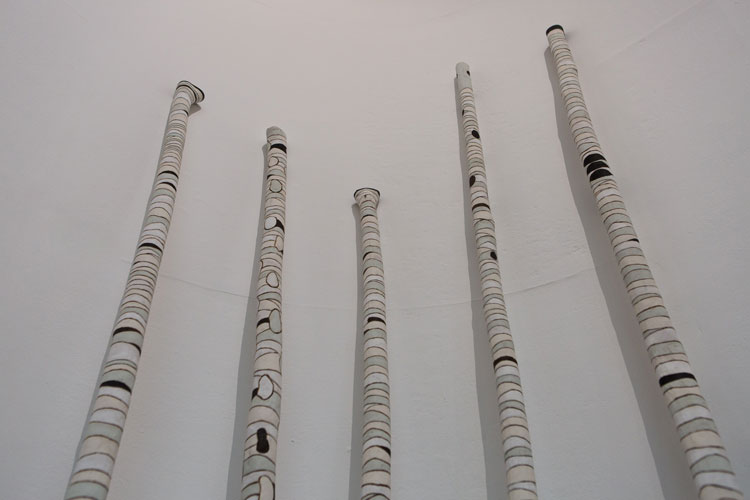
Ruth Richmond, 5 Lockdown Soul Poles, 2020. Courtesy the artist and Trinity Buoy Wharf Drawing Prize.
She describes 5 Lockdown Soul Poles, 2020: “I am using coppiced hazel cordwood as my canvas which stands in the landscape as a metaphor for human intervention. The variety of marks are informed by a meditative process while living alongside a habitually familiar character in unusual circumstances. I have drawn contour lines to represent the landscape and its effects on our mood changes, structured by uncontrolled events. Chalk paint allows the stem to breathe and to continue its cyclical journey through to decomposition.”
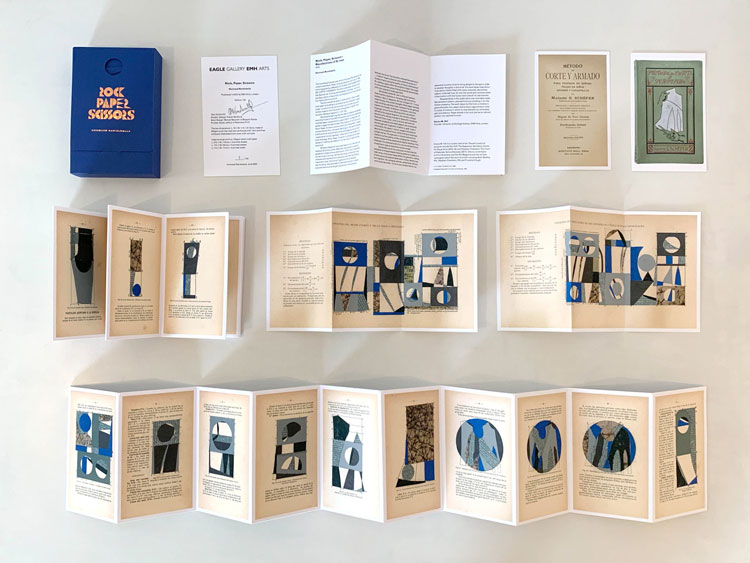
Hormazd Narielwalla, Rock, Paper, Scissors, 2020. Artist’s book. Courtesy the artist and Trinity Buoy Wharf Drawing Prize.
Rock, Paper, Scissors (2020), by the London-based fashion designer, tailor and collage artist Hormazd Narielwalla (b1979, Mumbai), is an artist’s book (edition 100) based on the series of the same name, made on pattern drawings from a 1906 tailoring guide he found on a trip to Seville, by a Madame G Schèfer entitled Metodo de Corte y Armado (cutting and assembly methods).
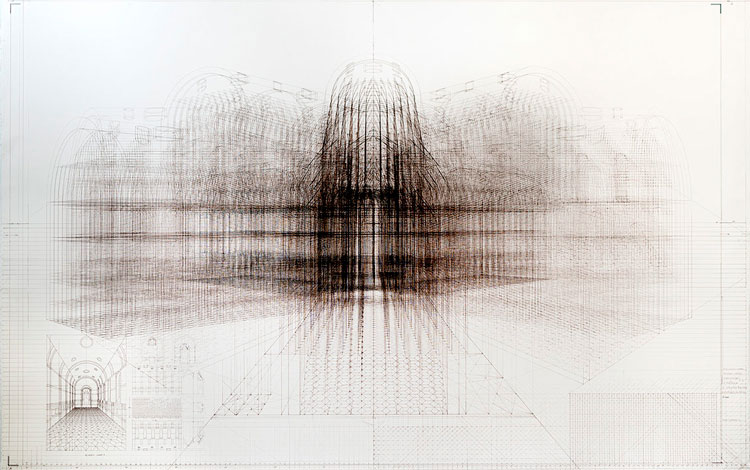
Ben Johnson, Scrovegni Chapel Worksheet, 2019. Courtesy the artist and Trinity Buoy Wharf Drawing Prize.
The consummate, architecturally inspired drawings of Ben Johnson (b1946, Wales), Scrovegni Chapel Worksheet (2019) and Further Study for Scrovegni Chapel Painting (2019-20) occupy a key position in the exhibition. Johnson explains the role of drawing in his unique oeuvre: “For me, drawing is establishing the firm foundations on which any painting may be built. It is at the drawing board that decisions and commitments are made. It is in the process of making a line or scratching a surface that one transcends image-making and explores the potential of simple gestures and marks. I see the craft of drawing as elevating description into the spiritual. I want to ‘establish emotional relationships by means of raw materials’ combined with geometry.”
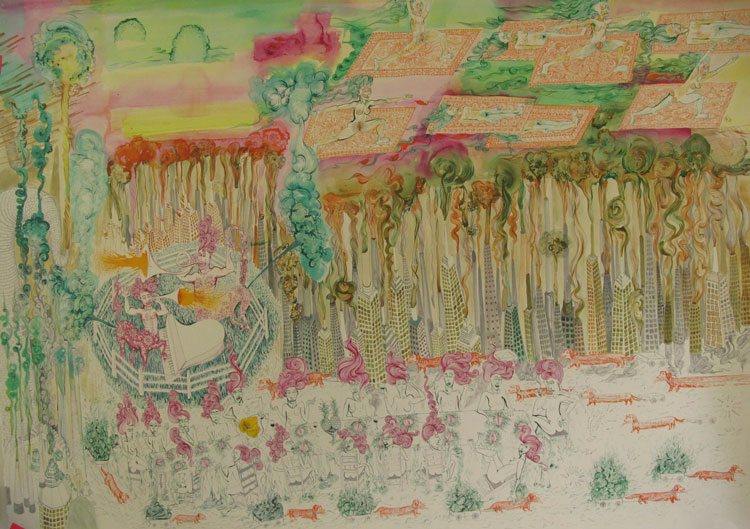
Isabel Rock, Grief – The Dinner Party, 2019. Courtesy the artist and Trinity Buoy Wharf Drawing Prize.
Not merely the creation of an illusion, but of psychological importance, the works of the artists in the Trinity Buoy Wharf exhibition indicate the manner in which drawing has become an enabling activity. A courageous pair of works by Isabel Rock (b1981, London) address grief and, by virtue of her inclusion in the exhibition (the works were made last year), their prescience alludes to the devastating loss on personal and, in turn, societal and global levels, brought about by the pandemic. The two works, Grief 1 – Leap from the Island and Grief – The Dinner Party (both 2019), have been shortlisted from a series of five. Rock explains what the two works are about: “In the first, the girl must escape the tower to get back to life and begin the healing process. The surreal adventure takes hold of her as she travels through a forest, towns and broken industrial landscapes spewing out end-of-the-world pollution; will she survive or is humanity doomed? At the dinner party [the women] discuss grief, loneliness, longing and the future; what future is there in a world like this?” In Rock’s surreal work, it is possible to identify the complexity of grief and the importance of self-determination through image-making.
Drawing can play a cathartic role in personal lives, and the impact of a drawing exhibition of such high calibre, in presenting truly affecting artworks at a point of unprecedented crisis worldwide is proof of the healing capacity of art, particularly the immediacy of drawing. The technological revolution and our dependence on media can lead to sensory overload and confusion. By contrast, the act of drawing for the artist can be a fundamentally grounding experience, it redefines his or her contours of self. Well-being on a personal and societal level are dependent on the human instinct to draw, to understanding authenticity in cultural terms, the autonomy of self, interconnectedness in political terms and an ongoing understanding of global culture.
• The exhibition will tour to Trinity Buoy Wharf, London, from 9-22 January 2021, and to The Gallery at Arts University Bournemouth, in spring 2021 (dates to be confirmed).

Click on the pictures below to enlarge
Genti Korini talks about A Place in the Sun, his twisty, challenging video installation at the Alban...
Aleksandra Kasuba: Shelters for the Senses
The Lithuanian-American Aleksandra Kasuba worked across art, design and architecture, creating publi...
-300.jpg)
From mummified cats to Tamagotchis and medieval assistance dogs to my own support dog barking at the...
The Columbian artist Delcy Morelos on how she made her enormous earthen outdoor sculpture now on sho...
Evelyn Taocheng Wang – interview
At her new exhibition in Bolzano, the Chinese-born, Netherlands-based artist Evelyn Taocheng Wang di...
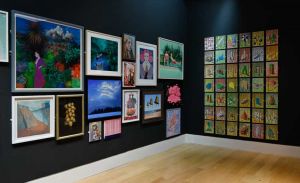
RSA 200 Annual Exhibition, Edinburgh
Despite packing in 560 works, the show doesn’t feel crowded and a walk through the galleries felt ...
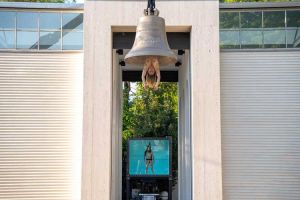
The 61st international art exhibition is a vast, volatile project that this year, more than most has...
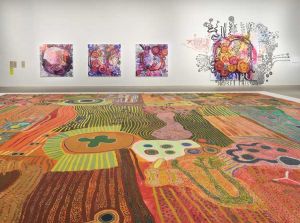
25th Biennale of Sydney – Rememory
Central to this biennale are First Nations voices and the diverse diasporas that shape contemporary ...
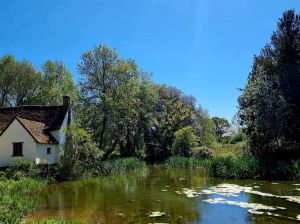
This year is the 250th anniversary of the birth of John Constable and to celebrate, his native Suffo...
MoonSunStarEarthSkyWater, the first UK presentation of the late artist Nancy Holt’s work to includ...
The first UK retrospective of the great Spanish baroque painter Francisco de Zurbarán trades the mo...
Several Eternities in a Day: Form in the Age of Living Materials
Opened within weeks of each other, the Hammer Museum presents a mind-bending show of Brown Art and L...
André Leon Talley – interview with curator Rafael Brauer Gomes
Rafael Brauer Gomes, the director of fashion exhibitions at Savannah College of Art and Design (SCAD...
To coincide with his first UK exhibition, Agua Salada at Hauser & Wirth Somerset, Angel Otero talked...
Paula Rego: Dance Among Thorns
With more than 140 works on show, this exhibition encompasses the breadth of Rego’s art, from her ...
Handpicked: Painting Flowers from 1900 to Today
A smorgasbord of flower paintings from the last 125 years, exploring meaning, metaphor, accuracy and...
Klima Biennale Wien 2026: Unspeakable Worlds
Vienna’s climate biennale takes place across the city with institutional exhibitions and public pr...
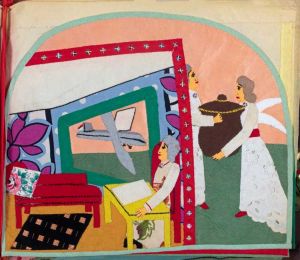
Troublemakers and Prophets: Elizabeth Allen and Other Visionary Artists
The amazing story of an artist, who saw herself as a contemporary prophet, and made patchwork artwor...
Bellmer Nauman Pondick: Material Desire
Focusing on the work of Rona Pondick, Hans Bellmer and Bruce Nauman, this exhibition considers how b...
-300.jpg)
Spanish artist Angela de la Cruz’s twisted canvases and collapsed objects are a reflection of the ...
,-Red-Devil-(soul-2),-Drifting-Leaves,-1972-300.jpg)
Senga Nengudi: Performance Works 1972-1982
Featuring photographic works, archival materials and films of key performance pieces, this exhibitio...
-Cecily-Brown-Photo-(c)-Jo-Underhill-300.jpg)
A painter’s painter, whose dynamic landscapes take viewers on a walk, Cecily Brown returns to Lond...
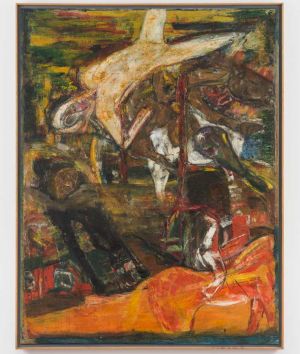
Frank Bowling: Seeking the Sublime
Though containing just 10 works, this exhibition demonstrates the breadth of the British-Guyanese ar...
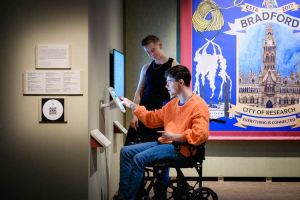
This exhibition explores ageing from the 1500s on, but it was the contemporary works here that reson...
This show focuses on honouring ancient relationships between people, land and water, with new work f...
Gainsborough: The Fashion of Portraiture
Despite once saying he was sick of portraits, Gainsborough was one of the most sought-after portrait...
Histories of erasure, displacement, annihilation and colonisation are told with power, subtlety, cla...
-(8)-300.jpg)
Hurvin Anderson’s paintings, which here stretch across his career, blend his British and Caribbean...
-(c)-DACS,-London,-2026-and-Chiharu-Shiota.-300.jpg)
Chiharu Shiota: Threads of Life
Chiharu Shiota’s immersive web-like installations, fashioned from coloured thread and found object...
-(c)Rob-Battersby-6-1000-300.jpg)
Paul Eastwood, who is dyslexic, attempts to explore neurodiversity and the complexities of language,...

Copyright © 1893–2026 Studio International Foundation.
The title Studio International is the property of the Studio International Foundation and, together with the content, are bound by copyright. All rights reserved.
 |
 |
 |
|---|
 Beth Fisher: Grisaille Legacy
 Artists’ Laboratory 02: Stephen Farthing RA – interview
 ARC: I Draw for You
 The 43 Uses of Drawing
 Book review: One Thousand Drawings by Tracey Emin