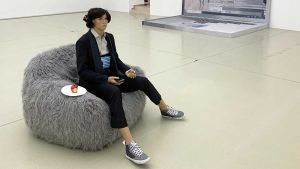

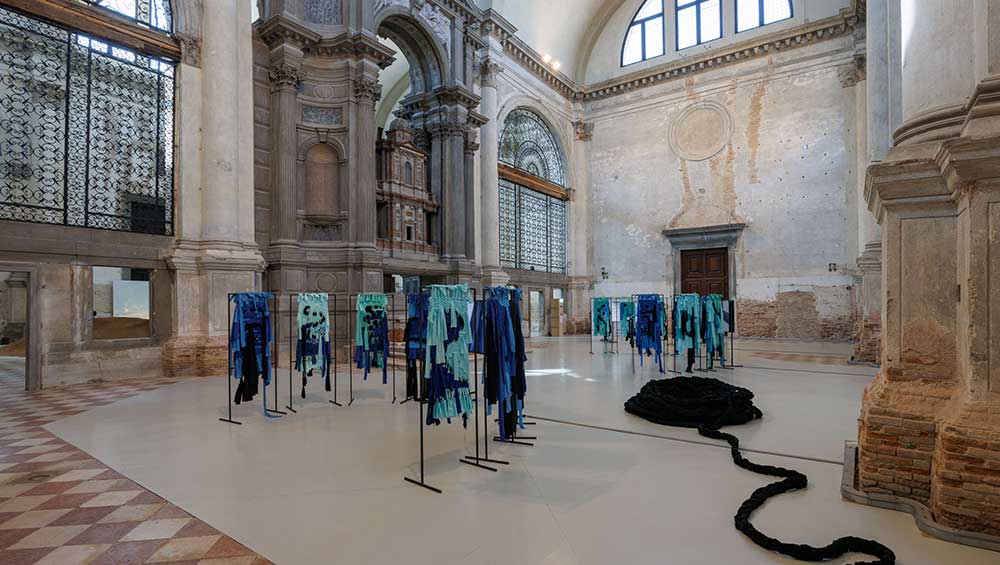
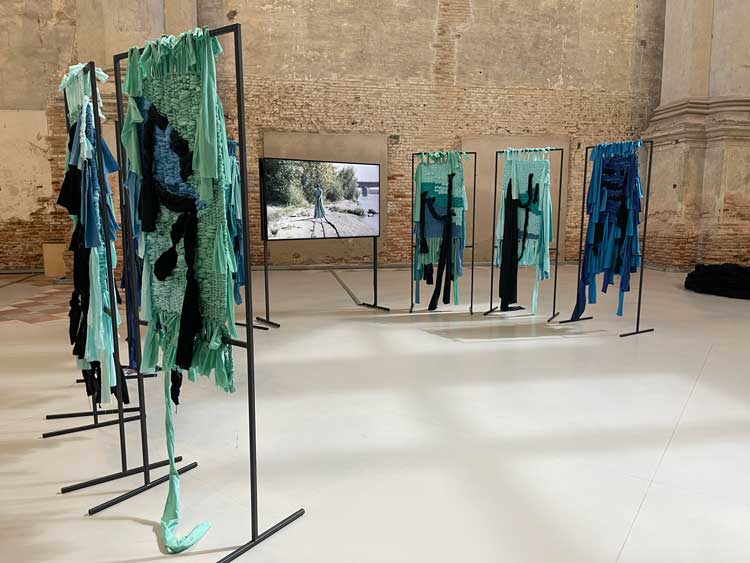
Verena Melgarejo Weinandt, Weaving Connections, 2026. Exhibition view, Tide of Returns, Ocean Space, Venice. Commissioned and produced by TBA21–Academy. Photo: Jacopo Salvi.
TBA21-Academy at Ocean Space, Venice
27 March – 11 October 2026
by VERONICA SIMPSON
I am captivated by a flock of pink flamingos drifting over a milky, blue lagoon, the grey-on-silver horizon beyond the Venetian archipelago’s outer reaches on a misty morning. Drone footage zooms low and close to the water to reveal spindly fences and flimsy fishing nets, then pans high to show the elaborate tracery of aquamarine sea channels looping around Venice’s partially submerged salt marshes. It is these scenes in a tranquil and contemplative film, Origin, by Yann Arthus-Bertrand, about the salty waterscapes encircling the city that have lodged in my mind as much as the two artworks filling the nave in the atmospheric church next door. In Venice’s Ocean Space exhibition Tide of Returns, all the work is asking profound and important questions about how we live with, and by, our coasts, seas and rivers.
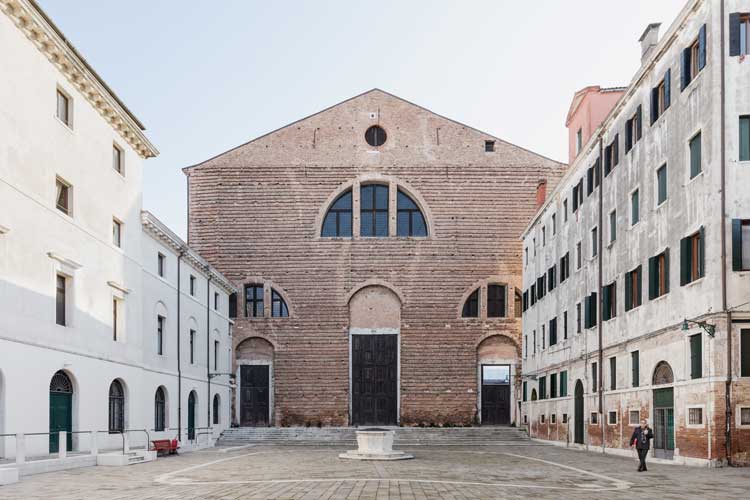
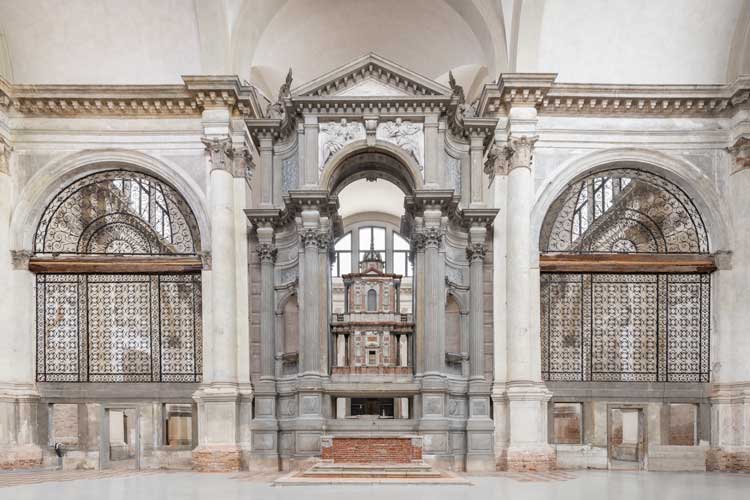
Ocean Space, Chiesa di San Lorenzo, Courtesy of TBA21–Academy. Photo: Marco Cappelletti.
The Ocean Space venue – the deconsecrated Church of San Lorenzo – has such presence, it takes a special kind of artwork to compete with its combination of cavernous, sacred sobriety and delicious dereliction. A 16th-century edifice, the origins of which as a place of worship go back to the ninth century, it lay abandoned (apart from the odd temporary staging of a biennale opera or installation) for 100 years before it was restored. Today Ocean Space is a centre for exhibitions and public programmes concerned with critical ocean literacy, collaborative research and environmental advocacy through the arts, led by TBA21 Academy, the research arm of the prestigious Thyssen-Bornemisza Contemporary Art Foundation in Madrid.
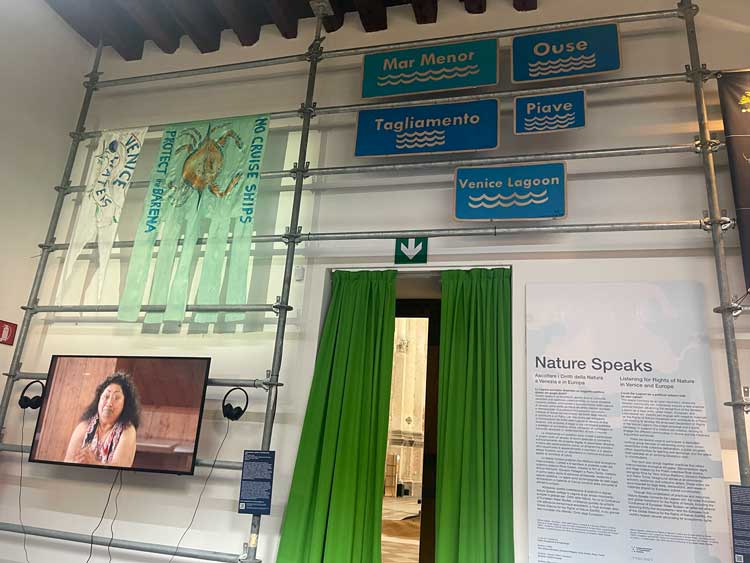
Entrance and information for the policy lab Nature Speaks. Listening for Rights of Nature in Venice and Europe. Photo: Veronica Simpson.
Arthus-Bertrand’s film is in one of the building’s various meeting rooms, now designated a policy lab under the title: Nature Speaks. Listening for Rights of Nature in Venice and Europe. Its programme involves artists and global activists working to claim the rights of bodies of water to legal personhood, and protection – including the Venetian lagoon. Information and inspiration for those working towards that aim fills the walls. Posters and maps reveal points of similar activism around the world.
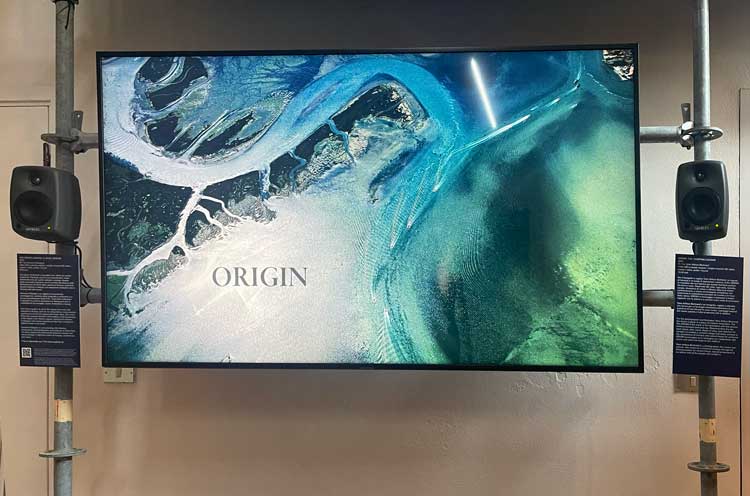
Origin film by Yann Arthus-Bertrand in the Nature Speaks Policy Lab. Photo: Veronica Simpson.
As for the art, it centres around indigenous practices and rituals of belonging and ecological wisdom, with a mix of sculpture, film and sound designed to weave a multi-sensory atmosphere of empathy and understanding. The west wing features the work of Repatriates Collective, a group of artists from Australia’s Pacific North, South and West Africa, Europe and Latin America. Curator Khadija von Zinnenburg Carroll has steered this and the east wing installation, by Verena Melgarejo Weinandt, as well as the programme of residencies and research that underpins it.
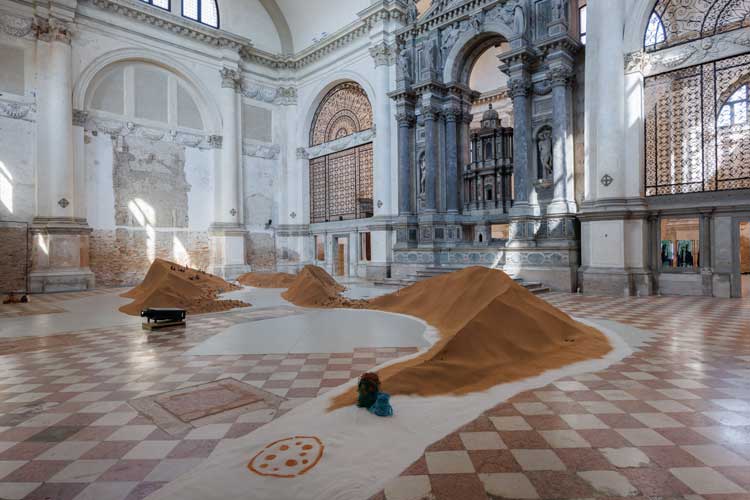
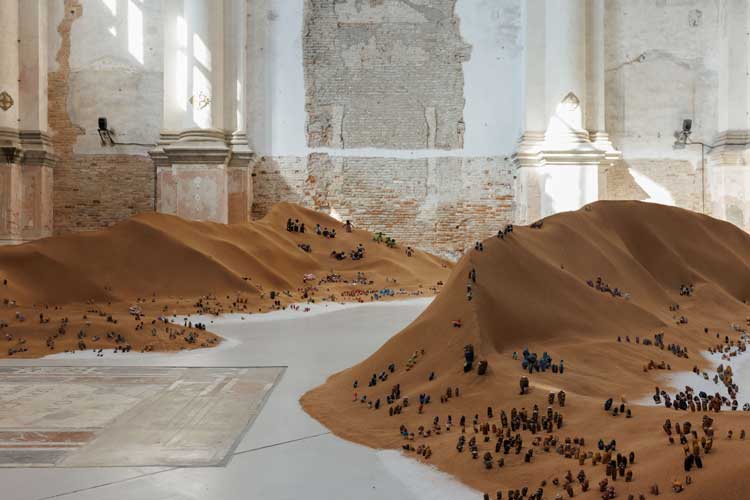
Repatriates Collective, From My Mother’s Country, 2026. Exhibition view, Tide of Returns, Ocean Space, Venice. Commissioned and produced by TBA21–Academy. Photo: Jacopo Salvi.
From My Mother’s Country is the title of the Repatriates Collective installation: a beachscape into which you walk, beyond the church’s vast and weathered, wooden front doors. Great drifts of reddish sand, fringed with silvery blond sand (taken from nearby beaches) undulate around this space, populated with thousands of tiny figures, dolls made of grasses, shells and scraps of fabric by the team of artists. A large video work is projected on a centrally placed screen, and speakers dotted around the room fill the space with the sound of waves washing the shore, interspersed with statements from some of the artists involved. One of these is Noeleen Lalara, an Anindilyakwa artist, who appears on the film against the vivid red sand dunes of her home territory, the Groote archipelago off the north-eastern coast of Australia.
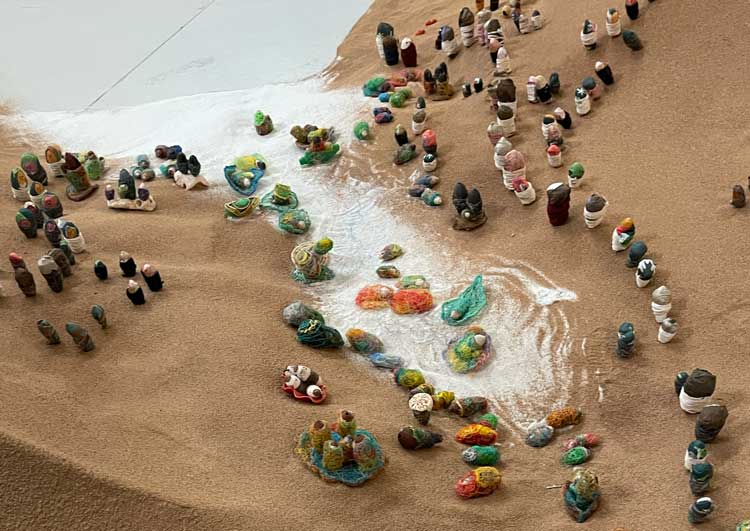
Repatriates Collective, From My Mother’s Country, 2026 (detail). Exhibition view, Tide of Returns, Ocean Space, Venice. Commissioned and produced by TBA21–Academy. Photo: Veronica Simpson.
Repatriates Collective, as its name would suggest, is very much engaged with the idea of reclaiming and returning artefacts. And the dolls in the room include some recently returned by European museums (Manchester Museum, in 2023, returned 174 Indigenous Australian objects, from dolls to boomerangs, and Lalara was among the delegation sent to Manchester to receive them), though many were made for the exhibition. There are also ritual dolls from Namibia, wrapped in traditional Namibian fabric, that have been used historically to teach children about the cycles of life, family and land as well as honouring their ancestors.
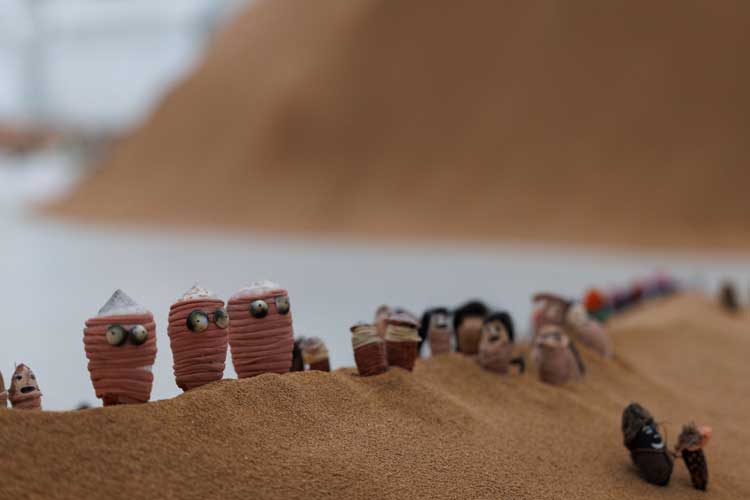
Repatriates Collective, From My Mother’s Country, 2026. Exhibition view, Tide of Returns, Ocean Space, Venice. Commissioned and produced by TBA21–Academy. Photo: Jacopo Salvi.
The arrangements of dolls form fascinating and quirky communities, some crowded together, as if at a celebration or gathering; some in circle-formation, ceremonial-style; others dispersed, in twos and threes. They range in size from between 4cm and 40cm, and it is fascinating to follow their flows and formations. In detail and as a whole, the installation works powerfully within this historic space; the colour of the red sand chiming with the colour of ancient bricks; the architects have, in contemporary fashion, left every mend and stitch in the walls visible, from across the centuries, and the patched and restored brickwork tumbles down beside the pale, rendered infill; the russet and pale silver tones of the sand echo those of the grey and terracotta floor tiles. Your eye is drawn from near to far, tracing curves along the dune line, to alight on the whorls of an elaborate, wrought-iron grille and up to the swooping lines of the restored vaulted ceiling. I am delighted – but not surprised – to find, halfway down the north wall, a series of faces of plump-cheeked cherubs or angels, looking for all the world like dolls heads.
Big, square, black bean bags are strewn in front of the video in From My Mother’s Country, inviting you to dwell in this space and absorb the material and thematic richness of it all.
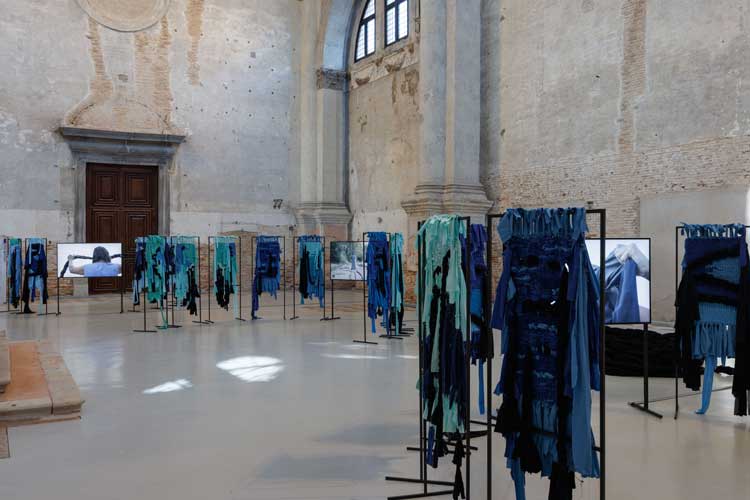
Verena Melgarejo Weinandt, Weaving Connections, 2026. Exhibition view, Tide of Returns, Ocean Space, Venice. Commissioned and produced by TBA21–Academy. Photo: Jacopo Salvi.
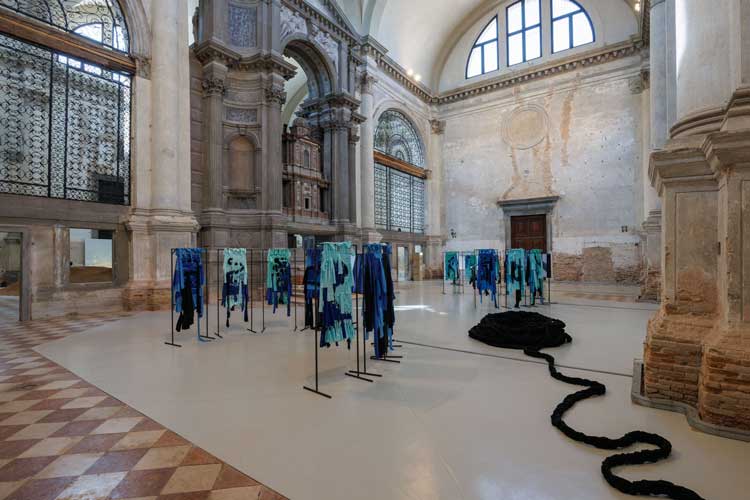
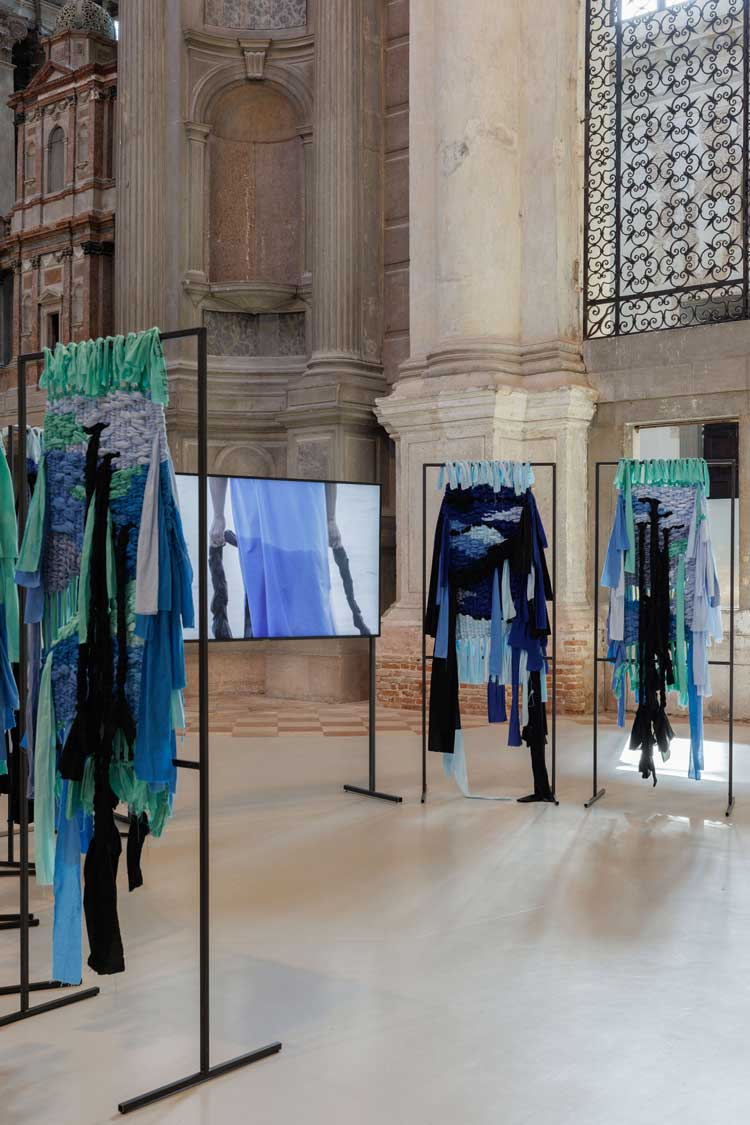
In the east wing is a textile-video installation, Weaving Connections, by Melgarejo Weinandt. This German-Bolivian artist, researcher, curator and teacher has picked braids as her theme – the braiding of hair and of fabric – as a connection to ancestral pathways and practices. She has created a textile landscape of tall, slender black metal frames, into which fabric in shades of aquamarine, indigo, cerulean and black has been woven and knotted. The colours are variously layered and patterned, the ends left dangling, each one different from the other, though it’s hard to say what they represent, singly or collectively, other than companions to the three video screens that sit in their midst, portraying the dyeing, knotting, braiding and washing of the fabric.
There is a hypnotic quality to these films, a welcome slowness and a sense of timelessness in the ritual – though we can see clearly in the background that the river in question is part of an urban landscape, not some mythical or rural one. Towards the rear wall, a large, coiled mass of black, braided fabric sits, one end trailing along the floor and out of a small aperture cut into a wooden doorway, like an umbilical cord. Beyond the obvious visual references, it is harder to find deeper meaning in this work, compared with its companion across the way.
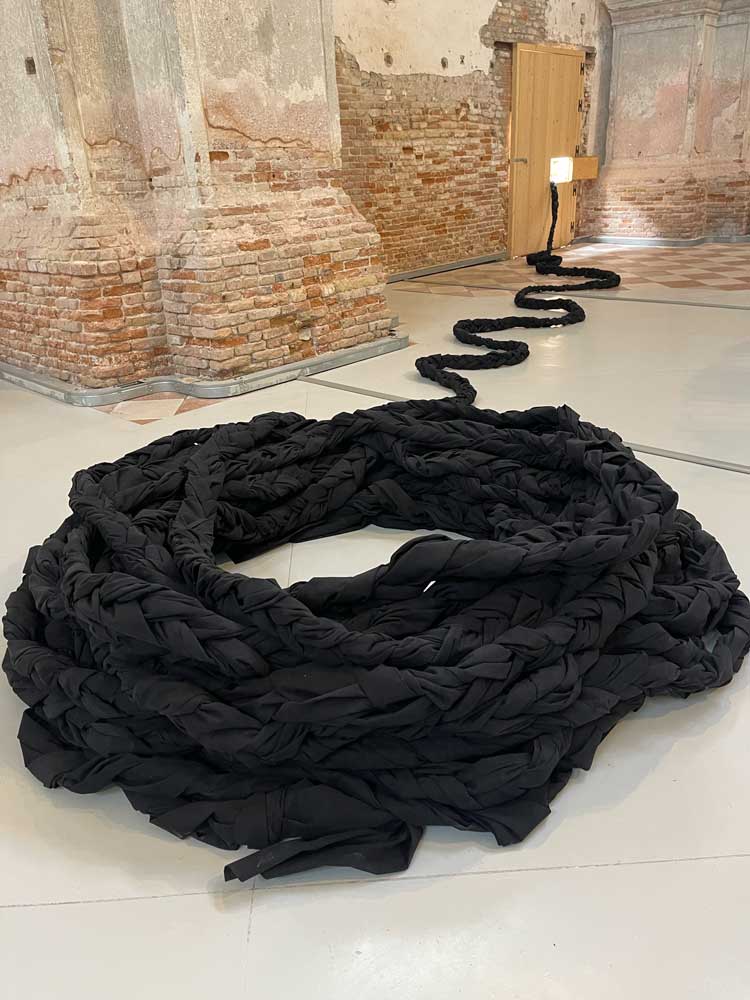
Verena Melgarejo Weinandt, Weaving Connections, 2026. Exhibition view, Tide of Returns, Ocean Space, Venice. Commissioned and produced by TBA21–Academy. Photo: Veronica Simpson.
The publicity for the show declares that this installation is part of the artist’s long-term body of work that “explores how the cultural imagery in Germany has represented and framed Indigenous people in mainstream media and culture”. I’m not sure any of that particular German perspective was conveyed to me. But there was a clear sense of grace, community and continuity. These are all qualities that will no doubt help to power the conversations around water and the importance of honouring and restoring the nearby lagoon and neighbouring bodies of water to health. For a city only recently rid of the hideous, huge cruise ships that threatened the fragile timber foundations on which Venice is built and the pleasure to be had in gazing at its antique skyline, the exhibition acts to underpin the seriousness and urgency of the campaign to keep these waters clear.
Click on the pictures below to enlarge

Copyright © 1893–2026 Studio International Foundation.
The title Studio International is the property of the Studio International Foundation and, together with the content, are bound by copyright. All rights reserved.

 |
 |
 |
|---|


-1000-300.jpg)