




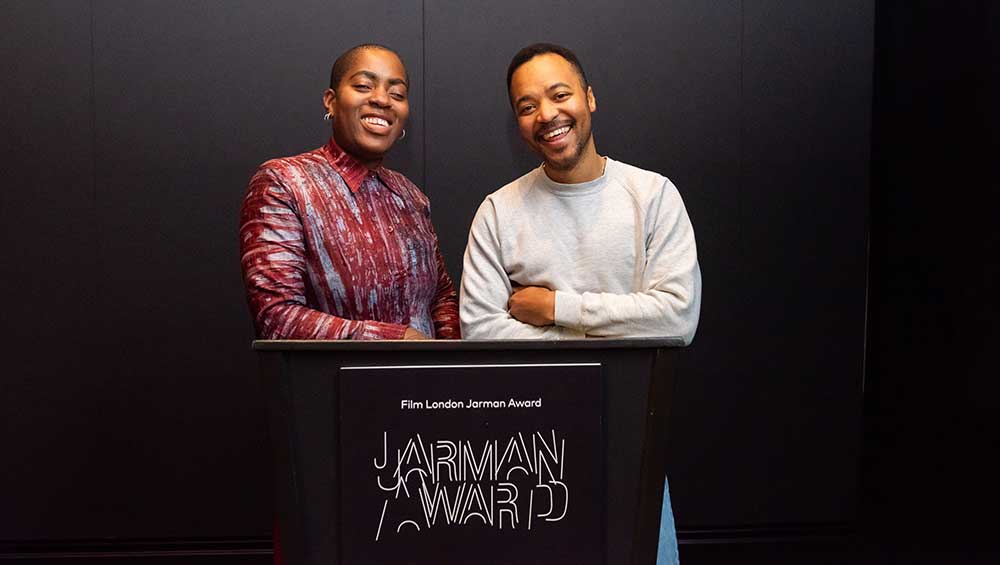
Onyeka Igwe and Morgan Quaintance (right), joint winners of the 2025 Film London Jarman Award. Photo: Max Colson.
by NICOLA HOMER
Morgan Quaintance is an artist and writer who has spent time living in London and Chicago. He is the joint recipient of the 2025 Film London Jarman Award for his moving image work. The annual prize was awarded jointly to Quaintance and his fellow artist, the film-maker Onyeka Igwe, for what the chief executive of Film London and the British Film Commission, Adrian Wootton, described as “significant bodies of work at the forefront of artists’ moving-image practice”. Drawing on the legacy of the late British film director Derek Jarman, the annual award, now in its 18th year, celebrates innovation among UK artist film-makers working with film and video in the UK. On the announcement of his award, the jury praised Quaintance’s “use of the moving image as a container to hold multiple different disciplines”.
Quaintance has exhibited internationally at festivals and institutions, including: the Museum of Modern Art (MoMA), New York; the Konsthall C, Sweden; the Images Festival, Toronto; the European Media Art Festival, Germany; the International Film Festival, Rotterdam; and the Courtisane film festival in Ghent, Belgium, which he says is his favourite film festival. In 2024, he was a MacDowell Fellow, on a programme in New Hampshire, US, founded in 1907 by pianist Marian MacDowell and composer Edward MacDowell, and a Woonhuis fellow at the De Ateliers institute in Amsterdam.
,-film-still-Courtesy-of-the-artist_1.jpg "Morgan Quaintance, Efforts of Nature, 2023. Film still. 16mm to digital, 20 min. Courtesy of the artist.")
Morgan Quaintance, Efforts of Nature, 2023. Film still. 16mm to digital, 20 min. Courtesy of the artist.
Quaintance lists his interests as ethnography, avant-garde aesthetics, the human condition, Afro-Caribbean, East Asian and British histories, and the built environment. His award-winning films are entitled Repetitions (2022) and Efforts of Nature (2023). Characteristically, Repetitions defies easy categorisation, although this film presents footage gathered by the artist over 30 years and includes early 20th-century photographs of feminist activists and the speech of a workers’ rights campaigner during the Covid pandemic. More widely, the film offers a plethora of images and an intricate soundtrack, including snatches of piano music and telephone messages, which offer a thread running through the film, focusing on labour, work and fragile beings. Efforts of Nature explores human subjectivity in connection with the planetary theme of climate change; it makes for challenging viewing as it investigates the fragility of the body. Quaintance offers an intriguing insight into the production of his work in our conversation. “One of the things that does recur for me are strategies of making, and one of the strategies of making is to use, let’s say, existential, social, historical or current conditions as generators of images and comparisons and juxtapositions in terms of moving image work,” he says.
Quaintance discussed his practice with Studio International over the telephone, ahead of his Bristol showing of Available Light, which has been part of a touring project for more than a year. The following is an edited version of our conversation.
Nicola Homer: How did you start your professional career in the arts?
Morgan Quaintance: I have been working in cultural production professionally since I was about 19, so that is 27 years ago – I am 46 now. I started then by being a musician. I have moved around a bit, so I’ve been involved in making music, writing about art, making moving image and doing criticism, across that expanse of time.
NH: How has your moving image work evolved in recent years?
MQ: I began making moving image in 2018 as a professional. The mark of being a professional would be my inclusion that year in film festivals and exhibitions. That is when I started making art with moving image. I had been making films before that, but more in a curatorial capacity, so the films were made to illustrate some of the exhibitions that I was working on with some colleagues previously. But during that time, I learned the craft, technically speaking, so I learned how to use multiple cameras, working with quite high-end broadcast-quality digital cameras and then right across the board to mechanically wound 16mm cameras.
,-film-still_2.jpg "Morgan Quaintance, Repetitions, 2022. Film still. 16mm to digital, 24 min. Courtesy of the artist.")
Morgan Quaintance, Repetitions, 2022. Film still. 16mm to digital, 24 min. Courtesy of the artist.
NH: What is most important to you when you make a film?
MQ: Well, it depends, each time I make a film, but what I am trying to do is find the film … I suppose it is important because without finding it there isn’t one. Whatever I am choosing, and when I am compositing material and composing music for the film or figuring out places to go and people to talk to, I am also finding out what the film is in the process. I suppose that one of the most important things for me when making the film is the point at which I fully understand what it is that I am doing.
NH: So, it is a process of discovery?
MQ: That’s right. Good one.
NH: Can you talk about what inspires you in doing your work as an artist-film-maker?
MQ: What inspires me is moving forwards in what I understand about the world, reading more, meeting more people, challenging myself in terms of what I can produce, aesthetically speaking, and trying out new things, and sometimes not succeeding in the way that I had initially envisaged but it is always that way of being a bit more present, intellectually, aesthetically, empathetically present in the world.
NH: What have you found to be most challenging in your creative work?
MQ: The most challenging thing in my creative work is the slowness with which the sector responds. I find myself to be at a kind of intellectual and aesthetic remove from where the sector sometimes seems to be … Being a cultural producer means sometimes I am beholden to funders or to people to afford me the opportunity to show or distribute my work, and that can be a real challenge.
NH: How do you overcome these challenges?
MQ: It is a process of constant negotiation with barriers that are erected, and trying to strategise ways of surmounting them, or going around them. Those barriers are manifold – they are economic, they are bureaucratic, they are to do with where you can be: can you live in this city?
NH: How do you explore the culture of industrial work in your film Repetitions?
MQ: Primarily, the film does what it says on the tin. It is exploring loops, repetitions, things happening again, and then those things being inverted, or turned upside down, and then from this investigation of the things happening over and over and over again, it is almost like a natural consequence that we end up talking about work. Work is a thing that people do every day, and quite a large proportion of society is involved in labour that is repetitive, it doesn’t change. They arrive at the same place every day, they sit at the same place every day.
Morgan Quaintance, Repetitions, 2022. Excerpt
It wasn’t too difficult for me to fold in dialogue about work, to put it simply. I don’t really want to make with my artistic practice work that is like a documentary on Netflix. I am always trying to find a way to present experiences that are different and require a different level of attentiveness from the viewer. The film is presented in an open enough way for you to make your own way into the source materials, into the images and what they are doing, into considerations about work and labour. Also, in there, fragility makes its way into that work because, ultimately, part of labour is like somebody discussing sick leave and Covid. I think that is really what is happening in the film and those two things bounce off each other: the formal exploration of recursion, or things happening over and over again, and then this dialogue that is centred around what takes place in the work environment. They bounce off each other and that, hopefully, creates the dynamic tension of the film.
NH: Would you like to talk about how you use the concept of the archive in your work?
MQ: There are some films I might be possibly making in a year that are definitely archival, because there is a specific place I am going to that has an archive and I am involved in it. But with Repetitions, it is more musical, what I am doing with the images, and the different tones and different textures of material that has existed now, and in the past. Maybe sometimes, I resist this label of the archive because I think it is trying to elevate or academicise something that just isn’t there, which I think at one level takes it out of this more practical sense that comes when I am creating. I am using footage that I have shot or pre-existing footage on materials, because I want to look into the past, and I want to bring that into some kind of contention with the present, but I don’t see that as especially archival material because that takes place everywhere. It takes place in text, it takes place in music, and we don’t automatically consider those to be archival investigations, right?
Morgan Quaintance, Available Light, 2024. Excerpt
NH: Can you discuss your work Available Light, which featured interviews with workers at the Edo-Tokyo Open Air Architecture Museum?
MQ: I just came back from Tokyo, where I showed Available Light at the Yebisu International Festival for Art and Alternative Visions 2026. Part of it is just to do with the tension between the ideal spaces in the museum. The ideal spaces in the museum are these homes or houses that have been transported from different locations in Tokyo and brought to the museum’s grounds and rebuilt, so that people can enter them and experience them, and then are preserved there. It is the difference between these kinds of preserved, perfect, ideal spaces, the difference between those and the experience of people living in temporary, rented accommodation in Tokyo and in London. I guess home is one of the central considerations in the work. And it is not really about Japan at all. It just happens to be set there, but it is about, I suppose, more broadly home as what that may be, or the experience of that may be today. I am kind of throwing that into relief by contrasting it with the ideal spaces that are preserved and remain unoccupied.
NH: Could you give an example of such a space?
MQ: Within the museum grounds, they are all late-19th-century to early to mid-20th century houses, so they can run from more traditional spaces, Japanese homes, to international style modernist interiors. They are all houses that have been previously owned by people: I think one was owned by one of the owners of a beverage company called Calpis, another was owned by a politician. They are all the homes of quite well-to-do people. There is also a photography studio that was transported from somewhere in Tokyo to there, which is in the international style – it is quite art deco. It is interesting as well because, obviously, the reasons for preservation are slightly different from, I imagine, some of those that govern heritage sites in England. Heritage sites tend to have this notion of the preservation of a sense of an England that is eternal, and kind of mythological and aristocratic, whereas there is a kind of pragmatic reason behind some of the preservation of these buildings in Japan, in part because there are a lot of earthquakes in Tokyo, and significant parts of the city were razed during the second world war. So, it is a practical solution to the disappearance of a lot of material.
NH: What are your plans and ambitions?
MQ: I have an exhibition coming up at Temple Bar Gallery + Studios that is opening on 2 October this year. So, I am making a new work for that.
• Morgan Quaintance I’ll Always Remember, co-curated with Alice Butler, is at Temple Bar Gallery + Studios, Dublin, from 2 October to 22 November 2026. Courtisane festival 2026: Notes on Cinema is on 1-5 April 2026 in Ghent.
For further reading, see The Film London Jarman Award 2025 essay entitled Dancing with Images: On Morgan Quaintance by Michael Kurtz.
Click on the pictures below to enlarge
,-film-still_7.jpg)
,-film-still_1.jpg)
,-film-still_2.jpg)
,-film-still_3.jpg)
,-film-still_4.jpg)
,-film-still_5.jpg)
,-film-still_6.jpg)
,-film-still.-Courtesy-of-the-artist_1.jpg)
,-film-still.-Courtesy-of-the-artist_2.jpg)
,-film-still.-Courtesy-of-the-artist_3.jpg)

Copyright © 1893–2026 Studio International Foundation.
The title Studio International is the property of the Studio International Foundation and, together with the content, are bound by copyright. All rights reserved.

 |
 |
 |
|---|
-1000-300.jpg)
 Radical Landscapes
 Grace Ndiritu – interview: ‘Museums hold our collective past and they can hold our future’
 The Film London Jarman Award 2020
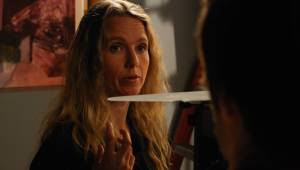 Daria Martin – interview: ‘Most people can relate to the feeling of being in exile’
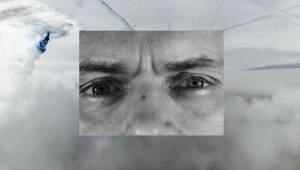 James Richards: ‘I was really into making an exhibition space where there would be nothing to look at’