
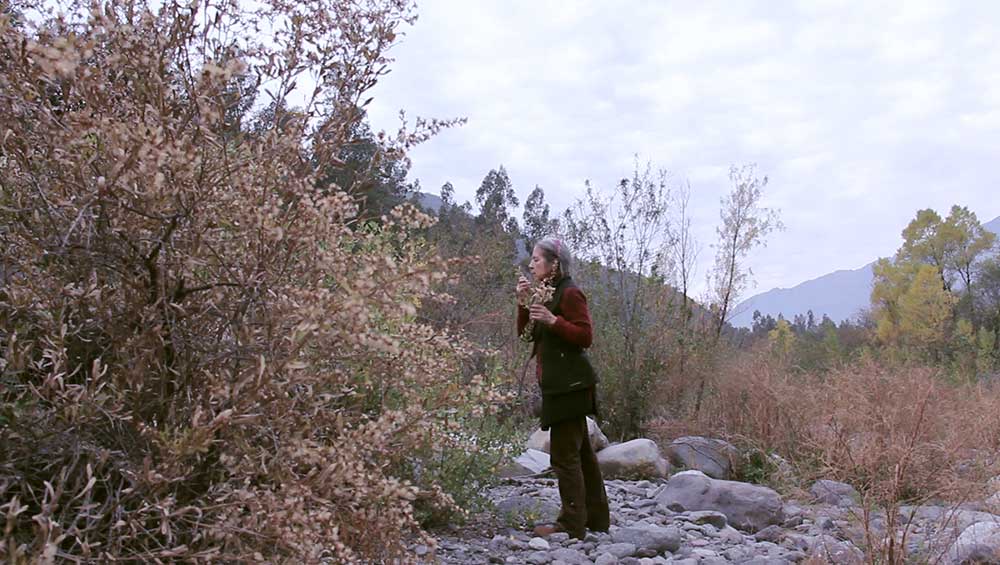
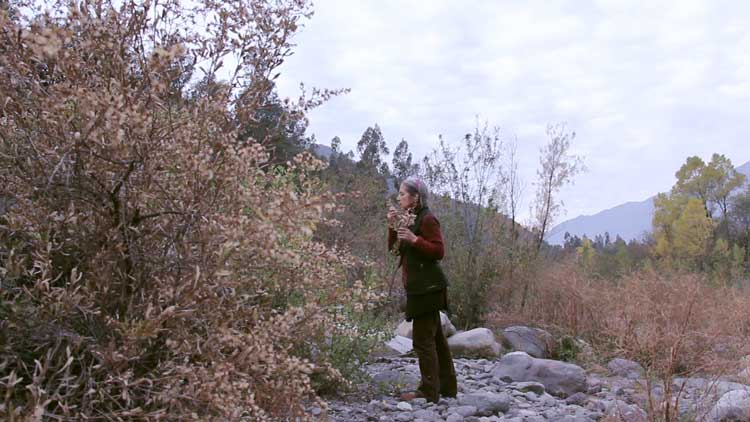
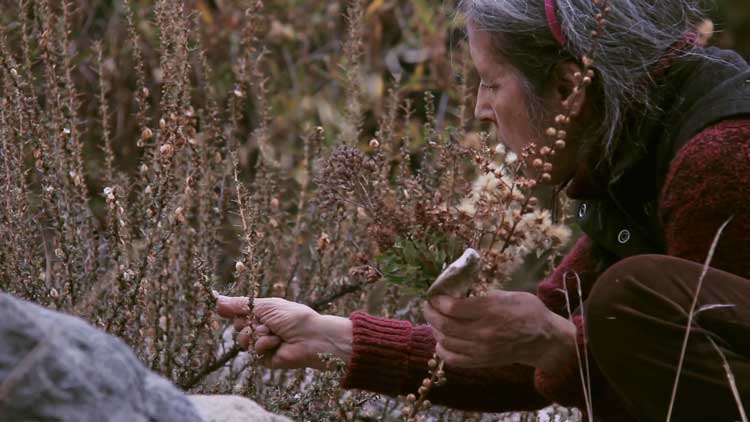
Cecilia Vicuña, Semiya (Seed Song), 2015, film still. Courtesy: Cecilia Vicuña, Electronic Arts Intermix (EAI), New York. © Cecilia Vicuña, Bildrecht Wien / Vienna 2026.
Multiple venues, Vienna
9 April – 10 May 2026
by BETH WILLIAMSON
Citywide biennales can be difficult to navigate. This is not simply a matter of traversing the city in question. Vienna, as it happens, is an easy city in which to get around and most of the biennale exhibitions and events are centrally located while those further out are easily reached by public transport. Navigating the overarching narrative of Unspeakable Worlds is a more difficult task, especially when the showcased public spaces programme (No) Funny Games seems somewhat cliched, at least what I saw of it. However, the institutional shows scheduled to run as part of the programme are, without exception, thoughtful and considered in a way that truly engages with the complexity of the climate crisis and its global interdependencies. As the festival guide reflects: “When language reaches its limits, art opens new spaces.”
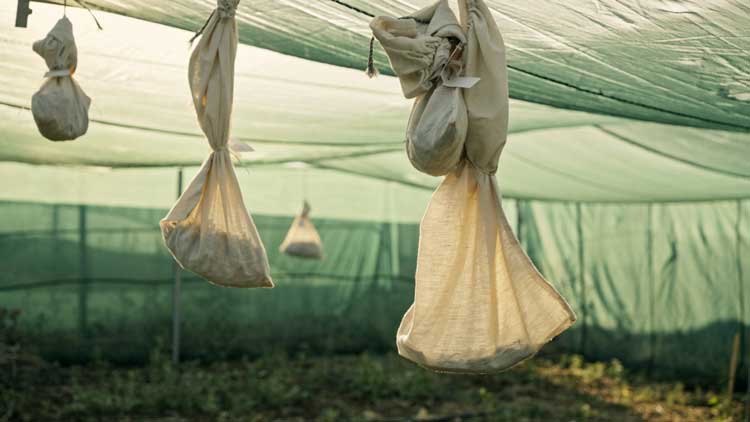
Dominique Koch, Sowing the Seeds for the Future, 2020, film still. Courtesy: Dominique Koch © Dominique Koch.
There are two institutional shows that really take this on. First, Seeds: Reclaiming Roots, Sowing Futures, showing at Kunst Haus Wien, the hub for the festival. Exploring migration, Indigenous knowledge, biodiversity and colonialism through the work of 14 international artists, the exhibition tells stories of disappearance and preservation, loss and regeneration, and what it regards as the powerful potential to be found in care and shared growth. It covers much ground, from agrobiodiversity, biocultural heritage and farmers’ rights to GMO seeds, monocultures and seed banks/vaults. As Kunst Haus Wien’s director, Gerlinde Riedl, says in her foreword to the exhibition catalogue: “A seed is more than a biological object. It is a silent promise made to the future.” The artworks in this exhibition make and explore that promise in myriad ways, sparking ideas and conversations that extend far beyond the walls of the exhibition. It would be difficult to argue that any one work activates the conversation more than another but there were certainly particular works that caught my attention.
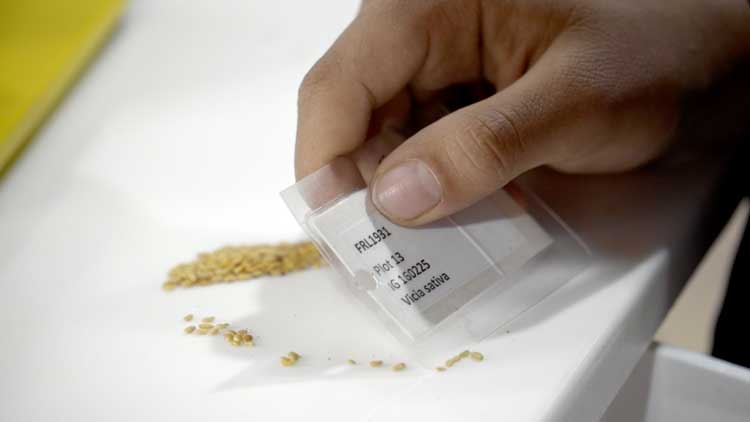
Dominique Koch, Sowing the Seeds for the Future, 2020, film still. Courtesy: Dominique Koch © Dominique Koch.
The Swiss artist Dominique Koch’s sound and video installation Sowing the Seeds for the Future (2020) captivates the viewer with a multilayered narrative that weaves together historical events, scientific facts and speculative perspectives. Focusing on visual material from the International Center for Agricultural Research in the Dry Areas, Koch’s film also discusses the tantalising ideas of the philosopher Andreas Weber and “being edible” as a point of reciprocity – eating and being eaten, giving and receiving, ideas that surely feed into the exhibition’s broader perspectives on matters of care and shared growth.
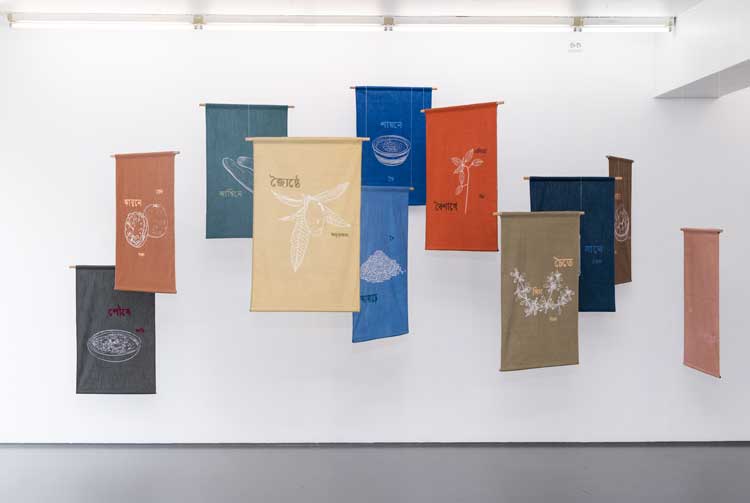
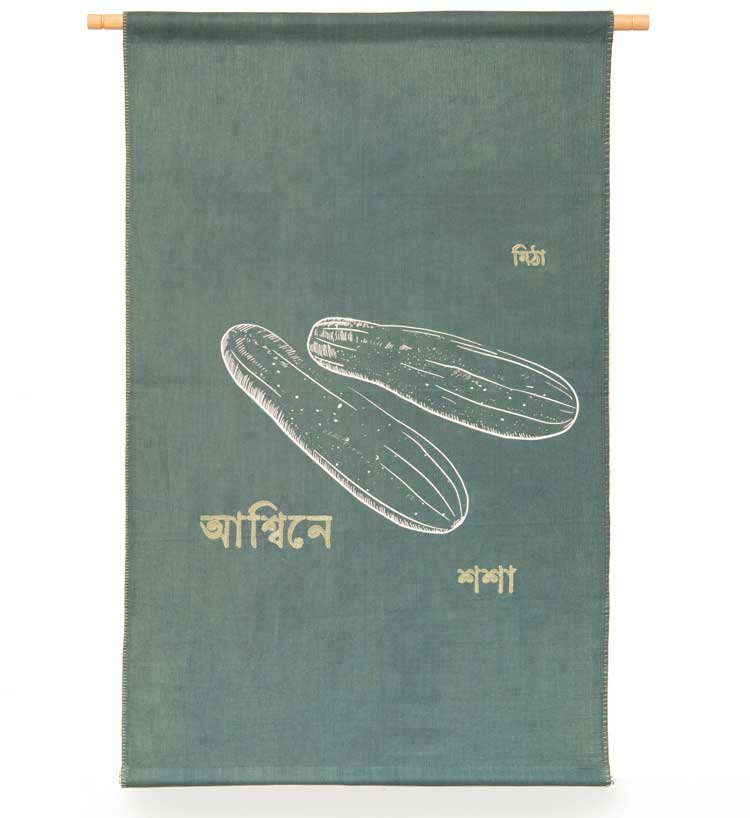
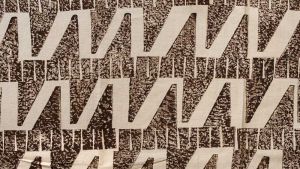
Munem Wasif, Songs of Seasons —The Ecological Calendar, 2023-ongoing. Exhibition view, Seeds Shall Set Us Free, Fotogalleriet, Oslo, 2024. Courtesy: Munem Wasif, project 88. © Munem Wasif.
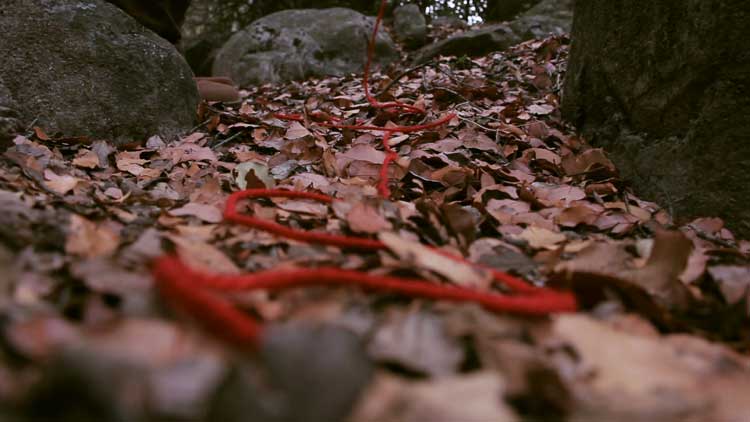
The installation by the Bangladeshi artist Munem Wasif called Songs of Seasons – An Ecological Calender (2023-ongoing) is especially sensitive in its handling of the issues as it measures time in colours. Through a collaboration of drawings, colours, needlework and installation, human needs are entwined within ecosystems rather than foregrounded. Here, for instance, “the month of the mangoes” glows golden with colour derived from curcuma, marigold and pomegranate rind. Meanwhile, deep-blue colours are obtained from the indigo plant. Tea leaves and myrobalan fruits create earthy hues. It is a deeply tender handling of humanity’s engagement with nature and possible new futures. I must also mention the Chilean artist Cecilia Vicuña’s video poem Semiya (Seed Song) from 2015, a haunting presentation of pre-Columbian knowledge with recent political history and the imminent loss of species diversity. It is a sobering tale.
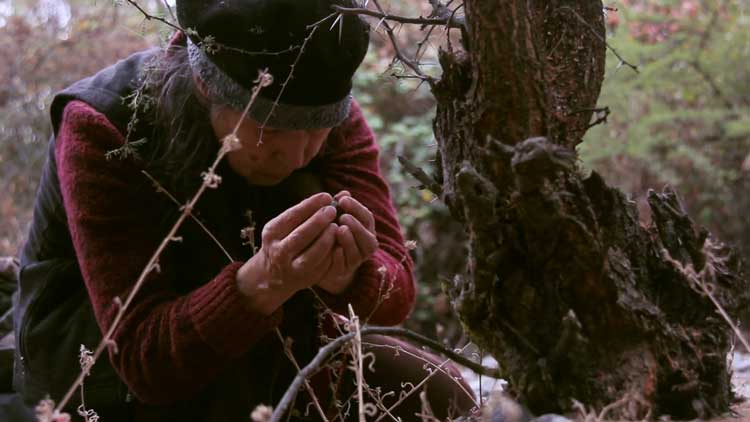
Cecilia Vicuña, Semiya (Seed Song), 2015, film still. Courtesy: Cecilia Vicuña, Electronic Arts Intermix (EAI), New York. © Cecilia Vicuña, Bildrecht Wien / Vienna 2026.
Next, The Craftocene by the phenomenal London-based design studio Superflux highlights the Welt Museum Wien’s commitment to addressing fundamental questions about the future and engaging in the climate conversation that the biennale brings to the fore. Claudia Banz, director of the Welt Museum, says: “Superflux practises a kind of speculative ethnology. Instead of merely documenting cultures, they translate social, ecological and technological dynamics into concrete future scenarios.” At the heart of this ethnographic museum, three major works by Superflux are shown together to great effect. Refuge for Resurgence (2021), Nobody Told Me Rivers Dream (2025) and Relics of Abundance (2026). The term “Craftocene” was coined by Superflux in 2020 and imagines a possible era beyond the Anthropocene. As Superflux founders Anab Jain and Jon Ardern explain: “The Craftocene is our chance to imagine different ways of being, the writing of a collective myth that we shape together. As we attempt to plot a path beyond the waste of the Anthropocene, this kind of endeavour has never been more urgent.”
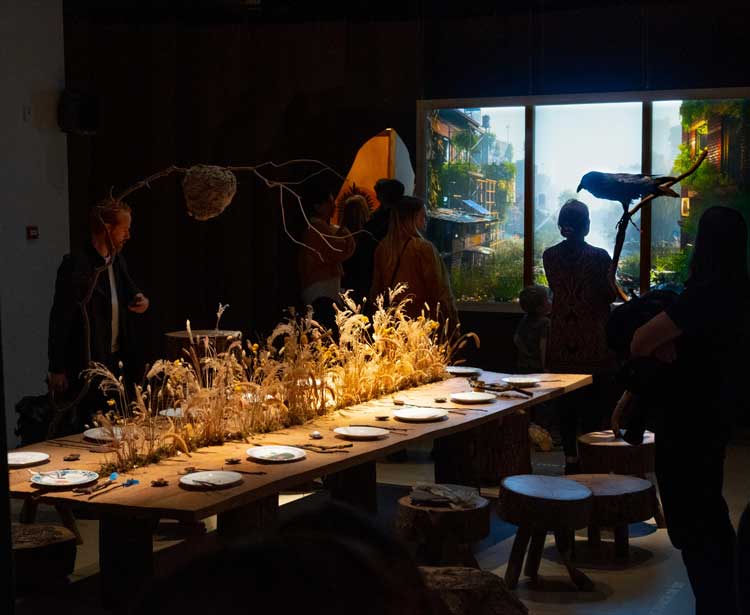
Superflux, Refuge for Resurgence, 2021. © Superflux.
Refuge for Resurgence considers the “more-than-human” idea that nonhuman entities also shape our lives – climate, bacteria, digital systems, materials, animals, fungi and so on. A banqueting table is set for a “more-than-human” feast. The story that unfolds is one of the collapse of the Anthropocene and the development of animal-human relationships and communities that indicate a return to care, responsibility and respect for the Earth. This is a space of mythic time where each guest has an equal space at the table.
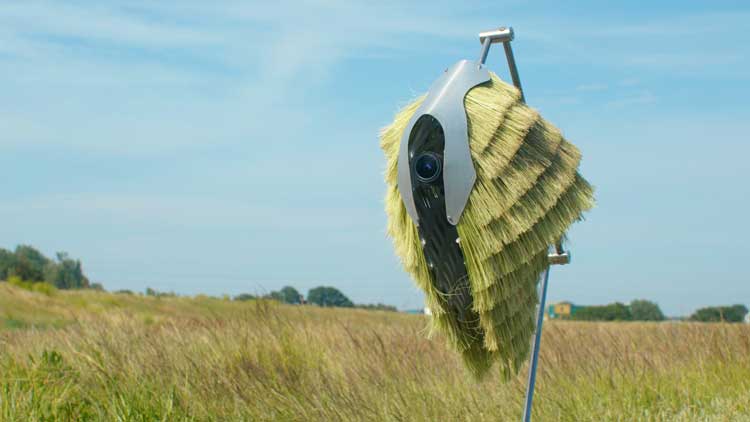
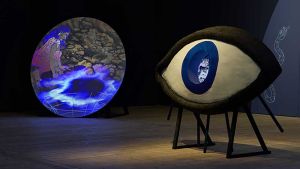
Superflux, Nobody Told Me Rivers Dream, 2025. © Superflux.
In Nobody Told Me Rivers Dream, Superflux associate the idea of the Craftocene with the present day, connecting craftsmanship and knowledge with artificial intelligence. It is a difficult concept to understand, but the point is that meteorological knowledge and ancient expertise, linked here with AI, are part of living cultures, thus making the line between AI and craftsmanship more difficult to discern. As the text explains: “Instead of humans prompting AI, the river uses AI to prompt us. Inviting us to slow down, to listen to the language of the living world that moves within us, to fall back into rhythm with the knowledge of the river once again.”
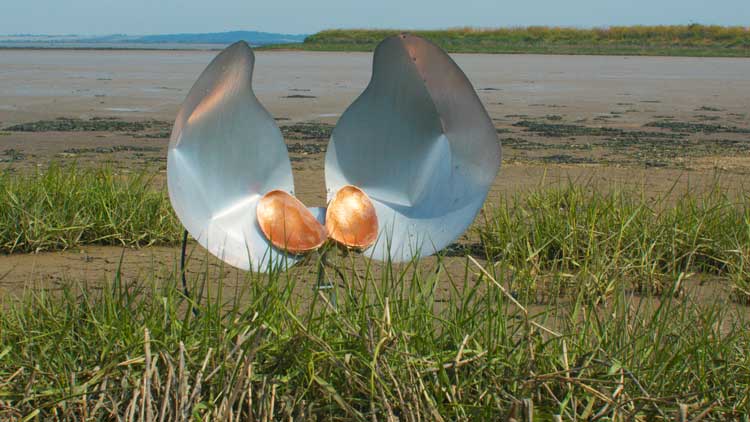
Superflux, Relics of Abundance, 2026. © Superflux.
Relics of Abundance, which was made specifically for this show, is a masterclass in critique of consumption and sustainability. Design and consumer brand products are shown in dialogue with objects from the museum to highlight connections when it comes to the relationships between humans, objects, resources and the environment. The space was established as one of reverence and visitors are requested to remain quiet here as it houses ceremonial objects – a ceremonial seat, a shrine, a string of prayer beads and references the devotional practices associated with them. Among this we have The Binding Seat, a contemporary designer chair, damaged and bound. In front of it is Obsidian Mirror, an iPhone placed on a stand, an object for contemporary devotion. Beside it is Lamp of Consumption, a designer table lamp that has become a vessel for ritual.
Superflux’s engagement with the collection at Welt Museum Wien and with Klima Biennale Wien 2026 is a superbly intelligent and thoughtful one. It points to problems we know we are making for the Earth – problems that we already know about, but that always bear restating. Further, it offers fascinating speculative futures that set the mind racing with these and other possibilities. As Superflux themselves explain: “It is an honour for Superflux to be included in the Klima Biennale, as a Partner in Climate with our colleagues and friends in Vienna. As the outside world continues to accelerate in a tragic direction, a primary way to resist is to fiercely imagine other ways of living, and collectively bring more hopeful futures to life. We hope visitors who enter The Craftocene will join us in crafting more hopeful stories for humanity.” It is a tour de force of an exhibition, and full credit to Banz for having the vision to extend the invitation to Superflux. This, and the other institutional shows at Kunst Haus Wien, and also at Foto Arsenal Wien, make visiting this Biennale worthwhile.
• Seeds: Reclaiming Roots, Sowing Futures is at Kunst Haus Wien until 14 February 2027; and Superflux: The Craftocene is at Welt Museum Wien until 16 August 2026.
Click on the pictures below to enlarge

Copyright © 1893–2026 Studio International Foundation.
The title Studio International is the property of the Studio International Foundation and, together with the content, are bound by copyright. All rights reserved.
 |
 |
 |
|---|
-1000-300.jpg)