



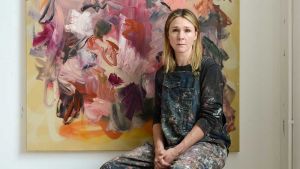
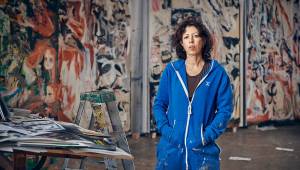
-Cecily-Brown-Photo-(c)-Jo-Underhill.jpg)
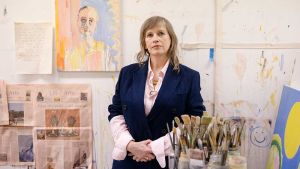
Cecily Brown: Picture Making, Serpentine South, 2026. © Cecily Brown. Photo: © Jo Underhill.
Serpentine South, London
27 March – 6 September 2026
by ANNA McNAY
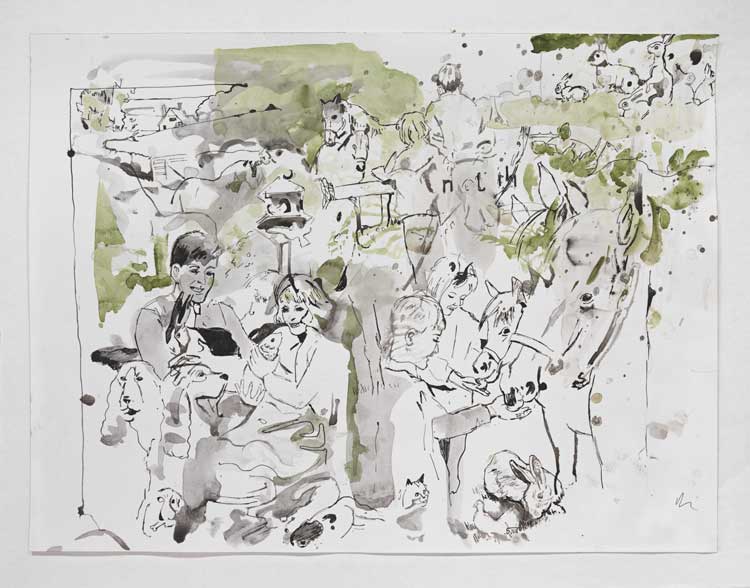
Looking at one of Cecily Brown’s paintings is a process, and not one that can be rushed. Describing it as akin to taking your eye for a walk, Brown also notes that she doesn’t want her process and struggle to show: “I want it to look effortless”.1 Indeed, she has been described as following in the footsteps of the abstract expressionists, but, at the same time, her work has also been labelled as “from Rubens to Bruegel”. “I look at everything,” she retorts. “Everything finds its way into the work.” And by everything, she means everything, including drawings from the television, copies of old master paintings, and sketches from illustrations of nursery rhymes and fairytales, including Beatrix Potter and Orlando the Marmalade Cat. Certainly, entering one of her pictures feels like an adventure, and an enjoyable one. I could happily spend several hours with each one, mixing in my own associations and memories to create a unique and wonderful experience.
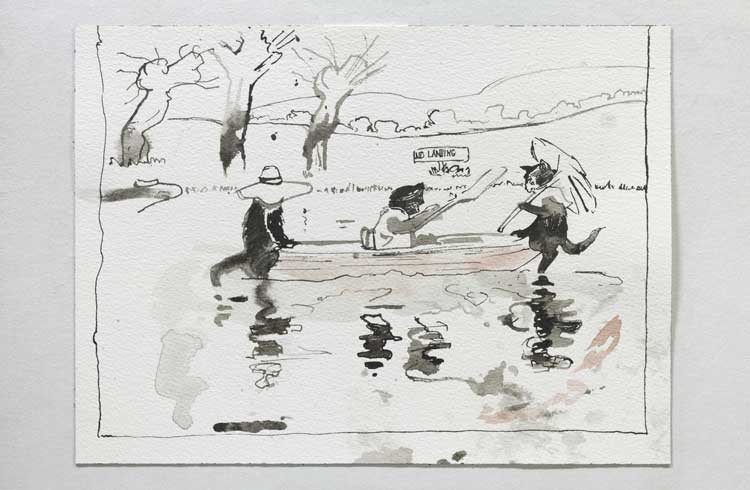
Cecily Brown, Untitled (from Three Kittens in a Boat), 2024. Ink and watercolour on paper, 22.86 x 30.48 cm (9 x 12 in). © Cecily Brown, 2026. Photo: Genevieve Hanson.
Brown, who is showing new and recent works at the Serpentine South Gallery, was born in London and brought up in the Surrey countryside, but has lived in New York for more than half her life. Trained at the Slade at a time when, she suggests, the painting being produced was “muddy”,2 she has spent her ensuing years “trying to shake off [her] own style”. For this reason, she often begins by copying a figure from someone else’s piece of work, noting: “I realised that if I start with someone else’s image, it’s a way to stop everything becoming abstract too quickly, because a lot of the time, I’m just struggling to pull a figure back in.”3
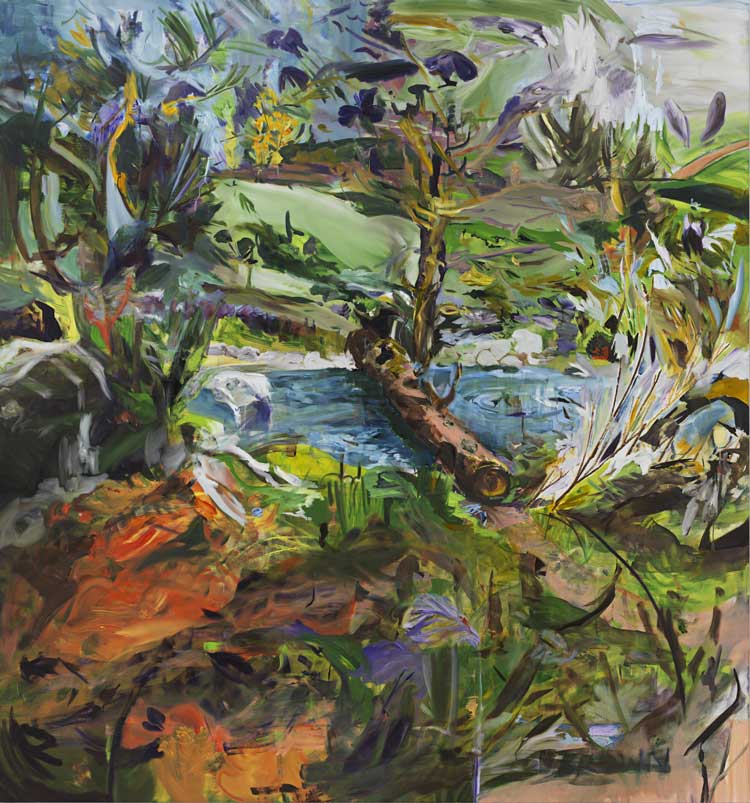
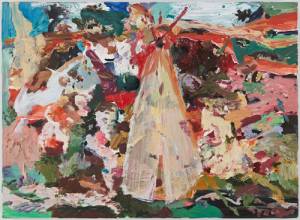
Cecily Brown, Nature Walk with Paranoia, 2024. Oil on linen, 226.06 x 210.82 cm (89 x 83 in). © Cecily Brown, 2026. Photo: Genevieve Hanson.
For the Serpentine exhibition, set in the heart of Kensington Gardens, Brown has focused on works responding to nature. In fact, the first six works are all of a very similar composition, with titles varying from Nature Walk with Paranoia (2024) to Nature Walk in Black and White (2024), which does what it says on the tin, to The Charmed Water (2024), in which the sky has turned a thunderous grey. While each work is fascinating by itself, with its scrubland, stream, fallen tree and suggestion of animals amid the bullrushes, so is it even more thrilling to move from one to another, playing a kind of “spot the difference” as you go.
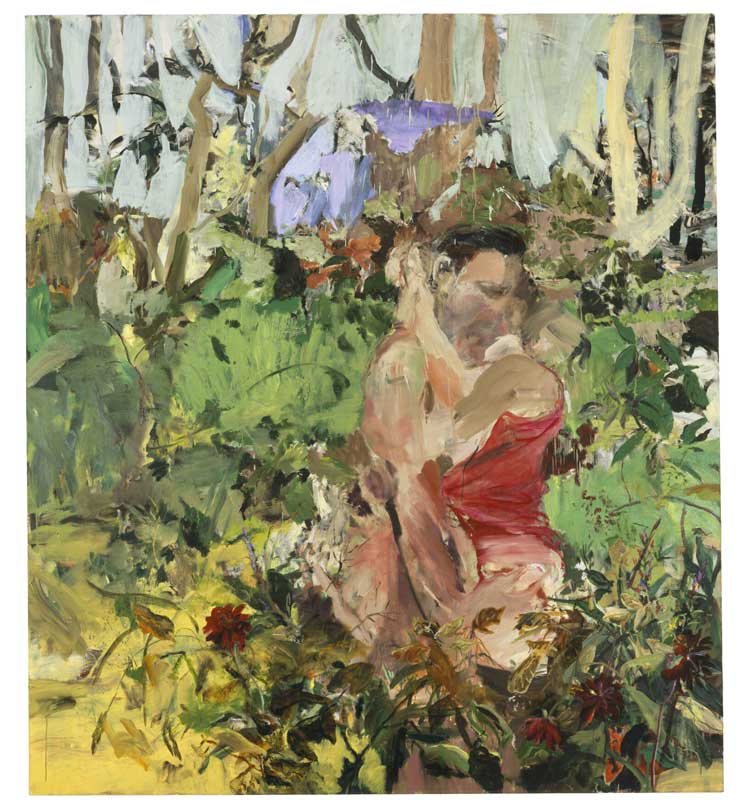
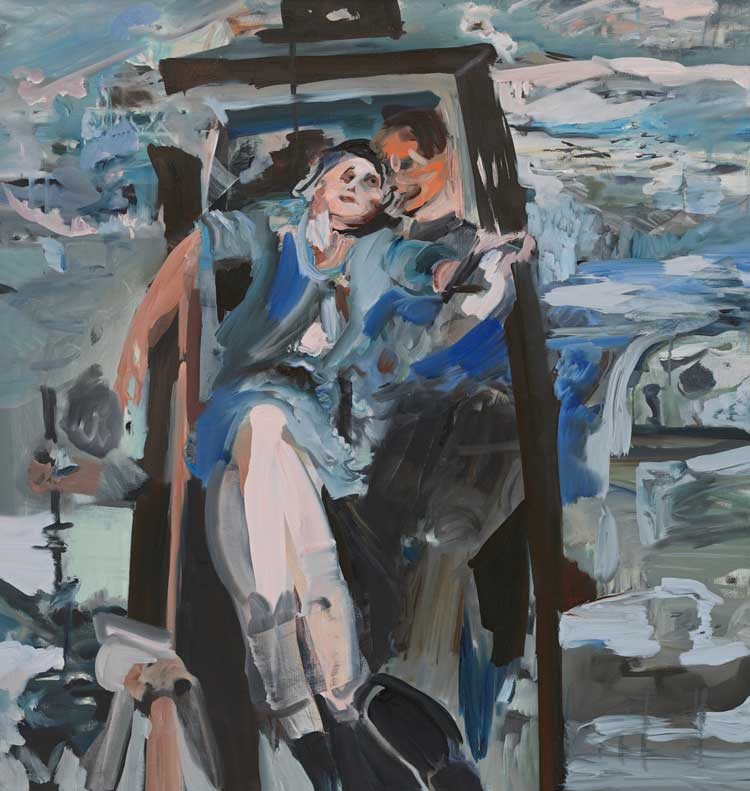
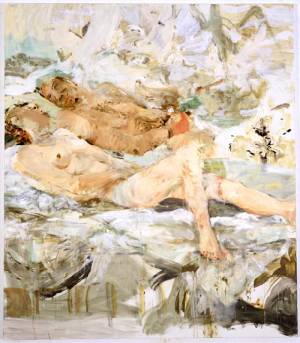
Cecily Brown, Couple, 2003–04. Oil on linen, 228.6 x 203.2 cm (90 x 80 in). FAMM (Female Artists of the Mougins Museum), France – The Levett Collection © Cecily Brown, 2026. Photo: Courtesy Gagosian.
In Couple (2003-04), a pair of lovers caress amid the overgrowth, the crimson of her vest highlighting their otherwise bare flesh; in Teenage Wildlife (2003-04), it is the white of his shirt and darkness of her pubic hair; while in Terry and Julie (2025), it is the pale areola of her otherwise dark skin. In Canopy (2004), perfect green leaves hang amid mere suggestions of a tree, and the flash of turquoise could as easily be a bird as it could the sky. In the bottom right-hand corner, a pale lemon yellow brings to life the end of a fallen trunk; above, a vibrant sunshine yellow peeps through the branches. In Brown’s hand, mere dabs of colour can conjure up vivid and complex landscapes. In The Last Shipwreck (2018), on the other hand, a bold sea blue is embroiled with peaches, oranges, black and white, and the outcome is much more a visceral feeling of weight and catastrophe than anything visual. Brown speaks of painting traditionally capturing a moment frozen in time, but her own wanting to know what happened five minutes later; it seems almost as if her dynamic swirls of colour answer that question, capturing what today’s mobile phones would call a “live” image.
As the title of the exhibition – Picture Making – suggests, it is a process for Brown in the making as much as for her viewer in the looking. Drawing is at the centre of her practice, and she describes it as a way of absorbing and understanding images. “I can copy a Bruegel and understand it 10 times better than just looking at it,” she notes. The image inspiring the Nature Walks series, however, came from a jigsaw Brown’s sister gave her. It shows a tamed wildness, she says, something highly artificial. The exhibition as a whole is “a love letter” to city parks. “In the city, you can have a miniature version of the country, but in the country, you can’t have the city,” she says, riffing off Andy Warhol.4 Despite having lived in New York for 32 years, she has not once painted the city.
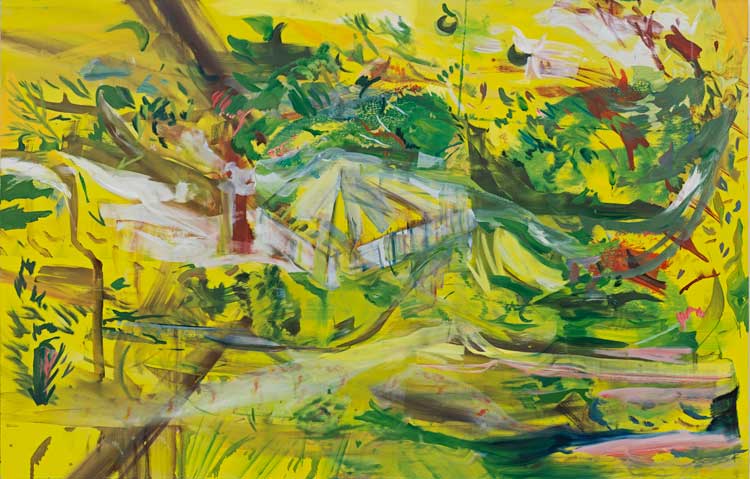
Cecily Brown, The Serpentine Picture, 2024. Oil on linen, 119.38 x 185.42 cm (47 x 73 in). © Cecily Brown, 2026. Photo: Genevieve Hanson.
Returning to the idea of process, Brown plays with moving the paint around on her canvas, one brushstroke leading to the next, necessarily not knowing what she is aiming for. In her larger works, there is something theatrical, a trace of the body; her smaller pieces, in contrast, are much more intimate, and, with that, much more intense. She has always made a point of changing up the scale of her works, insisting that there is no hierarchy, and the exhibition intersperses smaller works among the larger deftly proving this point. In the central space, a couple of small works hang up at the top of the wall, where they cannot really be seen, but this forces the visitor to take a new perspective.
Viewing the larger, lower works requires perpetual movement, zooming in, deep into the luscious swathes of greens and limes, lilacs and oranges, and zooming out to focus. If you squint at them, all manner of things become visible; Brown’s subject is at once revealed and concealed. No one work can be read by a single glance. The glimpses between rooms are important, too, drawing you in and on, even before you are ready.
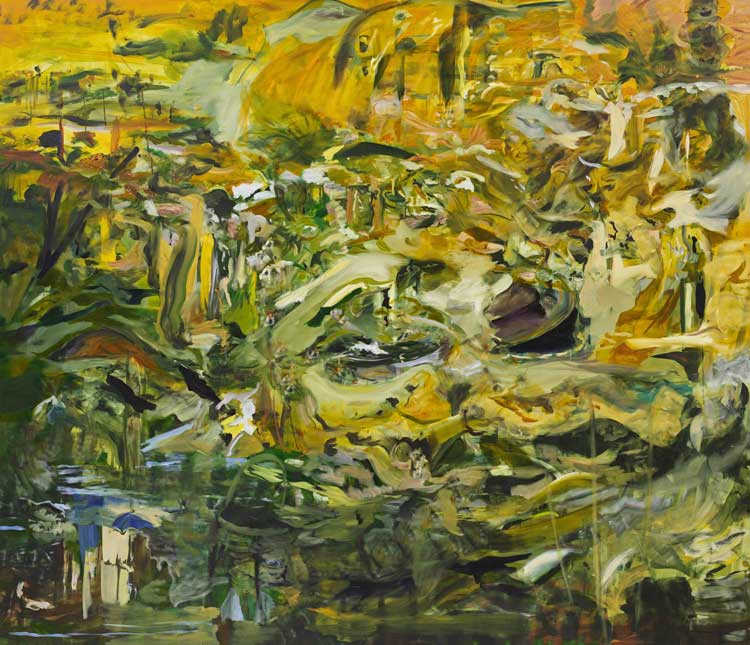
Cecily Brown, A Round Robin, 2023–24, Oil on linen, 226.06 x 261.62 cm (89 x 103 in). © Cecily Brown, 2026. Photo: Genevieve Hanson.
There is a lyrical quality to Brown’s works and her titles (which are often very matter of fact), for example A Green and Pleasant Picture (2024), but not everything is rose-tinted, for nature also has its cruel – and even murderous – side, and this is not something from which Brown shirks. The lime green of this painting could either represent lush, healthy grass or toxic, sickening water. Perhaps, were one looking for an artist to whom to compare Brown’s oeuvre, one ought to consider Hieronymus Bosch, with his Garden of Earthly Delights (1490-1510), which equally comprises a good many anti-delights. The monotype and watercolour Hunt (2019) goes so far as to bring to mind Picasso’s Guernica (1937). “I don’t have a message to get across,” says Brown, “so the subject is always just painting and how to push painting. I’m thoroughly absorbed by that.”5 It is with pleasure that I can reply: “And so are we.”
References
1. Unless otherwise stated, all quotes are from Brown’s speech at the press view for the exhibition on 26 March 2026.
2. In Conversation. Cecily Brown and Hans Ulrich Obrist, in exhibition catalogue, Cecily Brown: Picture Making, Serpentine and Verlag der Buchhandlung Walther und Franz König, 2026, page 68.
3. ibid, page 70.
4. ibid, page 74.
5. ibid, page 72.
Click on the pictures below to enlarge
-Cecily-Brown-Photo-(c)-Jo-Underhill.jpg)

Copyright © 1893–2026 Studio International Foundation.
The title Studio International is the property of the Studio International Foundation and, together with the content, are bound by copyright. All rights reserved.
 |
 |
 |
|---|
-1000-300.jpg)
 Cecily Brown
 Cecily Brown: ‘In a way you can see things more clearly when they’re small’
 Cecily Brown: Paintings