




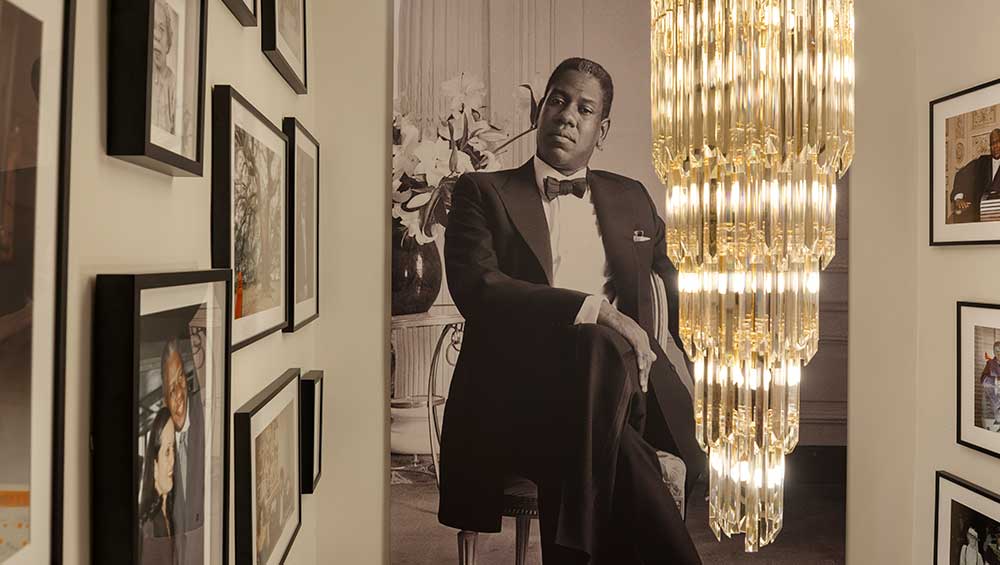
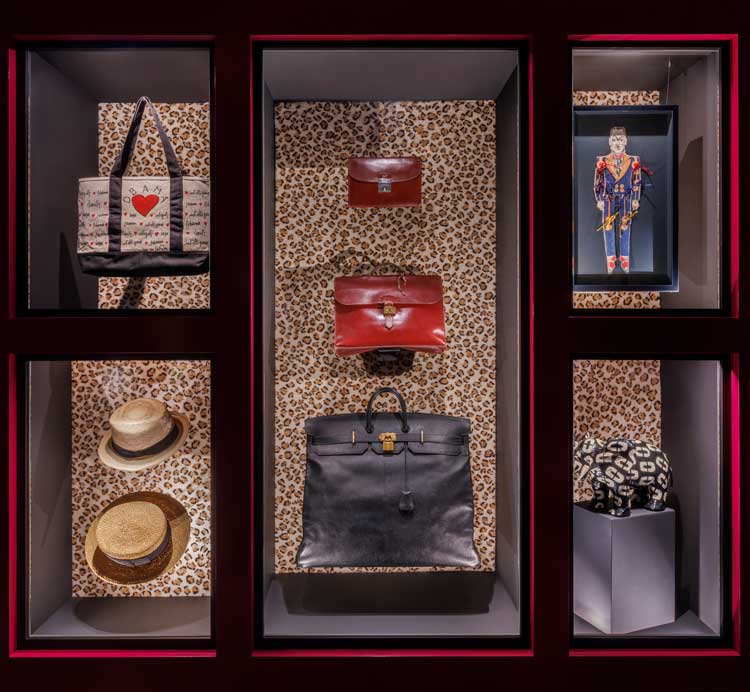
Installation view, André Leon Talley: Le Style est Éternel at SCAD FSAH Lacoste. Photo courtesy SCAD.
by LILLY WEI
André Leon Talley: Le Style est Éternel (1 April – 31 October 2026) is the first exhibition in France dedicated to the late fashion legend, influential Vogue former editor, and ardent Francophile who died in 2022 at the age of 73. It takes place in Lacoste, a medieval Provençal village that is home to a branch of the Savannah College of Art and Design (SCAD) over which towers the ruins of the infamous Marquis de Sade’s chateau. While still an extravaganza, it is a smaller edition of the show that was exhibited in Atlanta and Savannah, Georgia last year. This somewhat pared down, more intimate presentation, however, only amplified its impact.
It seemed as if we were entering into Talley’s White Plains house, the charismatic, larger-than-life figure (he was 6ft 6in tall) about to appear to greet us, garbed in one of his splendid ensembles. From the depth of the South and the back of the bus, Talley fought his way to the front rows of fashion’s most exclusive events, surrounded by a circle that included Diana Vreeland, Andy Warhol, Anna Wintour, Karl Lagerfeld, Yves Saint Laurent, Tom Ford, Marc Jacobs, John Galliano, and many other illustrious names from its pantheon.
.jpg "Tuyen Huy Vu")
Tuyen Huy Vu's painting of André Leon Talley as Louis XlV, based on Hyacinthe Rigaud's 1701 portrait of Louis XIV. Photo courtesy SCAD.
In the show is an amusing painting given to him by New York Times columnist Maureen Dowd that shows him as Louis XIV, his face substituted for the French monarch in a copy of a well-known portrait by Hyacinthe Rigaud. In it, Talley swathed in ermine and a rich blue cape festooned with fleur-de-lys, looks every inch a king.
The following is an edited, excerpted conversation about Talley and Le Style est Éternel with Rafael Brauer Gomes, the exhibition’s curator and the creative director of SCAD FASH museums.
Lilly Wei: Why do you think André Leon Talley matters?
Rafael Brauer Gomes: For many reasons, but perhaps the most important is that André was the first man of colour who found a place at the top tier of the fashion world. It wasn’t easy for him. He had to fight his way there; he had to fight racism and homophobia and that must be remembered. He should be celebrated as a great figure in American and global fashion history.
LW: Could you talk a little about how he achieved that, how he overcame those hurdles?
RBG: I think it was because he hung in there. He showed up. And perhaps most of all because of the scope of his astonishing knowledge. It was his superpower. Before Google, there was André. He knew it all. He was indispensable. I was always so impressed by his knowledge and how he could consume so much information and retain it. His memory was photographic. He could talk about any topic, but he was especially knowledgable about art, history, and, of course, about fashion. It was like taking a course on the fashion world, on culture, listening to him.
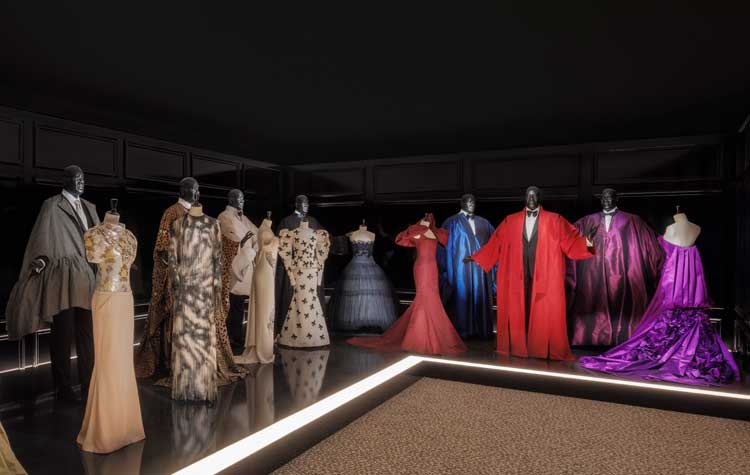
Installation view, André Leon Talley: Le Style est Éternel at SCAD FSAH Lacoste. Photo courtesy SCAD.
LW: How did you meet him?
RBG: Before I joined SCAD 20 years ago, I was in London at Vivienne Westwood and André and Vivienne were friends. I was very lucky to meet him then. He was also a close friend of SCAD president and founder Paula Wallace. They were creating fashion exhibitions at SCAD, inviting designers such as Vivienne to Atlanta and Savannah, Georgia. André brought me to SCAD for the project – and I’m still there.
LW: How did you make the selection for this show? To say he was a maximalist seems an understatement.
RBG: True. And it was difficult. It was about six months after his passing, and it was very emotional to see all those pieces of his that were known from newspapers and other publications. Some of them were folded away, some were on hangers, and some bunched in plastic bags. It was picking the highlights of his life to create a story that we could show.
LW: It must have been fascinating to see the evolution of his style through the years. Did anything surprise you?
RBG: I was most surprised – and impressed – by the sheer quantity and beauty of the things in his house: the books, clothes, shoes, ties, hats, handbags, the accessories, the amazing collection of classic films. It was immersive.
LW: Would you describe his house?
RBG: It was a big house in White Plains and very comfortable. He lived alone there. He loved leopard skin and nearly everything was carpeted with it – except the ceilings. And art was everywhere. Photographs were also everywhere from different times in his life. They were of his friends and all the celebrities he knew, the models, film stars, designers, socialites, artists, and it included signed photos by Horst P Horst, Jonathan Becker and other famous photographers. They were all showcased in this house, all the people he worked with, their presence part of the house, part of the narrative of his life.
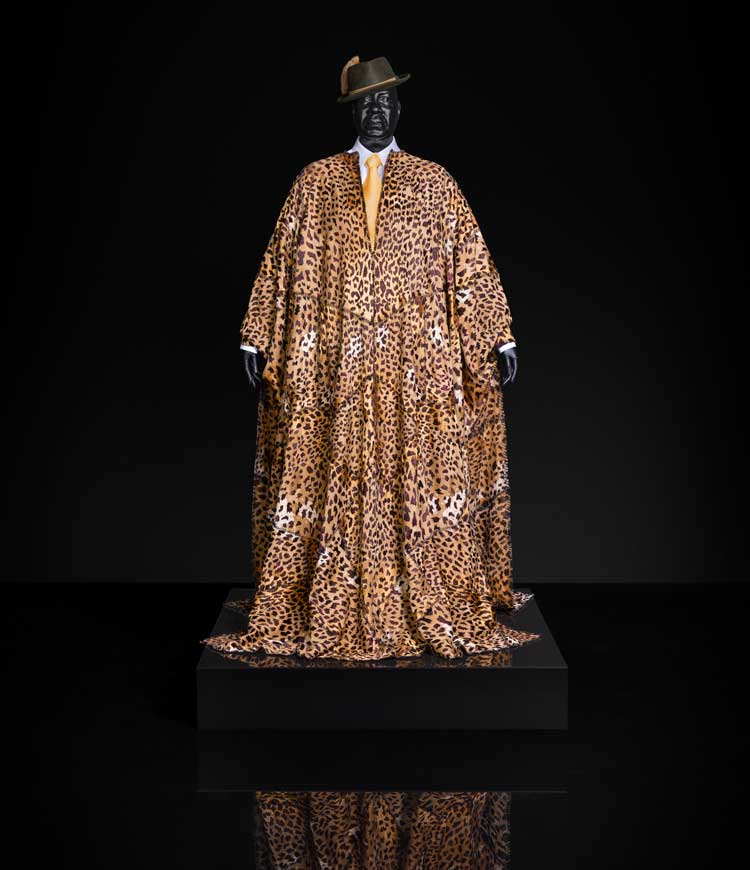
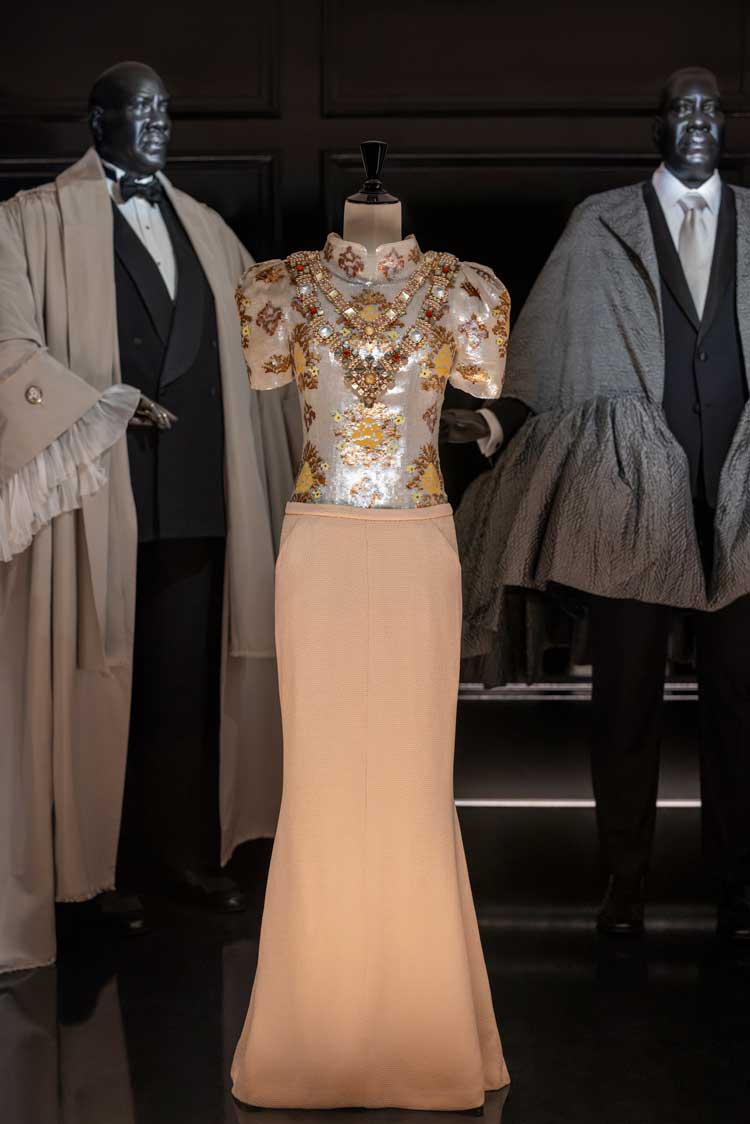
Leopard caftan, Yves Saint Laurent by Tom Ford. Photo: Allen Cooley for SCAD.
LW: One of the featured looks in the exhibition is the caftan, his signature garment from his later years that made him appear glamourous, operatic, like a Japanese shogun or an imperial French king, someone who could not be overlooked.
RBG: He was incredibly fashionable. He always loved long dramatic coats and from coats he went to tunics and from tunics to capes and caftans which you can see in the show. And his body was changing. All the big designers created bespoke pieces for him, including Nicolas Ghesquière when he was at Balenciaga, and Vivenne Westwood, Tom Ford, John Galliano and Karl Lagerfeld, who designed the remarkable scarlet cape for André when he was at Chanel. Often, they were for the Met Gala.
LW: Would you talk a little about his relationship with young designers and with SCAD.
RBG: He mentored so many SCAD students and young designers and he got them jobs, too. He came to Atlanta and Savannah often to talk to students and to curate shows. Because of his close ties to Paula and to the school, he left much of the contents of his house – clothing, accessories, photographs, letters and other memorabilia – to SCAD’s permanent collection.
.jpg "Tom Ford, red silk taffeta kimono. Installation view, André Leon Talley: Le Style est Éternel at SCAD FSAH Lacoste. Photo courtesy SCAD.")
Tom Ford, red silk taffeta kimono. Installation view, André Leon Talley: Le Style est Éternel at SCAD FSAH Lacoste. Photo courtesy SCAD.
LW: Would you say that his mentoring was a crucial part of his legacy?
RBG: It was certainly important, but I think of him as an activist; there are not that many in the fashion world. He made it a place of greater diversity. Before him, it was mostly monochromatic. Because he suffered so much discrimination as a gay Black man, he fought against racism and homophobia always, opening doors for so many. That, I think, might be his greatest legacy.
LW: What was your response to him?
RBG: I was so intimidated when I first met him. He looked so fabulous. But he was also so gentle. I was surprised. And it was his knowledge. I said it earlier, but I was always so impressed by what he knew. I learned so much by just listening to him. He wanted everything to be perfect – as he said, “perfect, perfect, perfect”. Good was not enough. It had to be marvellous. He taught me that I should always aspire to do the best that I can and to not take shortcuts, to care about details. For one example, the mannequins in the show are completely dressed, even if you can’t see what they are wearing underneath. They wear shoes, even if covered by long garments, and they wear shirts, even if you get only a peek.
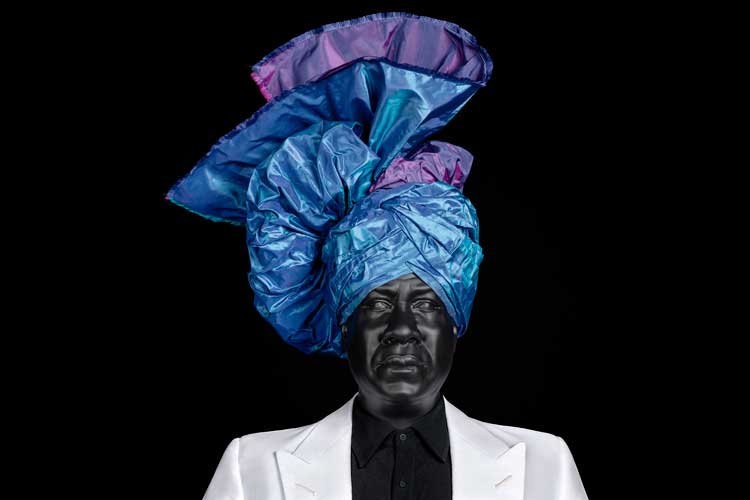
LW: The mannequins were modelled on him I was told – his height, his face. They are certainly imposing.
RBG: Yes, Stephen Hayes, a SCAD alum, created them.
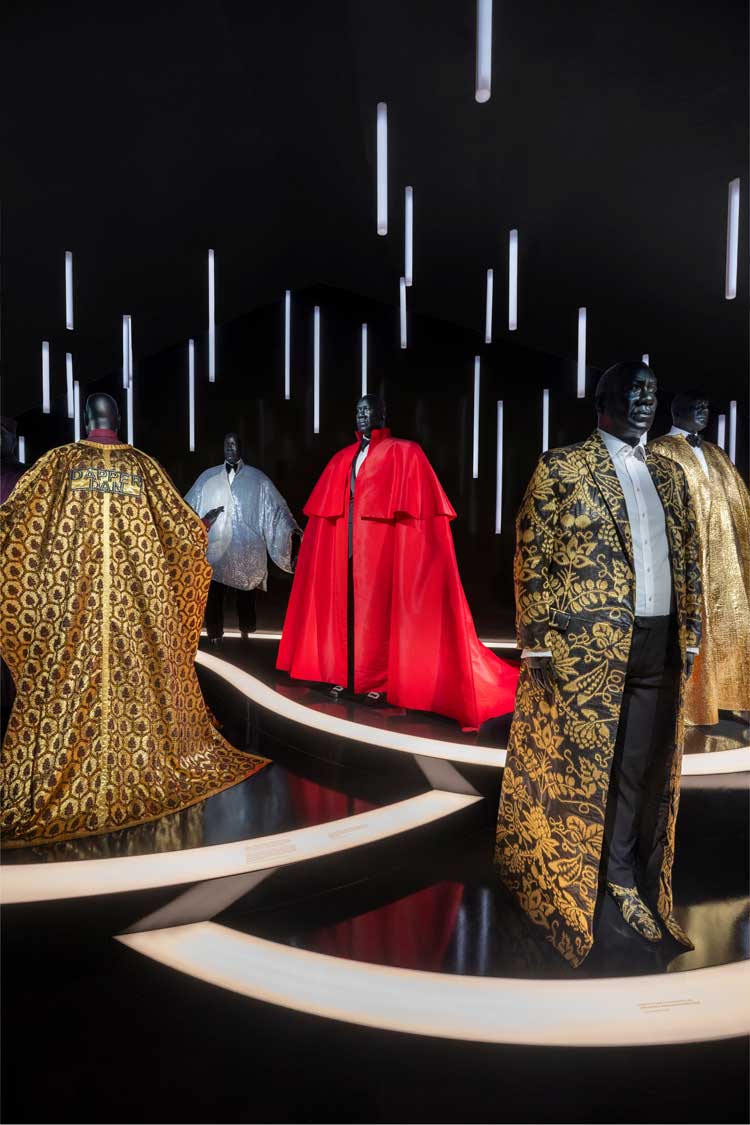
Installation view, André Leon Talley: Le Style est Éternel at SCAD FSAH Lacoste. Photo courtesy SCAD.
LW: Tell me a little about the structure and organisation of the exhibition. You had so much to choose from.
RBG: We started to plan this exhibition when André was still alive. He wanted to highlight the designs, arranging them in groups. This show is still organised by groups, keeping the designers together. But we also wanted a timeline beginning with the early years, the 1990s and 2000s, and the bespoke tailoring, when his body size was smaller. Then came the transition to longer coats, tunics, capes and caftans. The first gallery was white because white was such an important colour for him. He associated it with his grandmother who raised him and was the single most important person in his life. When he thought of his grandmother, he thought of white gloves, crisp white linens and shirts (there is a photo of her in the show which he cherished). And he said, if he could, he would have bottled the smell of clothes drying outside in the sun. The second gallery was high gloss, shiny, like the pages of Vogue, celebrating André as one of its most influential editors and a celebrity in his own right. And at the very end, there is the red room with a red carpet for all the red- carpet moments that defined his life. He was a complete style icon. And we wanted the show to celebrate that.
Click on the pictures below to enlarge

Copyright © 1893–2026 Studio International Foundation.
The title Studio International is the property of the Studio International Foundation and, together with the content, are bound by copyright. All rights reserved.

 |
 |
 |
|---|


-1000-300.jpg)


 From Power Lunches to Public Sculpture
 A Walk Down One Fashion Magazine