




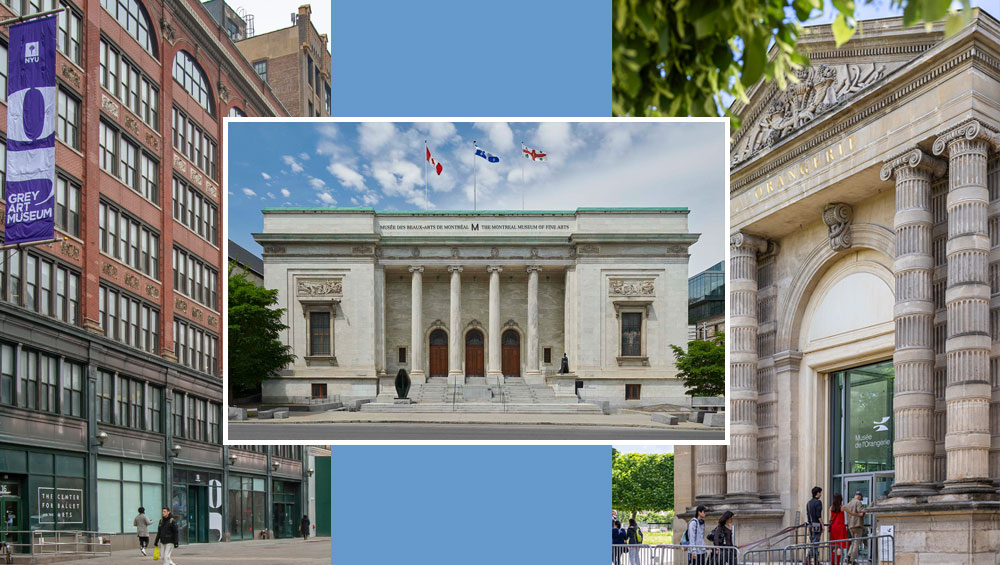
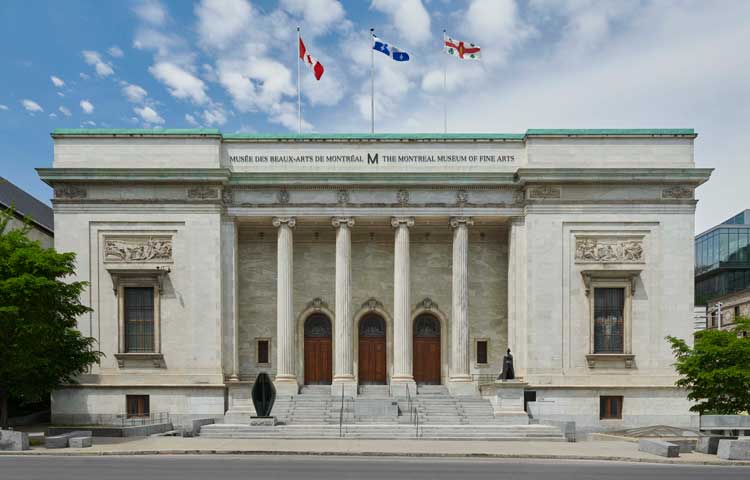
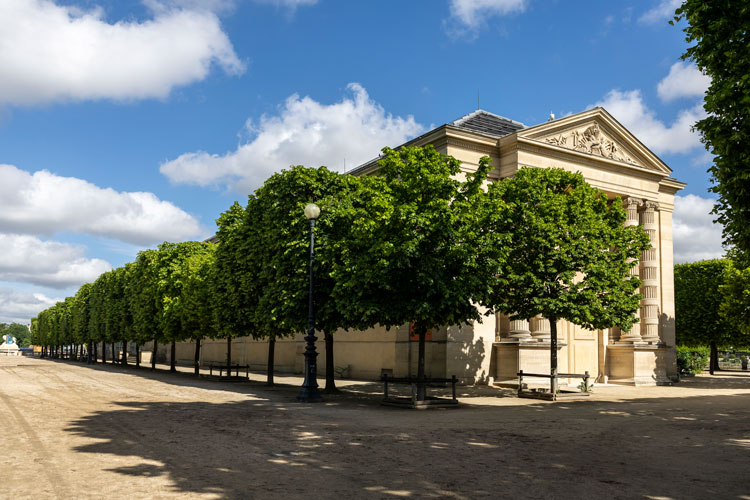
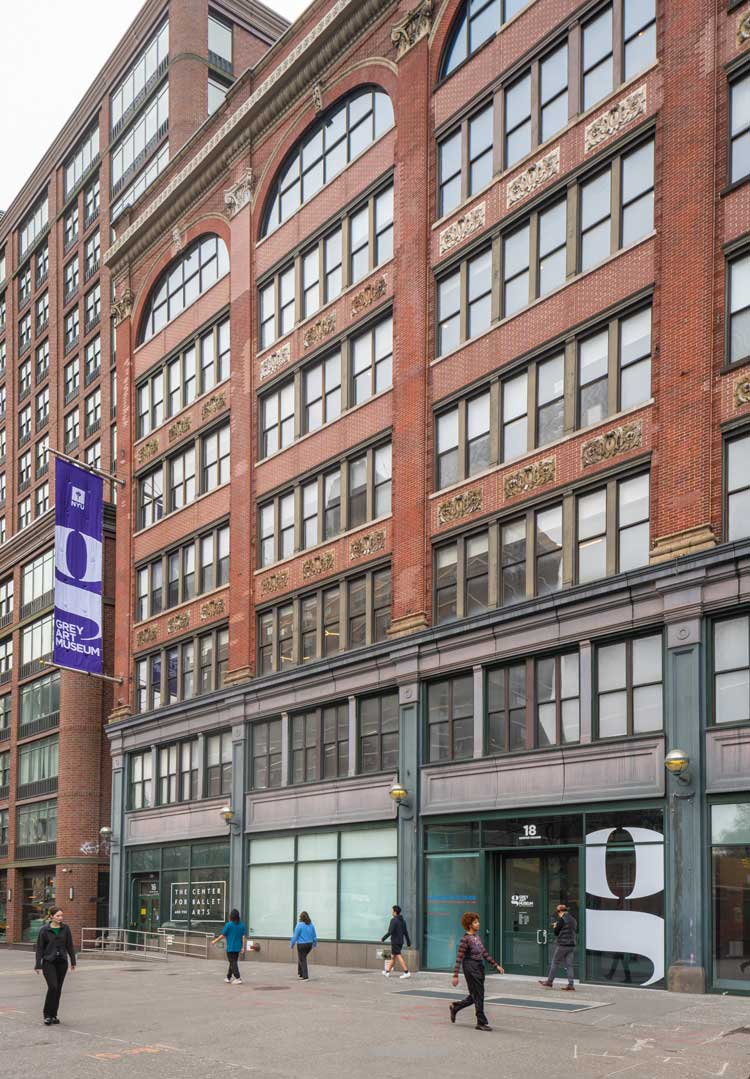
From left to right: The Grey Art Museum in New York, the Montreal Museum of Fine Arts and the Musée de l’Orangerie, Paris. Photos: Grey Art Museum, Aislinn Weidele courtesy of Ennead Architects; MMFA, Annie Fafard; Musée de l'Orangerie, Alexandra Lebon.
by SABINE SCHERECK
Gabriele Münter in Madrid and Paris; Frans Hals in London, Amsterdam and Berlin; Edvard Munch in Williamstown in the US, Potsdam and Oslo. Exhibitions on these artists have, in the past few years, toured across Europe and beyond. In May 2025, the show celebrating the pioneering Parisian avant-garde gallerist Berthe Weill that had opened in New York, travelled to Montreal in Canada. It then crossed the Atlantic to Paris. But are these touring exhibitions, which have the same, or similar, titles and billings truly the same? Would a visitor to the Weill exhibition at the Grey Art Museum in New York have had the same experience as someone who saw the show at the Montreal Museum of Fine Arts or at the Musée de l’Orangerie?
To find out more, I have traced the journey of that exhibition. Its curators provided valuable insights into the many factors that come into play when presenting an exhibition at different venues and how this prompts changes. Looking behind the scenes also brought into view the unsung heroes of travelling exhibitions: the registrars and conservators. They are key to getting the artworks moved and their involvement reveals what a major undertaking a touring exhibition is.
A basic factor determining the way an exhibition is presented and experienced is the venue: its size, layout and style – is it a modern or historic building? Another aspect to take into account is the audience and its relationship to the subject. Which raises the question: why have these three venues chosen to present this exhibition about Weill?
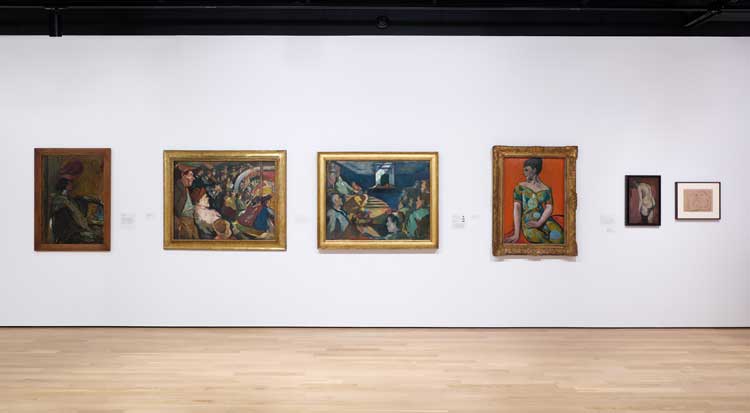
Installation view, Make Way for Berthe Weill: Art Dealer of the Parisian Avant-Garde, Grey Art Museum, New York. Photo: Simon Cherry.
Lynn Gumpert, curator and former director of Grey Art Museum at New York University, says: “I’ve been working on this project for 11 years. I first was introduced to Berthe Weill by [the late] Julie Saul.” An art historian and a dealer, Saul had read Michael FitzGerald’s book Making Modernism: Picasso and the Creation of the Market for Twentieth-century Art, which briefly mentioned that the very first dealer to sell works by Pablo Picasso in Paris in 1900 was Weill. Gumpert was intrigued as she had never heard of Weill. “More research needed to be done and all we knew about her was in her memoir, Pan! Dans l’Oeil!,” she says. The memoir, published in 1933, had never been translated. A first edition was in the library at New York’s Museum of Modern Art. Weill’s significance was immediately evident – she was the only dealer to give a show to Amedeo Modigliani during his lifetime and she mounted Diego Rivera’s first solo show in Paris. Gumpert had already set her mind on creating an exhibition about her and recalls: “I knew we would need a partner to do this exhibition because we were going to try to borrow Picassos and Modiglianis and Riveras.” As a university museum, the Grey Art Museum has a modest budget. Its focus is on education and, as such, it doesn’t generate income in the same way as the Montreal Museum of Fine Arts and the Musée de l’Orangerie. “The Grey Art Museum is a small university museum, but we’re in the middle of New York City and we present ambitious exhibitions known for their scholarship,” says Gumpert. This gives it the freedom to explore emerging research subjects outside the mainstream.
Gumpert got in touch with Marianne Le Morvan, the leading scholar on Weill, who came on board as a curator. In Paris, the Musée de l’ Orangerie initially showed an interest in the exhibition, but pulled out when its director changed. “I really had a hard time finding other museums to partner with us once the Orangerie had said no. I approached other institutions in Europe, the Courtauld Gallery and lots of museums in the US.” Fate took a turn when she contacted Nathalie Bondil, then director of the Montreal Museum of Fine Arts (MMFA), who immediately agreed to co-organise the show. She had studied art history in France. After Bondil’s departure, staff at the MMFA were still keen to continue with the exhibition and, using their strong ties with French museums, they persuaded the Musée de l’Orangerie, which was then preparing a series on art dealers, back on board. Besides having a strong collection of French art, Montreal was also a strategic location: With an English- and French-speaking community, it served as a perfect link between New York and Paris.
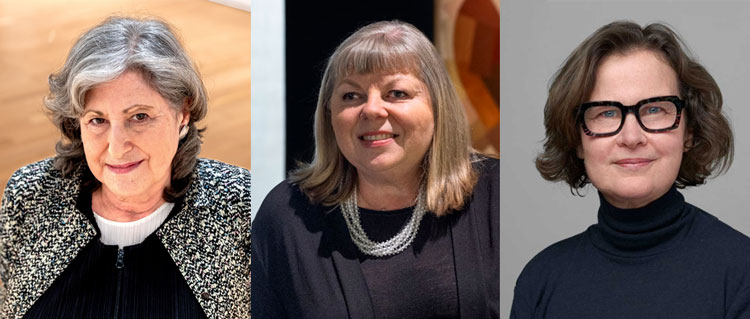
Left to right: Lynn Gumpert, Sophie Eloy and Anne Grace (photos by Tracey Friedman; Laëtitia Striffling-Marcu; Jean-François Brière).
Gumpert and Le Morvan were joined by Anne Grace, curator at the MMFA, and Sophie Eloy from the Musée de l’Orangerie. The initial idea was to show works that passed through Weill’s gallery, but the records were patchy and only a few works could be identified, so the focus became to tell Weill’s story and illustrate it with the artists whom she had exhibited. Besides, even if a piece were documented, there was no guarantee it still existed or if it would be lent to the exhibition.
The curators of each venue set out to devise the exhibition for their space and audience based on the resources available.
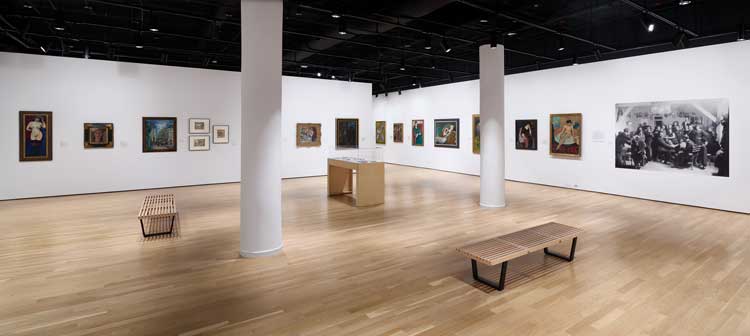
Installation view, Make Way for Berthe Weill: Art Dealer of the Parisian Avant-Garde, Grey Art Museum, New York. Photo: Simon Cherry.
Gumpert had a large ground-floor space in a 1901 brick and glass building that was newly converted into a gallery with white walls. Additionally mounted walls created separate sections to guide the visitor through. She retold Weill’s story by presenting a timeline – her first exhibition, the art movements fauvism and cubism she featured, female artists she championed, and the time between the wars and after the war. For her audience, Gumpert included a section on the Dreyfus affair, which had led to raging antisemitism in France around 1900 and affected Weill, who was Jewish. Because the Grey Art Museum is an educational institution, it was important to Gumpert to inform students and visitors about this significant period in French history with which they might not be familiar – unlike the French audience in Paris. Another section unique to the New York show was the presentation of collectors who bought from Weill.
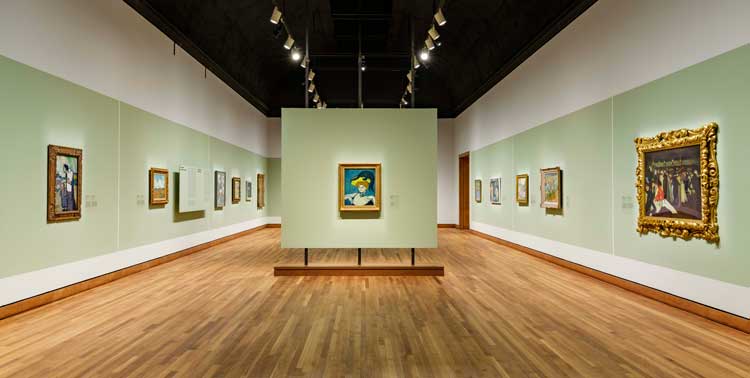
When Grace took over the show at the MMFA, there were different variables to work with. Her gallery space consisted of eight rooms and was bigger than those in New York and Paris. Working with a designer, she added wall colours, mainly in pastel tones, and shortened the wall texts. The ones created by Gumpert served her as a basis. In addition, the texts needed to be produced in French too as Montreal is a bilingual city. Each venue has a house style and at the MMFA this meant wall texts had to be kept to a maximum of 100 words. Grace led into the exhibition by setting the scene – Paris in around 1900 – and then largely followed the narrative outlined in New York. Its illustration through the artworks differed, however. The exhibition can be compared to a play, where the story and the roles remain the same, but the cast – in this case the individual artworks – changes.
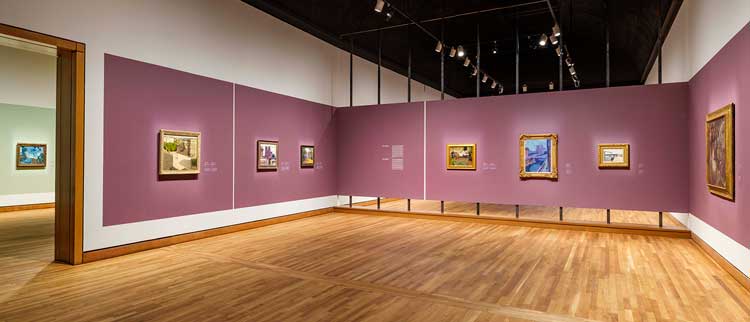
Installation view, Berthe Weill, galeriste de l’avant-garde parisienne, Musée de l’Orangerie, Paris. © Succession Picasso / CARCC Ottawa 2025. Photo MBAM, Denis Farley.
Key artists to feature were Picasso, Matisse, Modigliani, then the artists who created fauvism and the cubism, as well as the female artists Émilie Charmy and Suzanne Valadon, and, last but not least, illustrators of the likes of Théophile Steinlen and Henri de Toulouse-Lautrec. While New York showed just one Picasso (Crouching Woman, 1902), which then travelled to Montreal, Montreal had more than half a dozen Picassos on display, which continued their journey to Paris – except for Crouching Woman and Le Moulin de la Galette (1900), the latter shown only in Montreal. Tracking the sourced works by Matisse tells a similar story: some were at only one venue, others were in New York and Montreal, and a different set appeared in Montreal and Paris, while My Room in Ajaccio (1898) travelled to all three. These are just two examples of the nearly 60 artists associated with this exhibition.
Why didn’t every work appear at all three venues? When creating an exhibition, curators draft a wish list of works they would like to include. Since only a fraction of them are part of a museum’s own collection, they have to be sourced and borrowed from the collections of other museums or private collectors. Grace points to the advantages of the cooperation between three venues for an exhibition: “Each institution has specific links with different institutions, so having a broader network is important. Private collectors are often reticent about lending an artwork for more than one or two venues.” Some museums are also reluctant to lend their works for an extended period, or do not want them to travel a long distance. In some cases, a picture might have already been promised to another exhibition.
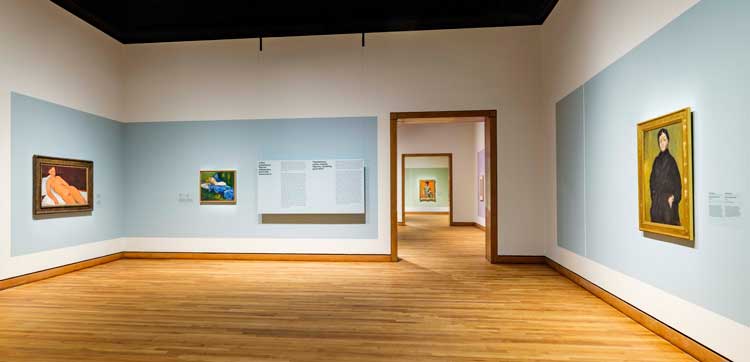
Installation view, Berthe Weill, galeriste de l’avant-garde parisienne, Musée de l’Orangerie, Paris. © Succession Picasso / CARCC Ottawa 2025. Photo MBAM, Denis Farley.
Gumpert says: “A perfect example of that is the Modigliani painting borrowed from the Allen Memorial Art Museum at Oberlin College in the US. We were working very hard to find some nude Modiglianis. We wanted to borrow the one from the Courtauld, but it’s on view all the time because it’s one of their most famous paintings, so they did not want to lend it. So, I had to try to track another one down. Then we found one at Oberlin, which was not on our list, but then we [the Grey Art Museum] couldn’t borrow it because it had already been promised for another exhibition. So, it wasn’t available for the Grey, but it travelled to Montreal and Paris.”
Eloy recalls a similar case: “The works of Suzanne Valadon were really hard to get as there have been many exhibitions on her recently and her works were reserved. There were some works which we really wanted because they were shown in Weill’s gallery – for example, The Blue Room. It was not possible to get it for New York and Montreal, because it was at an exhibition at the Centre Pompidou. And even then it was not easy [to obtain it], because the painting belongs to the Musées de Limoges and it had already been on loan for several years and it is their major work.”
With regards to other works, she acknowledges, it was helpful to be in France, where so many significant works are in local collections. The research for the show also drew attention to artists such as Fabien Viellard, who have largely been forgotten. It led to works being showcased that had not been exhibited for more than 100 years or had never before been displayed in Paris. Is there a work that Eloy would have liked to present in Paris? “Yes, Picasso’s Le Moulin de la Galette, which belongs to the Guggenheim Museum in New York. They only lent to Montreal, but not to Paris because they didn’t want to part from it for so long.”
Gumpert would also have liked to include more “stars” in her show, such as Picasso, Matisse and Modigliani, but she saw the situation pragmatically, because being in New York meant these works could be seen elsewhere in town, for example at the Guggenheim Museum and the Museum of Modern Art.
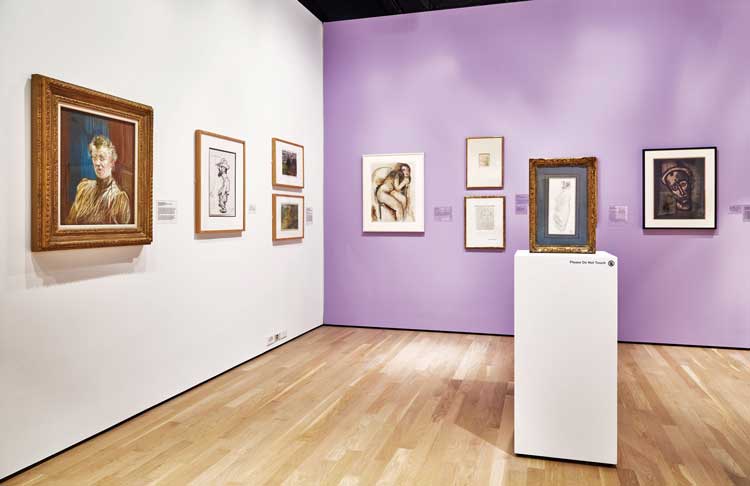
Installation view, Make Way for Berthe Weill: Art Dealer of the Parisian Avant-Garde, Grey Art Museum, New York. Photo: Simon Cherry.
This reveals that paintings can have a busy diary, but whether they will travel also depends on their condition. Some works are too fragile. Fragility is a big factor in regard to works on paper such as drawings, prints and documents. They rarely travel to more than one venue because they can be damaged if they are exposed to light for too long. In New York, Gumpert borrowed works from the Zimmerli Art Museum in New Jersey, which has a formidable collection of posters on the artistic cabarets of Paris’s Montmartre district. These helped her to give a sense of time and place; some of the works also travelled to Montreal. While Paris focused on paintings, it did include paper documentation such as letters and exhibition brochures, which it borrowed from the nearby Institut National d’Histoire de l’Art. It also included César Abin’s 56 sketches from 1932, which portray artists, critics and dealers of the time, Weill being the only woman among them.
Eloy admits that because Paris was the last stop in the touring exhibition, it made it easier for her as it gave her more time to prepare it and source material. “It was very instructive to have seen what my colleagues had done in New York and Montreal,” she says.
The space Eloy had at her disposal was, in effect, a large hall and she worked with a scenographer to bring the content to life by creating several rooms, stand-alone walls to highlight certain works and open wall sections like a window that produced stunning sightlines and intriguing connections between the works.
In the end, the curatorial team had secured about 50 works that were able to travel to all three venues. They became the core of the exhibition around which Weill’s story was told. The remaining parts were variables and changed with each venue. Altogether, there were about 80 paintings and 40 drawings and prints involved in the exhibition coming from about 30 institutions, not counting the private collectors. The works came from, among other places, Chicago, Philadelphia, Washington, Minneapolis, St Louis, Ottawa, Toronto, Reims, Strasburg, St Tropez, Grenoble, Bordeaux, Munich, Turin, Barcelona and Pécs in Hungary.
Coordinating all the arrivals, returns and onward journeys of these works across three venues is like doing a gigantic jigsaw puzzle. The logistics behind this were handled by a team of registrars at each venue. They liaised with the lending organisations and arranged the loan conditions. Mélissa Bezzi, registrar at the MMFA, outlines the details: “Our main responsibility in any exhibition is to manage all aspects of the documentation and movement of the artworks: contracts and insurance, transportation, timing, scheduling, exhibition and environmental requirements, condition checks, security measures and coordination between institutions.”
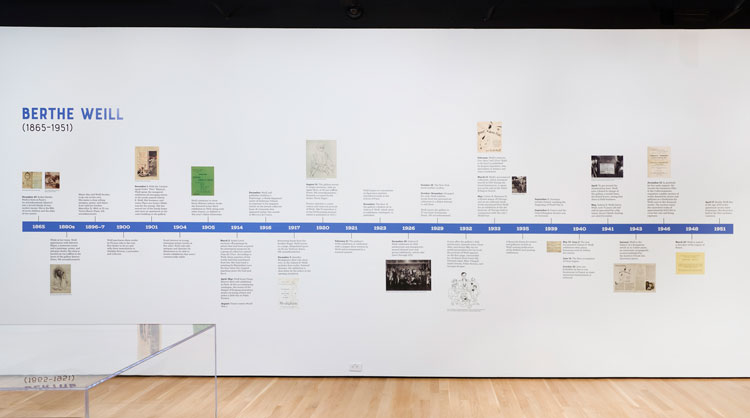
Timeline, installation view, Make Way for Berthe Weill: Art Dealer of the Parisian Avant-Garde, Grey Art Museum, New York. Photo: Simon Cherry.
The registrars take in the arriving works, store them safely until they are unpacked and installed, which they also oversee. Between unpacking and installing, painting conservators meticulously check the condition of a work to track if they are in the same condition as when they left the previous venue. This is done jointly by a conservator from the institution borrowing the works and one from the lender. A conservator, generally from the lending institution, often also acts as a courier, accompanying the artwork on the road to ensure its safety. They are present, too, when the work is unpacked and installed, and after the show when it is de-installed and packed up again for its next journey. As they have ultimate responsibility for the work, this means that once a work is hung and the courier has left, its position on the wall cannot be changed. The security measures around paintings even demand that couriers are not allowed to talk about any journeys they undertake when chaperoning a painting because of their high value. It is a section of travelling exhibitions that is shrouded in secrecy.
When figuring out the logistics, the registrar needs to tie the arrival of a work – wherever possible – to the availability of the courier and calendars need to be coordinated. On some occasions, the condition check on the work that the conservator/courier would normally undertake on location has to be done by virtual couriers. For this exhibition, Bezzi had to draw up an intricate schedule to coordinate nearly 65 paintings with about 15 couriers for an installation period of two weeks.
Gumpert was in the art business for 45 years before she retired in April last year. She says that although touring exhibitions are not a recent phenomenon, things have changed: “When I was a young curator, we travelled exhibitions to four or five or six venues in the US. International shows travelled to three or four venues. The standard [duration of a presentation] was typically three months. Now, most museums keep shows up for four or five months because they are so expensive.” This, in turn, affects getting artworks as lenders do not like to loan them for so long. She explains the challenges: “Post-Covid, shipping costs have increased enormously and museums are also becoming much more climate conscious. Bizot’s Green Protocol [a set of guiding principles for museums to adopt environmentally sustainable practices, reducing carbon emissions and energy use while maintaining safe, responsible conservation standards] recommends that you send them by sea and that takes longer.”This also has repercussions for the security and safety of a work, considering the high value that is attached to it.
Gumpert says: “A travelling show was originated by one museum and when we borrowed it, we paid a fee to the institution that originated it. But in this case, we’re three museums that are originating the show and share the cost.” This has become common practice among leading venues. “A lot of the shows that come to New York, for example to the MoMA or the Guggenheim are usually co-organised by them.”
This trend for organising exhibitions in partnership has also been observed by Ann Barnes from the Exhibitions Group: “Particularly in the last 10 years, we have seen more partnerships to bring an exhibition to different venues as part of a bigger tour.” The Exhibitions Group is based in the UK and supports individual artists as well as venues with advice regarding practicalities such as transport, insurance, customs regulations and import requirements when touring internationally. It also provides a network of resources to enable exhibitions to tour.
There are many motivations behind touring an exhibition and teaming up with other venues. Barnes points out a particular one: “They increase the profile [of a venue] because it means getting your name out there and being able to share the work that you do. Besides, you are not only developing a partnership in that one sense. It can feed into so much more and creates other opportunities for collaboration with not just that venue, but other connected practitioners. In addition, it enables venues to share resources.”
In the case of the Weill exhibition, this meant the workload was divided: The Grey Art Museum focused on the research, the Musée de l’Orangerie produced the catalogue and the MMFA sent out the request letters to secure the works. Forming partnerships to tour exhibitions is clearly a win-win situation for venues and audiences alike, yet the immense work behind such projects is a masterpiece in itself, which cannot be overestimated.
Click on the pictures below to enlarge

Copyright © 1893–2026 Studio International Foundation.
The title Studio International is the property of the Studio International Foundation and, together with the content, are bound by copyright. All rights reserved.

 |
 |
 |
|---|
-1000-300.jpg)


 Douglas Gordon: Superhumanatural
 The National Museum of the American Indian
 Ettore Sottsass: Architect & Designer – book review
 Book review: Archaeology of an Urban Desert
 Towers: from Manhattan to Moscow