



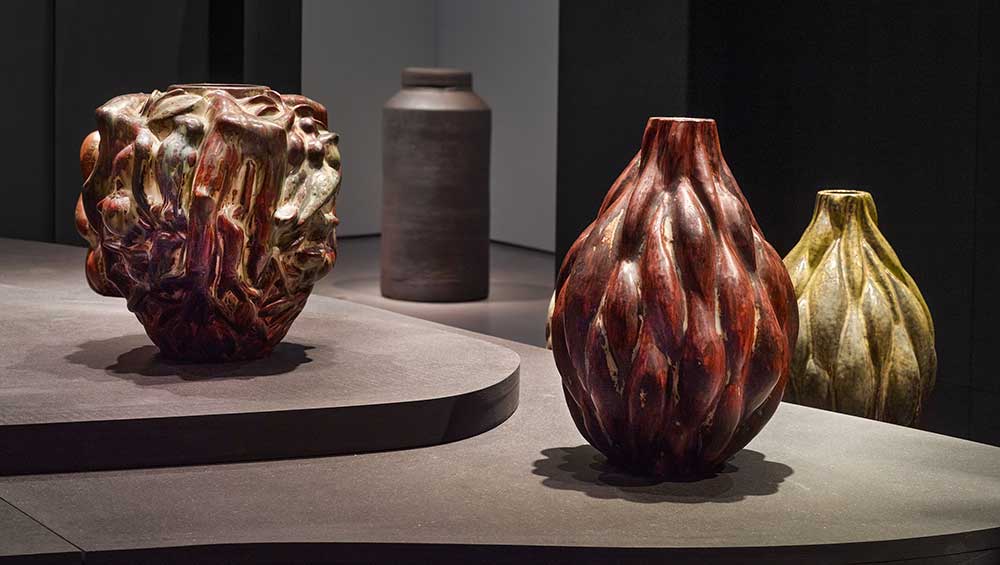
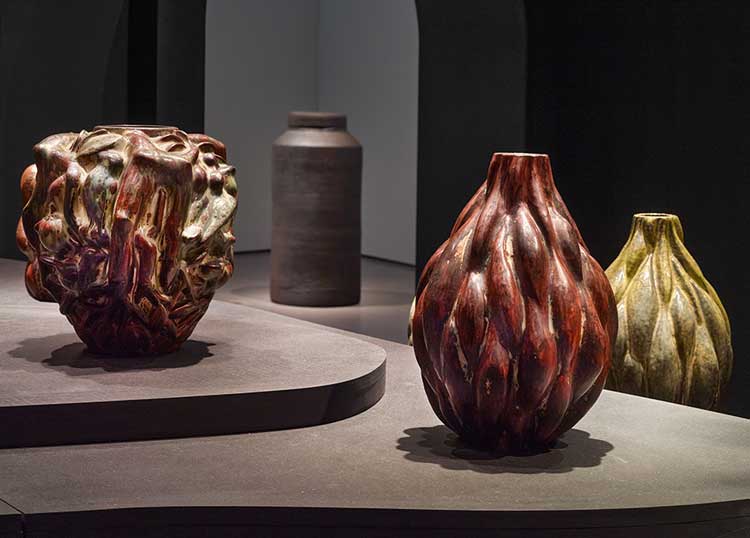
Playing with Fire: Axel Salto and Edmund de Waal, installation view, The Hepworth Wakefield, November 2025. Photo: Michael Pollard.
The Hepworth Wakefield
22 November 2025 – 4 May 2026
by BETH WILLIAMSON
It is a crisp November morning in West Yorkshire and the Hepworth Wakefield is looking its best in the cold, sharp light. Winter sun pours over David Chipperfield’s design and the architecture positively sings in this weather. There is a sensibility of material here that is deftly supported by the River Calder and the thundering weir. Inside, the atmosphere is fizzing with anticipation as artist and author Edmund de Waal (b1964) prepares to open his exhibition of work by the Danish ceramicist Axel Salto (1889-1961). When De Waal first encountered Salto’s work 30 years ago, he says he was “flabbergasted”. He certainly did not contemplate that, decades later, he would curate a landmark exhibition of the ceramicist’s work.
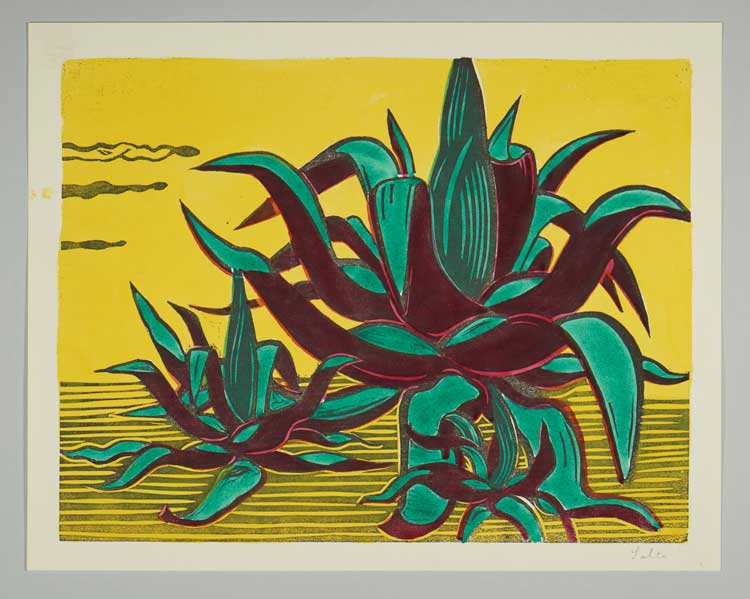
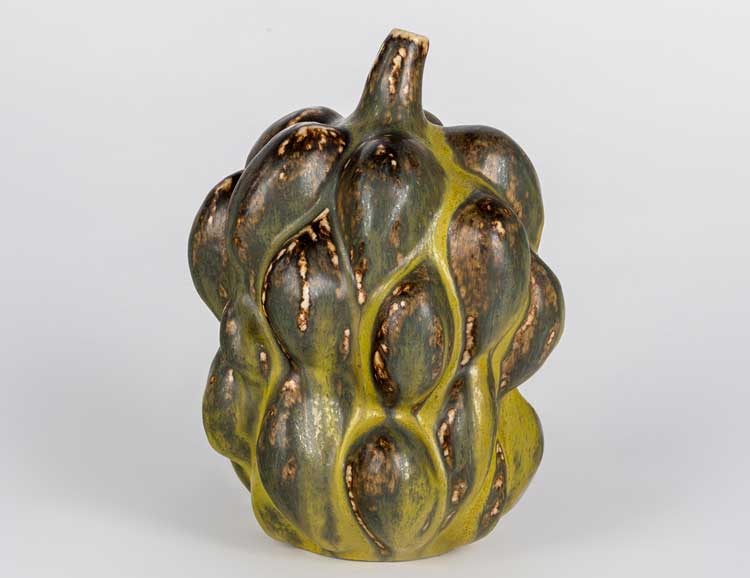
Playing with Fire not only showcases Salto’s work but also De Waal’s unique response to it. Salto was a polymath and although the two men never met, De Waal is well practised in conversations across time. Alongside an astonishing body of ceramic work, Salto also created paintings, woodcuts, drawings, book illustrations and textiles. His extraordinary practice began with his studies at the Royal Danish Academy of Fine Arts, after which he travelled to Paris, meeting Picasso and Matisse, before returning to Denmark and working prolifically with a modernist-informed aesthetic. Inspired and informed by the organic world, the surfaces of Salto’s stoneware pots seem to bud, sprout and burst forth with the flowing energy of life. You get a sense of that energy in Salto’s account of climbing Mount Vesuvius, written in 1920, when he observed: “The actual crater bottom is a viscous, moving mass, its metallic colours flickering uncannily.” This is Salto’s ceramics in motion.

Playing with Fire: Axel
Salto and Edmund de Waal, installation view, The Hepworth
Wakefield, November 2025. Photo: Michael Pollard.
His works on paper, illustrations, writings and textiles add further to our inevitable fascination with this curious artist. De Waal’s enthusiasm for Salto is infectious and he presents him in this exhibition as a radical, interdisciplinary artist. Most importantly, perhaps, he highlights Salto’s vision of transformation in relation to material and play. As De Waal explains: “His sculptures seem to be on the point of change: glazes are caught in flux. Vases swell as if to burst … That moment of change, transformation, is the moment when poetry occurs.” Salto was fascinated by the poet Ovid, and we can see exactly what it is about Salto that captures De Waal’s imagination. Both men care equally about pots and poetry. There is play and pleasure, but there is also seriousness about their craft. Salto wrote in 1940: “I have always preferred burning mistakes to tepid accuracies,” bringing his seriousness to the fore.
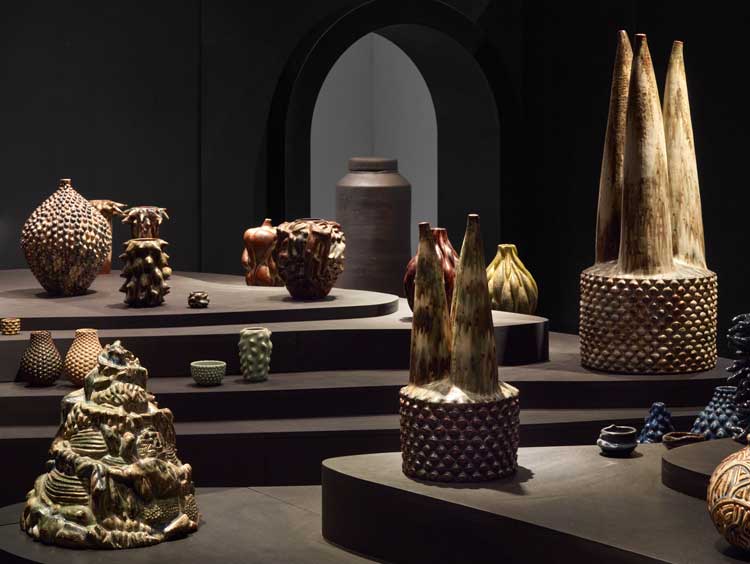
Playing with Fire: Axel
Salto and Edmund de Waal, installation view, The Hepworth
Wakefield, November 2025. Photo: Michael Pollard.
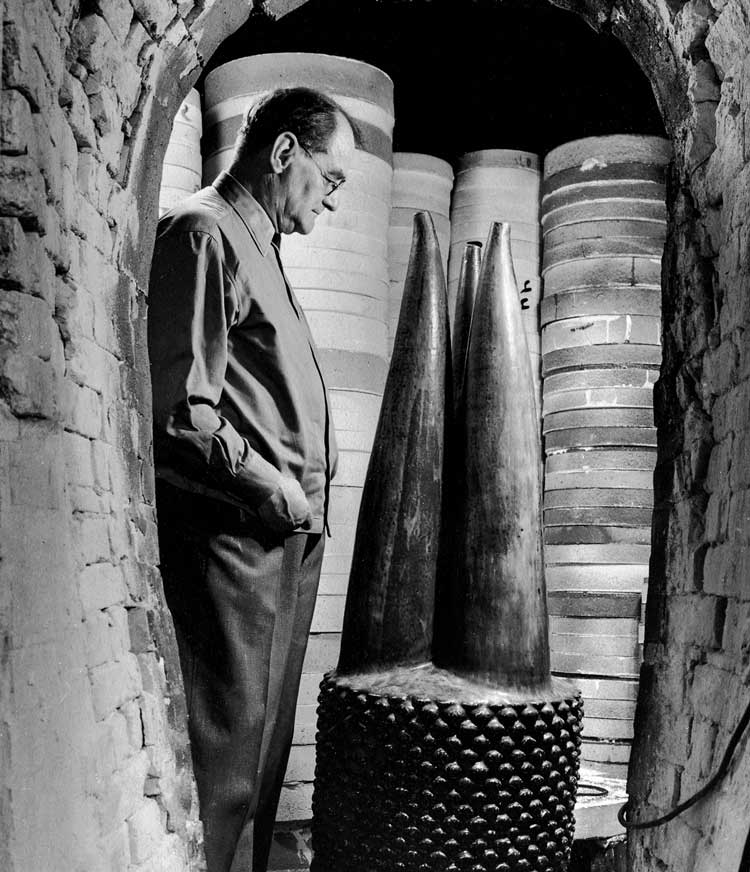
The exhibition itself is sensitively shaped by De Waal’s understanding of Salto’s making, a truly hands-on understanding of material and methods, and a deep and focused engagement with Salto’s work and ideas sustained over three decades. What this means is an exhibition conceived as a series of highly charged spaces. The first space, Kiln, approximates an immersive experience of the kiln with Salto’s vessels set out on open, tiered shelving within the confines of a central structure that visitors can walk through. Surrounding this are five floor-standing black pots, the largest De Waal has ever made. These are his elegy to Salto, inscribed with words by the poet Rilke and complete with an invitation to touch those words, to feel their material existence and understand something of the poetry in Salto’s work too. This is the closest you will ever come to being inside the poet’s or the potter’s head, to feel what they feel with their fingertips when writing or working with clay. This is where everything begins, and De Waal understands Salto’s concept of “the burning now” as extending into his practice, then creating a place or a pause, what the poet Paul Celan called “a place made fast”. This is poetry given material form, enabling a tacit engagement.
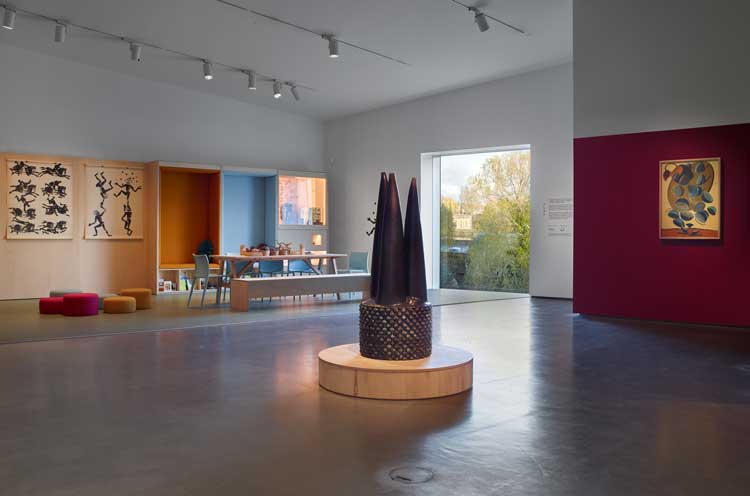
Playing with Fire: Axel
Salto and Edmund de Waal, installation view, The Hepworth
Wakefield, November 2025. Photo: Michael Pollard.
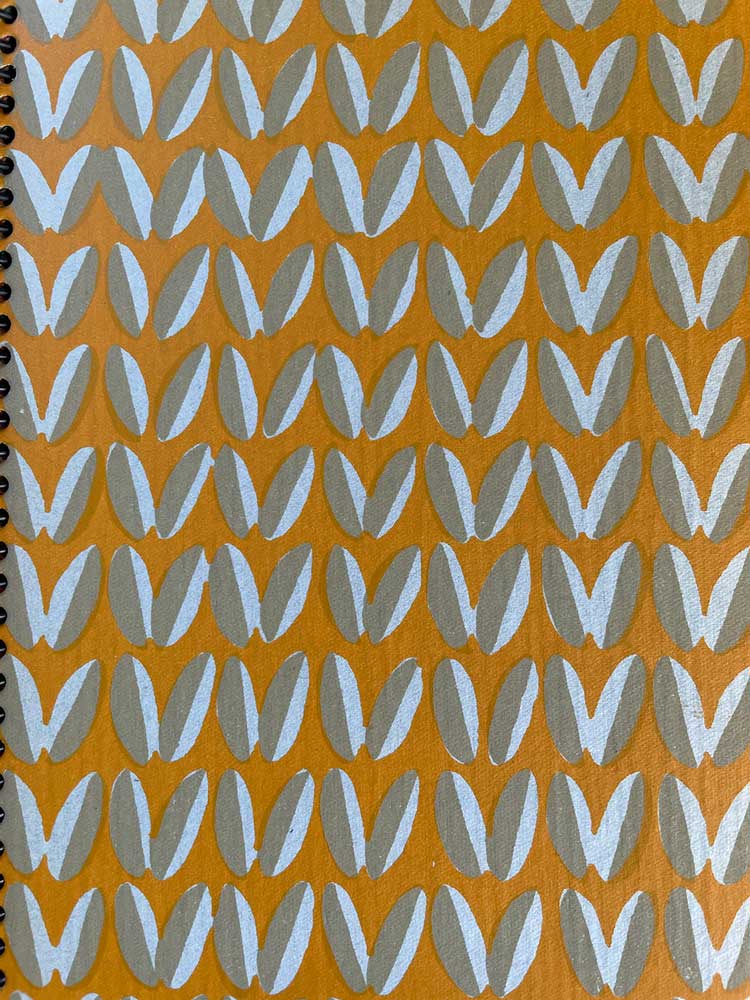
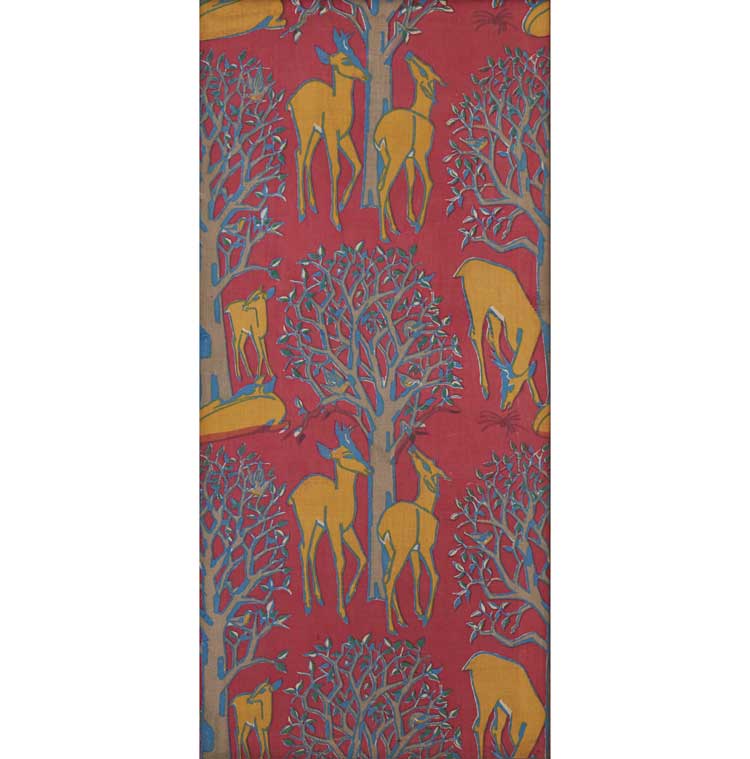
Through Salto’s works with textiles, works on paper and other clay works, De Waal identifies some useful guiding themes. In the space Colour, we see how, through his use of colour, Salto layered his aesthetic, with textiles echoing pots, books and pictures. Pattern-making is transformed through graduations and shifts in colour at every twist and turn. And in Line, Salto sketches a line on paper, in clay, and on fabric. He sketches a vessel, then another, perpetual movement. The space entitled Metamorphosis is where the exhibition explores Salto’s love of the writings of Ovid and especially the myth of Actaeon. He paints, draws and sculpts the myth. As De Waal sees it: “It is the dangerous moment of creativity, the ‘burning now’,” and one body becomes another.

Playing with Fire: Axel
Salto and Edmund de Waal, installation view, The Hepworth
Wakefield, November 2025. Photo: Michael Pollard.
A space dedicated to Play is not an obvious theme to follow but is perhaps inevitable when you consider the risk that is equally inherent in play and art, especially working with clay where the risk of failure is ever-present. De Waal says: “Play is a kind of risk, a way of trying things out, a making a mess and then a delight in bringing odd things together again.” Play is enough.
The Burning Now is a pavilion, a crucible by De Waal with liquid porcelain-coated walls, with words visible and invisible, through which De Waal continues his dialogue with Salto. He says: “I have written on these walls like a child scribbling. Inside, are my porcelain vessels alongside torn, curved pieces of silver to catch the light and the shadows. Some light comes from above you. Here, too, is darkness: two installations of black-glazed porcelain together with steel blocks and silver blackened by fire … Pausing to celebrate the metamorphic moment. Not before, or after, but the very ‘burning now’.” This is the very essence of De Waal and the nature of his craft as a potter. It is characteristically self-effacing of him to hold a space for Salto, not himself. Intellect always gives way to poiesis and the resounding “now” of “the burning now” is what reverberates throughout this exhibition. A generous conversation between friends.
Click on the pictures below to enlarge



Copyright © 1893–2026 Studio International Foundation.
The title Studio International is the property of the Studio International Foundation and, together with the content, are bound by copyright. All rights reserved.
 |
 |
 |
|---|
-300.jpg)

-300.jpg)

 In the Land of the Gods. Marc Chagall and the Greek World
 Edmund de Waal – interview: ‘The great thing about a library is that, as soon as you have made it, people start to use it’
 Garry Fabian Miller: Midwinter Blaze
 Michael Sherrill – interview: ‘I’d call myself a student of art’
 Edmund de Waal: Psalm