




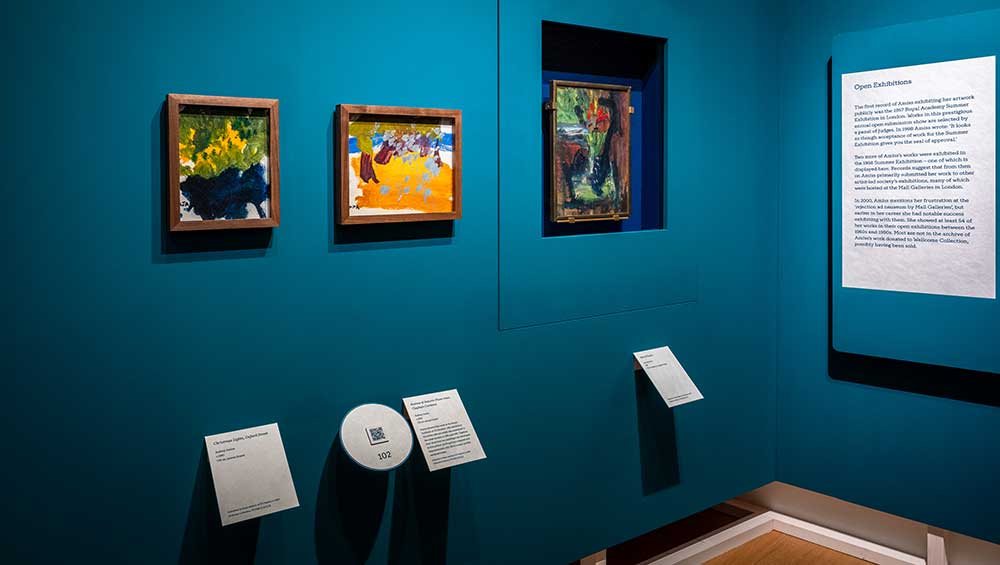
Audrey Amiss: The Surviving Exhibitions, installation view, Wellcome Collection, 10 July 2026 – 7 February 2027.
Wellcome Collection, London
10 July 2026 – 7 February 2027
by BETH WILLIAMSON
Audrey Amiss (1933-2013) was an artist of immense strength and courage. Bold, brave and fearless, she made work in almost every medium imaginable despite the many obstacles put in her way. This exhibition honours Amiss’s achievements and shares her work as an artist and campaigner, showing how she used her artistic practice to speak out against harmful treatment in the mental health system.
In the 1950s, Amiss studied painting at the Royal Academy of Arts until a mental health crisis and psychiatric treatment precluded her from completing her studies. Despite this, she continued to make, exhibit and sell her artwork throughout her life alongside a career in the civil service. The present exhibition focuses on works that Amiss had exhibited or hoped to make public. The exhibition’s title is double-edged. It shows what survives of Amiss’s exhibitions but she also identified as a mental health survivor. Throughout her life she campaigned for reforms in the mental health system, including attending demonstrations and writing to policymakers. Amiss was detained under mental health law in psychiatric units on at least 11 occasions between the 1950s and 2000s. Such challenges seemed to fuel, rather than dull, her drive and desire to make art and campaign. Many of her artworks were shown in group exhibitions. Further, she held at least six solo exhibitions, often underlining survivors’ experiences in psychiatric systems.
Audrey Amiss: The Surviving Exhibitions, installation view, Wellcome Collection, 10
July 2026 – 7 February 2027.
Following her death in 2013, Amiss’s archive was donated to the Wellcome Collection by her family. Given that her campaigning challenged the lack of agency that she and other mental health survivors faced in psychiatric systems, questions of consent and self-representation are especially crucial in presenting her work in a public exhibition. The development of the present exhibition has been rigorous in addressing such issues. This is important to point out since it is part of a way of making exhibitions that foreground new narratives. It was guided by material that Amiss had exhibited, or intended to, in order to respect her privacy. It was guided, too, by close consultation so that those who knew Amiss, others associated with survivor movements and a group of advisers with lived experience played a crucial role in exhibition development.
Audrey Amiss: The Surviving Exhibitions, installation view, Wellcome Collection, 10
July 2026 – 7 February 2027.
Amiss had early success exhibiting in open exhibitions such as the Royal Academy Summer Exhibition in 1957 and 1958 and the Mall Galleries where she showed at least 54 works between the 60s and 90s. She also organised at least six solo exhibitions between the 80s and 00s. Some of these focused on presenting her artworks while others aimed to increase awareness of harm in psychiatric contexts.
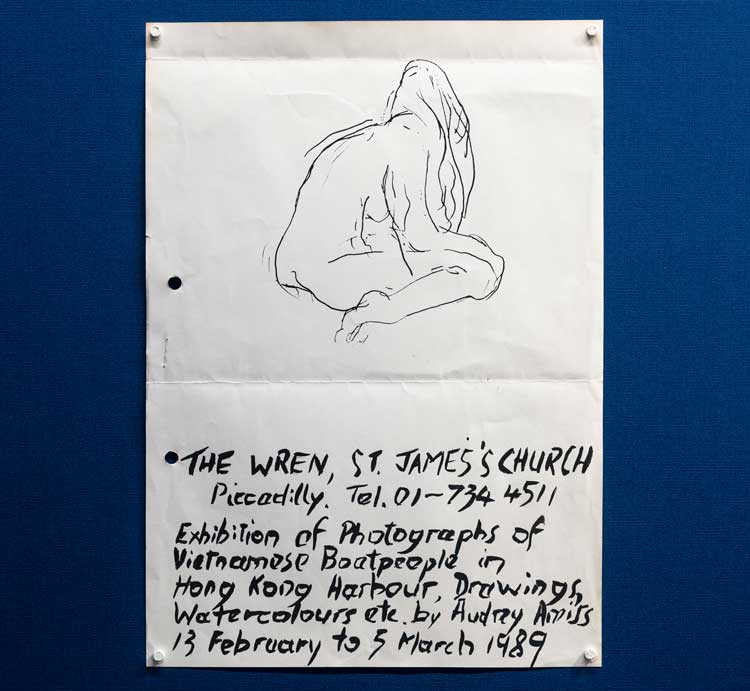
One of the most complete of these exhibitions in archival terms is Drawings and Watercolours from the 1960s, an exhibition that Amiss staged at Dance Attic Studios in London in 1989. The exhibition is reassembled here with 24 of the original 30 artworks shown. Domestic scenes and views from a window dominate. Many works are double-sided and a variety of ways of hanging these works makes for original and enriched perspectives rather than simply treating them as a curiosity. In places, Amis has pressed so hard into the paper that she created grooves or tears. Two aspects or perspectives are offered on a single sheet of paper. Meanwhile, the pressure applied to that page creates a closer connection between them through grooved or torn areas. It suggests the leaching of the unconscious into the conscious mind and perhaps it is those points of surfacing or meeting that become the focus of psychiatric care.
Audrey Amiss: The Surviving Exhibitions, installation view, Wellcome Collection, 10
July 2026 – 7 February 2027.
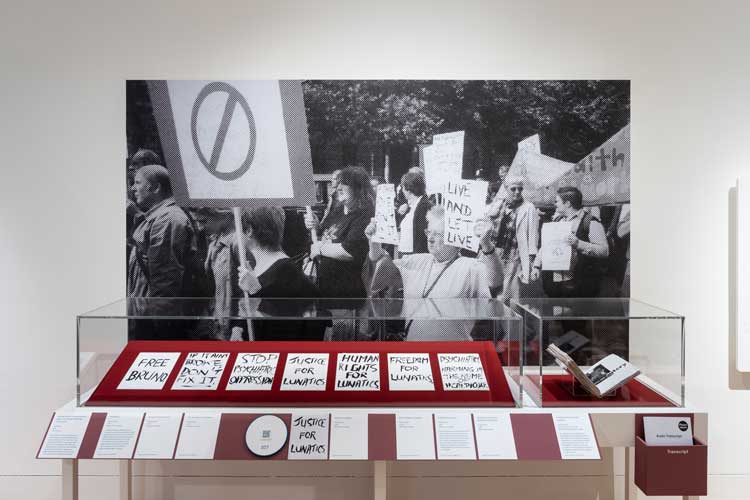
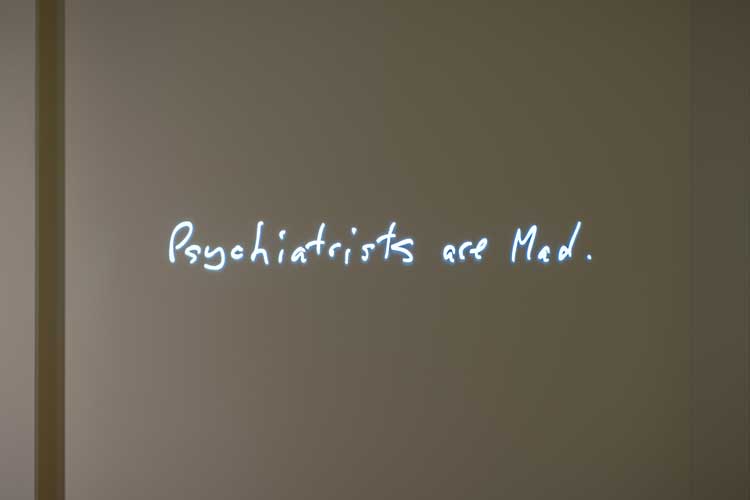
Another significant exhibition for Amiss was Fireworks: A Protest Exhibition, also 1989. This time, the exhibition was an overt protest and 26 of the 49 works are reassembled in the Wellcome exhibition. Amiss intended to speak out and raise awareness of the harm that she and other survivors had experienced at the hands of the psychiatric system. Framed graffiti-style statements included “Psychiatrists are mad” and “Doctors are Quacks”. In the early 2000s, Amiss made further graffiti works. A powerful black and white photograph of Amiss protesting is enlarged on one wall. A small woman with grey hair and glasses, dressed in an unremarkable fashion, she stands resolute near the front of the gathering at a demonstration against a controversial mental health bill of 2002. The message, in summary, was: “Stop psychiatric oppression.”
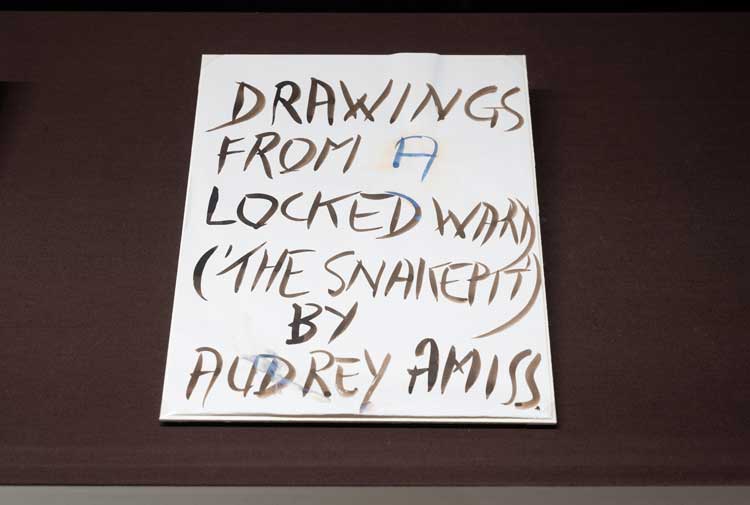
Audrey Amiss: The Surviving Exhibitions, installation view, Wellcome Collection, 10
July 2026 – 7 February 2027.
Amiss’s 2002 exhibition was Drawings from a Locked Ward (The Snakepit). This exhibition directly referenced her experience of the psychiatric system, bringing her art and campaigning together to support fellow survivors. Explaining the exhibition, Amiss wrote: “I have referred to ‘The Snakepit’ in the title of the exhibition. That, if you remember, is an old Hollywood film about a woman who gets trapped in a madhouse and can’t get out because no one will believe a word she says. With the introduction of the NHS and calling these places by a more moderate name, ie, mental hospitals, they would, I suppose, have us believe ‘Snakepits’ are a thing of the past. Not so. They are still very much with us.” The Wellcome has been unable to locate the 44 drawings that Amiss exhibited in Drawings from a Locked Ward. The drawings were originally made by Amiss while detained in a psychiatric ward in 2001. As well as exhibiting them, she donated them to charity shops, sent them to MPs, submitted them for publication and handed them into a police station. As a mental health survivor, she called for awareness of the use of force and detention in psychiatric treatment. She called for different approaches to mental health that would allow people more agency in the kinds of support they receive. It is the contemporaneity of Amiss’s observations that make them so powerful. Just as she survived psychiatric treatment and her exhibitions survived, at least in part, her message survives and is spoken aloud here in an exhibition that returns agency to the artist and other survivors. As well as sharing the work of an artist most will never have encountered before, it is a wonderful example of how to make exhibitions differently and it should be commended for both these reasons.
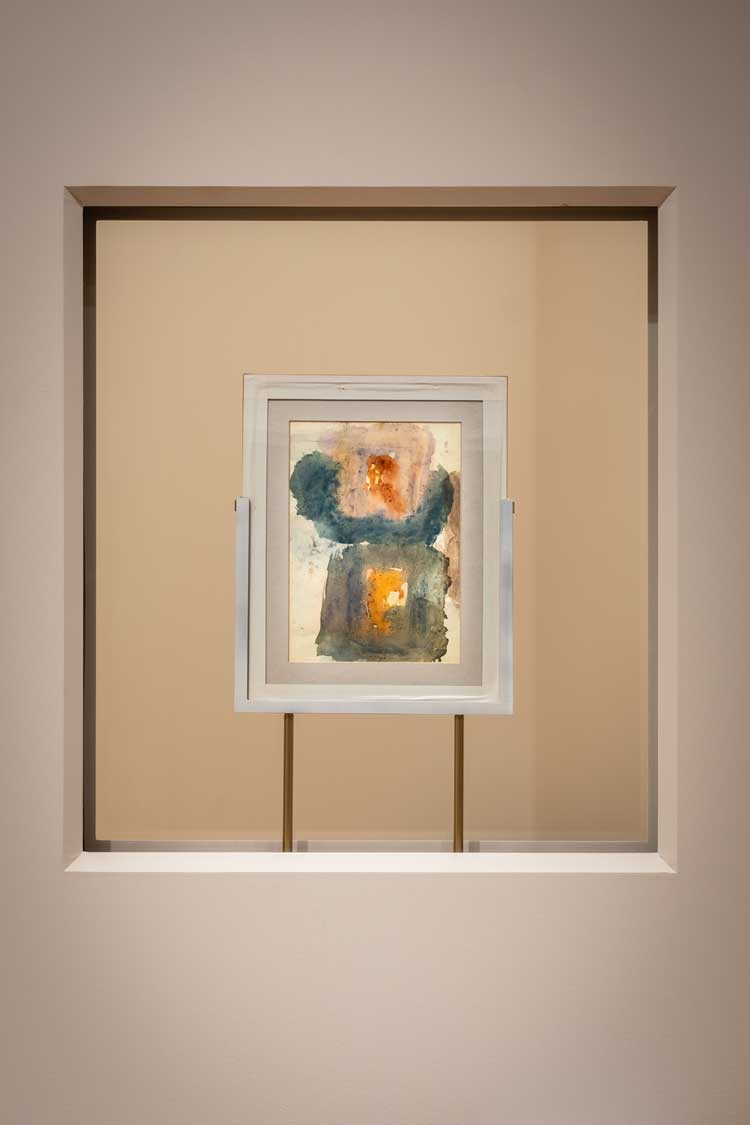
Audrey Amiss: The Surviving Exhibitions, installation view, Wellcome Collection, 10
July 2026 – 7 February 2027.
Click on the pictures below to enlarge

Copyright © 1893–2026 Studio International Foundation.
The title Studio International is the property of the Studio International Foundation and, together with the content, are bound by copyright. All rights reserved.
 |
 |
 |
|---|

-1000-300.jpg)



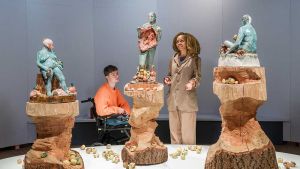 The Coming of Age
 Jason Wilsher-Mills – interview: ‘Doing art is like cultural national service’
 Grace Ndiritu – interview: ‘Museums hold our collective past and they can hold our future’
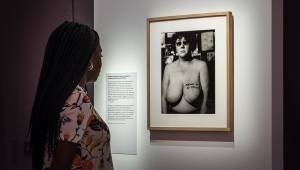 Jo Spence and Oreet Ashery: Misbehaving Bodies
,-James-Wilkes-1000px-300.jpg) James Wilkes: ‘Mind-wandering has became a productive way for us to disrupt that idea of there being rest and the opposite of rest’
James Wilkes: ‘Mind-wandering has became a productive way for us to disrupt that idea of there being rest and the opposite of rest’