




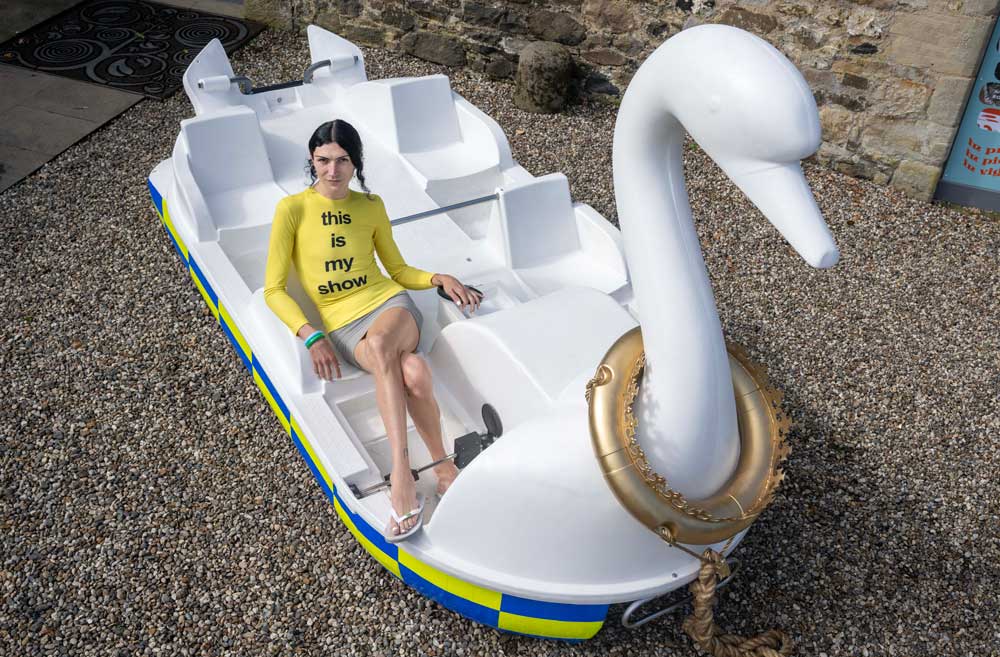
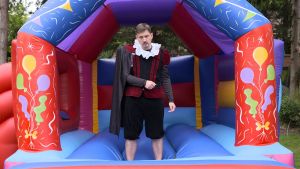
Sgàire Wood, In Pride, In Piety, In Vigilance, Jupiter Artland. Part of EAF26. Photo: Neil Hanna.
Various venues, Edinburgh
14-30 August 2026
by BETH WILLIAMSON
Since 2023 I’ve spent a couple of days every year in August running around Edinburgh taking in the inevitably mixed bag that is Edinburgh Art Festival (EAF). This year was no different. Once again, a small dedicated curatorial team, led by director Kim McAleese, programmed the two-week-long festival with a very light hand. Core exhibitions curated and commissioned by the team do have a focus. As they explain in a joint statement in the festival literature: “Our 2026 edition invites you to gather around alternative queer images, global community-held stories, never before sets of photographs and living sound collections” and so on. Orbiting around this are a set of institutional shows across the capital city that, while part of EAF, may have no particular allegiance to the climate that the core programme seeks to reflect. Perhaps this “mixed bag” something for everyone approach is a good thing, but it does make it confusing to navigate.
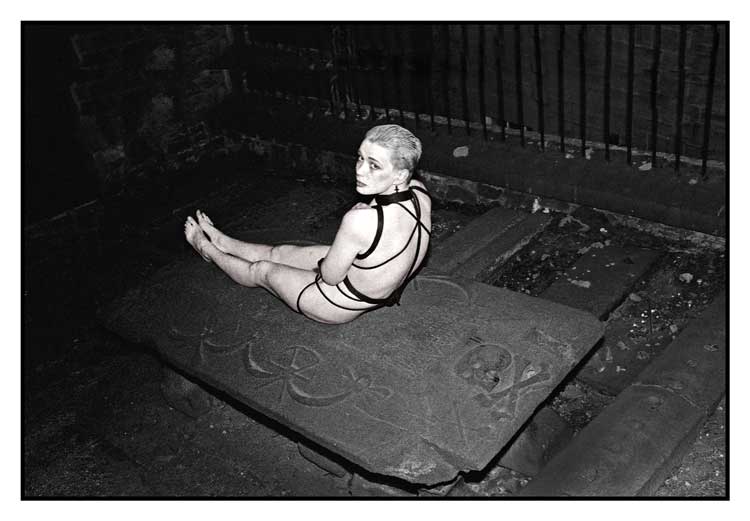
Sylvia on a Tombstone in Greyfriars, Edinburgh 1989. Photograph: Del LaGrace Volcano. EAF @ 92, Edinburgh.
In Leith, three EAF exhibitions foreground questions of queer culture. Carnal Desires shows work by Sadao Hasegawa while History is a Home represents another iteration of Trans Masc Studies. Del LaGrace Volcano’s Love Bites Back shares a body of work produced since the early 1980s and challenging normative constructions of gender and the body. Volcano’s work deserves much wider coverage, and I hope it gets it.
.jpg "Katie Paterson, Afterlife, 2026, created in collaboration with architects Zeller & Moye, at Collective Gallery, Edinburgh. Photo © Eoin Carey.")
Katie Paterson, Afterlife, 2026, created in collaboration with architects Zeller & Moye, at Collective Gallery, Edinburgh. Photo © Eoin Carey.
Up on Calton Hill are a number of works. Emii Alrai’s Guardian, is a monumental but fragmented relic installed atop of Calton Hill surveying the city below. Collective Gallery shares two exhibitions. In its Dome Gallery, Katie Paterson’s Afterlife occupies the space lightly and thoughtfully. Paterson’s work is always deeply researched and considered. Afterlife uses miniature amulets recreated from materials sourced from endangered landscapes and ecosystems. They serve as a memorial of sorts to monumental themes of deep time, geology and the environment. This is also the artist’s call to action to us all to protect life on Earth.
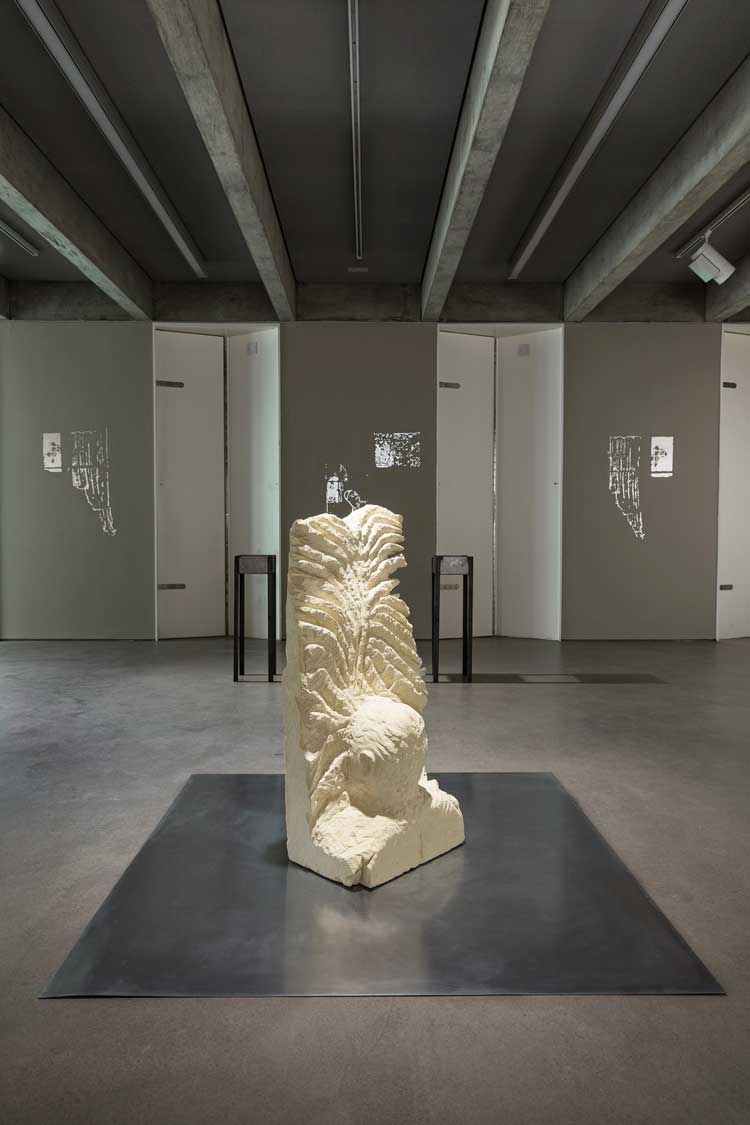
Richard Maguire, There Is No Beginning, As There Is No End, installation view, Collective Gallery, Edinburgh, 10 Juyl 2026 – 13 September 2026. Photo: Eoin Carey.
In Collective’s Hillside Gallery Richard Maguire’s show, There is No Beginning, As There is No End, marks the first edition of Time + Space, a new early career artist programme. Maguire was previously in EAF’s Platform programme in 2023, so it is encouraging to see how his work is developing. This is a beautifully pitched show that weaves together Maguire’s creative response to archival research and brings together sexuality and coloniality in productive ways. A mix of drawings, sculpture and works directly on to the wall extend the artist’s practice but, as in previous examples I have seen, at Platform and at Maximillian William Gallery in London, it is Maguire’s exquisite drawing that captivates and holds.
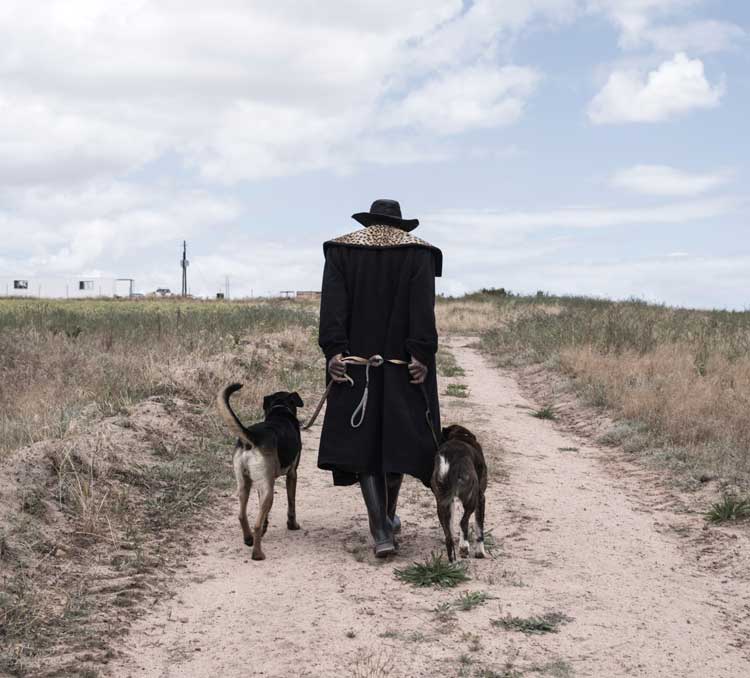
Jillian Edelstein, Oxfam, 2018.
Moving to spaces in and around Waverly and the University of Edinburgh, there is much to be excited about. Two outstanding sculpture shows take shape in Anne Hardy’s Feelings at Talbot Rice Gallery and Eva Rothschild’s The Void Presses the Wall at Fruitmarket. However, it is the two stand-out photography exhibitions close by that deserve serious attention. Stills presents Jillian Edelstein’s Among People, a compact survey of four decades of work by the renowned documentary and portrait photographer. Born in South Africa and now based in London, Edelstein has work internationally. The show brings together a wide range of work from her time as a press photographer in Johannesburg during the apartheid era along with her documentation of the work of the Truth and Reconciliation Commission established after the end of apartheid. Portraits of Bishop Desmond Tutu and others such as actor Simon Callow and choreographer Stuart Hopps demonstrate her enduring interest in all sorts of people.
-Sandra-George-Estate.jpg "Sandra George, Tyler, Dalgety Street, Edinburgh, 1982. Photograph. Digital reproduction from photographic scan. Courtesy of Craigmillar Now © Sandra George Estate.")
Sandra George, Tyler, Dalgety Street, Edinburgh, 1982. Photograph. Digital reproduction from photographic scan. Courtesy of Craigmillar Now © Sandra George Estate.
At City Art Centre, photography comes much closer to home with the work of Sandra George in Start from the Level. Two years ago, George’s work featured in a standout exhibition at Glasgow International. Now, thanks to the extensive work done by Craigmillar Now, Rachael Cloughton and Jenny Brownrigg, City Art Centre has been expanded to share a much broader selection of George’s work. Documenting communities and committed to social activism, George lived and worked with the communities she cared about, not looking in from the outside, but embedding herself within them and working collectively for positive change. The curatorial approach here is to be commended too. Rather than simply extracting information from the communities close to the artist, Stuart Fallon from City Art Centre developed an ongoing dialogue that enabled Craigmillar Now to actively participate in the development of the show. George would have been delighted.
On the other side of the city, in the Hawthornvale Space at Edinburgh Sculpture Workshop, is Esther Castle’s Abundant Parts. It is a tender and thoughtful ceramic figure squeezed into the space, as Castle says: “Uncomfortable and inspected by others … [and] … aiming to echo a wetness and weeping of illness.” Delving into her experience of childhood illness, the artist uses art-making to investigate and alter such realities. Interesting parallels are drawn between the ailing body and garden weeds, both exceeding norms and to be controlled, perhaps.
Out at Jupiter Artland, Sgàire Wood’s In Pride, In Piety, In Vigilance examines tradition, heritage and violence through heraldic symbolism and pop iconography. This exhibition is full of fascinating ideas, perhaps too many to present fully developed, but I hope it is a sign of more good things to come from this artist.
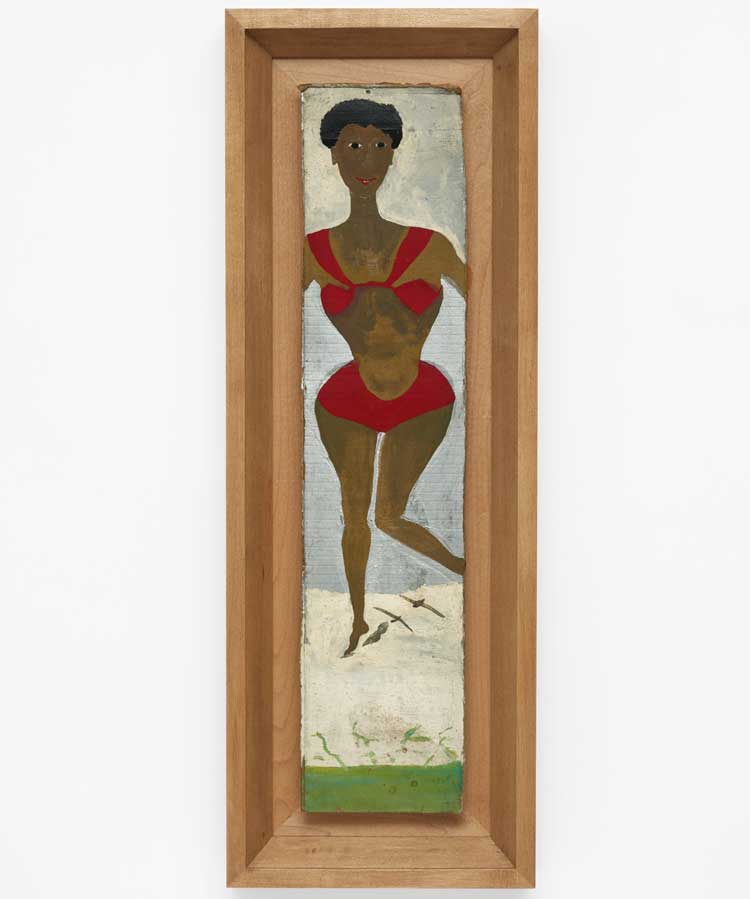
Frank Walter, Out of the Swim. undated. Oil on cardboard, 61.3 x 21.6 cm (frame) 24 1/8 x 8 1/2 in. Photo: Andy Keate.
Last, but not least, I want to leave you with an exhibition that presents as an oasis of calm amongst EAF’s often mad, noisy, irreverent body of shows city-wide. Songs of Innocence and Experience, Part II is presented at Ingleby Gallery. Celebrating the centenary of the Caribbean artist Frank Walter, this show brings Walter’s work together with that of invited artists whose work responds to or is in dialogue with his. It is a perfect moment to reflect on art and artists across the city and beyond and the role that EAF plays in building relationships, promoting work and providing platforms for development. Somehow, everything is connected after all.
Click on the pictures below to enlarge

Copyright © 1893–2026 Studio International Foundation.
The title Studio International is the property of the Studio International Foundation and, together with the content, are bound by copyright. All rights reserved.
 |
 |
 |
|---|
-1000-300.jpg)
 Edinburgh Art Festival 2025
-2023-1000-300.jpg) Edinburgh Art Festival
Edinburgh Art Festival Edinburgh Art Festival 2023
 Tacita Dean: Woman With a Red Hat