




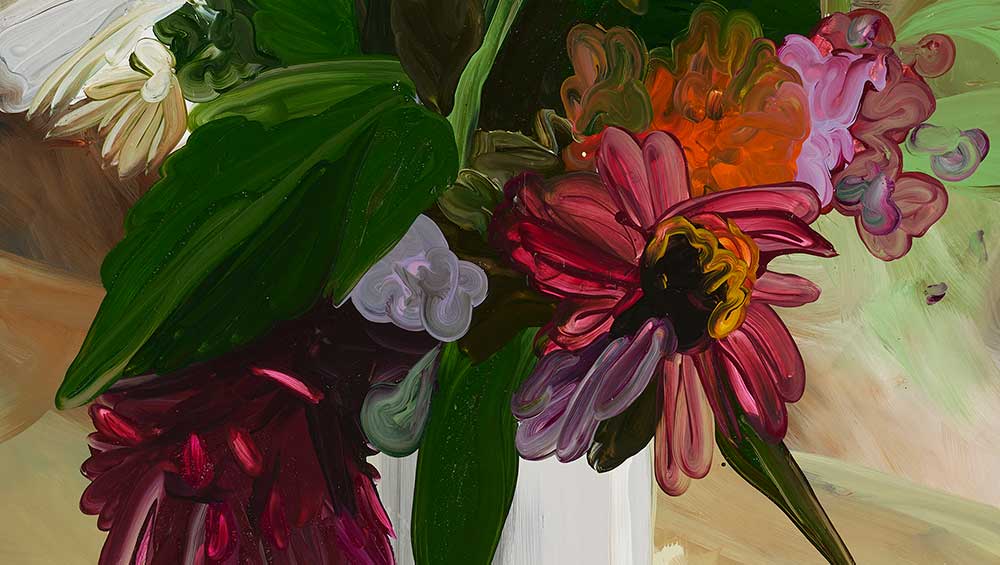
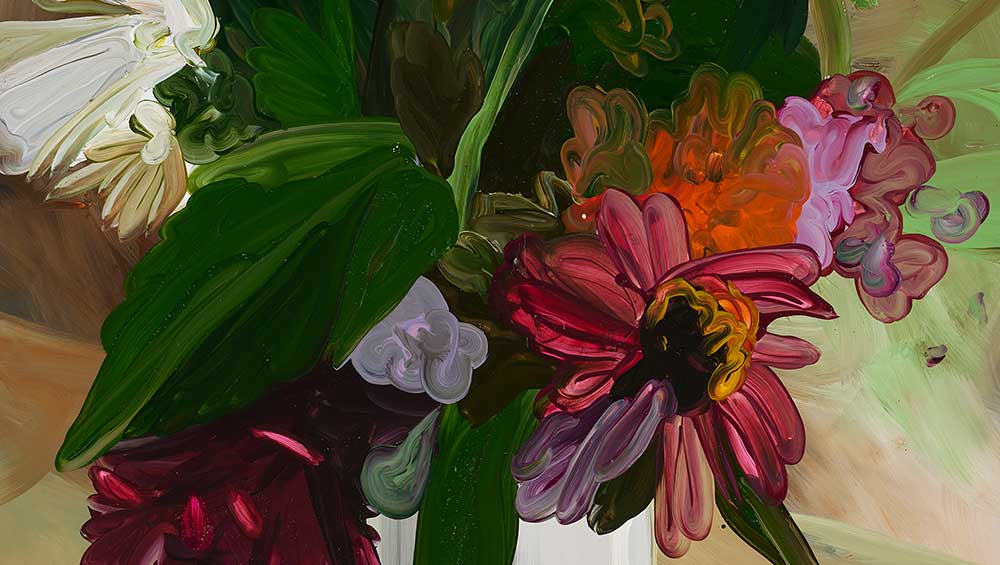
Clare Woods, Woolworth's Roses, 2023 (detail). Oil on aluminium, 124 x 95 cm. © Clare Woods. Courtesy the artist and Cristea Roberts Gallery, London.
Pitzhanger Manor & Gallery, London
29 July – 8 November 2026
by SABINE CASPARIE
Opened during the UK’s hottest summer on record, Clare Woods: Garden Without Seasons, is an aptly timed exhibition, and Pitzhanger Manor, architect Sir John Soane’s elegant, neoclassical country retreat finished in 1804, the perfect venue, with its pair of 18th-century cedar trees adorning the west lawn. During my visit in late afternoon, I spot people with iced drinks at the outdoor gallery cafe or lingering in the large park at the back of the building. A fox looks at me through the glass windows, before slipping off into the shaded bushes of the landscaped garden (Regency-style, also designed by Soane).
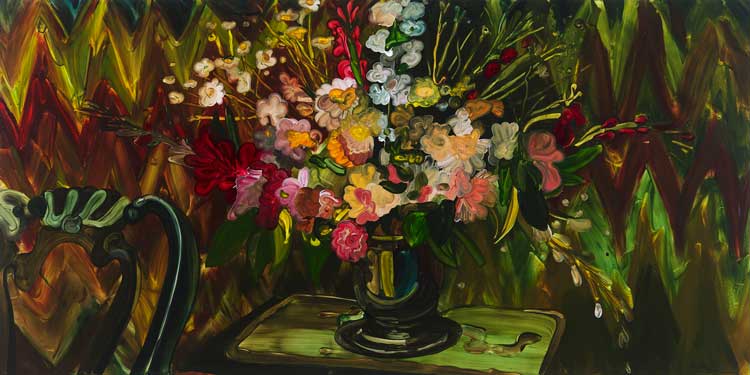
Clare Woods, Nothing Permanent, 2025. Oil on aluminium, 124 x 249 cm. © Clare Woods. Courtesy the artist and Cristea Roberts Gallery, London.
Entering the main gallery, you face the large, frieze-like painting Nothing Permanent (2025), its bouquet of candy-coloured flowers almost jumping out from a plain green vase. The flowers are juicy with visible paint strokes so thick and fluid that you almost want to lick them off the canvas. Behind the bouquet, a zingy zig-zag pattern, too vivid to be wallpaper, provides an interesting, almost nervous energy, a nice contrast with the more rounded shapes of the flowers. The backrest of an elegant chair is just visible in the bottom left corner, to anchor the explosion of flowers and suggest an interior. A demure Dutch still life bouquet this definitely isn’t.
Woods was, in fact, inspired by historical still life paintings, in particular 19th-century French painter Édouard Manet’s small paintings of flowers, made as he lay bed-bound at the end of his life. But she also likes to work from photographs. “I take out a lot of information and just leave a line, like a trace of what’s there,” she says in one of the voice recordings on Pitzhanger Manor’s online exhibition guide (an inventive use of interpretation by the gallery). “That line is the base of the paintings, which I then draw on the aluminium panel and fill in. It’s like recreating the image but with different colours and less information, remodelling it in a way.”
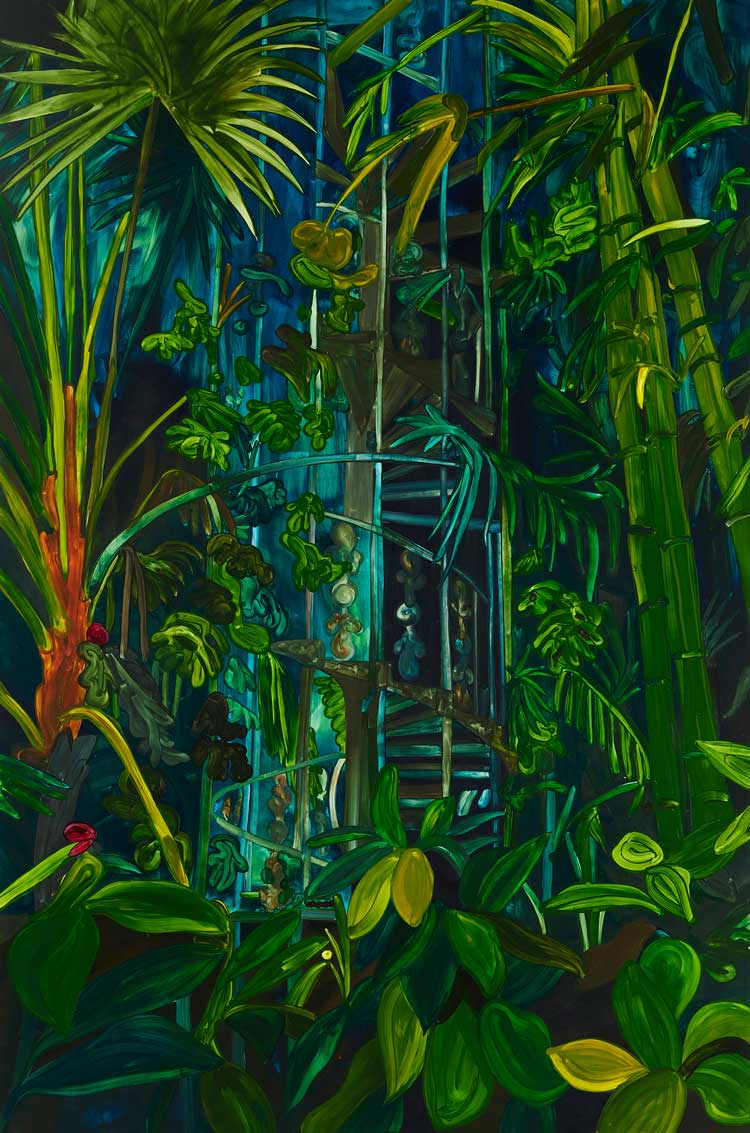
Clare Woods, Under The Dome, 2024. Oil on aluminium, 300 x 200 cm. © Clare Woods. Courtesy the artist and Cristea Roberts Gallery, London.
Woods is describing her trademark technique, in which she works on aluminium panels laid flat on a table, applying layers of paint like a sculptor laying bricks. The aluminium base with the wet-on-wet application of oil paint gives the resulting paintings a wonderfully lush appeal. In another large, portrait-shaped painting, Under the Dome (2024), the movement of the brush is mainly vertical – an interesting notion in itself when thinking of Woods bent over her composition at an angle unconventional to most painters. Under the Dome is based on a photograph of the Temperate House at Kew Gardens, and the upright architecture of the glass dome at its centre is mirrored by tall palm trees on either side. A splash of burnt orange contrasts with the almost moody symphony of blues and greens. It is a sharp and subtle colour interruption that almost looks accidental, but is certainly the result of a meticulous design by the artist.
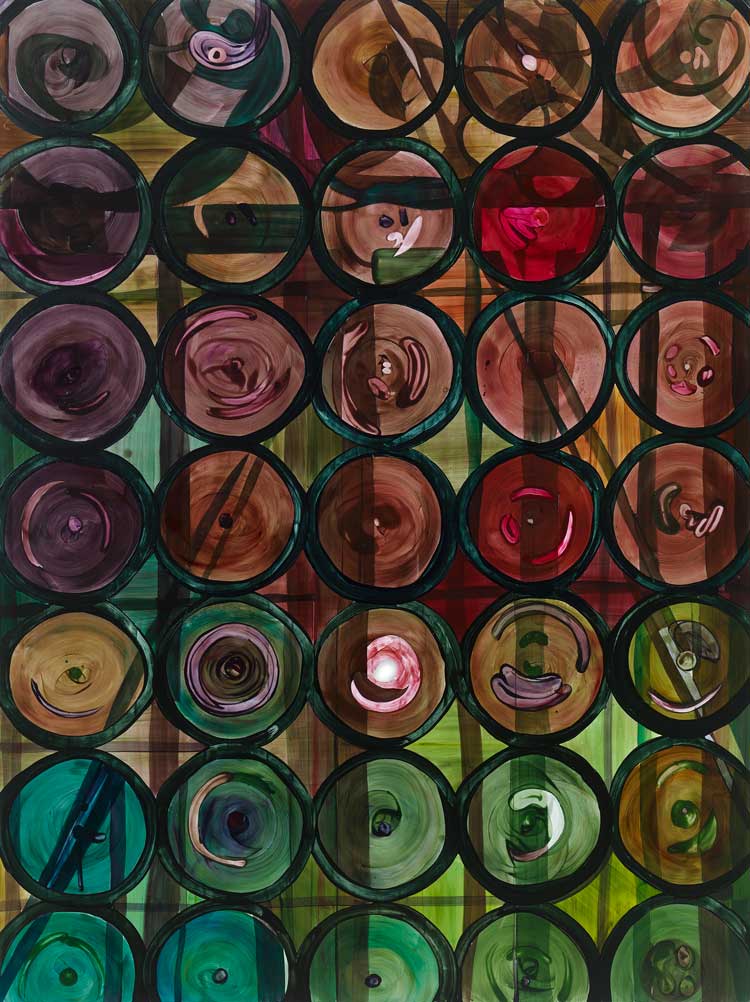
Clare Woods, Trackwalker, 2025. Oil on aluminium, 200 x 150 cm. © Clare Woods. Courtesy the artist and Cristea Roberts Gallery, London.
Trackwalker and Cold Case (both 2025), two medium-sized paintings featuring a grid of circles in shades of greens and reds, come closest to abstraction, although the paintings were, in fact, based on images of stained glass. It seems that abstraction is not something that hugely interests Woods. “My images are recognisable or more abstract; sometimes [the view] is just closer in, like a crop,” she says. The multiple shades of red in Cold Case are dripping with paint, a hospital palette of fresh and old blood, possibly from the crime scene to which the title alludes. Initial Wave, a closeup of a chandelier in front of a window, expands on Woods’s interest in glass and windows, and their ability to mirror, divide and obscure.
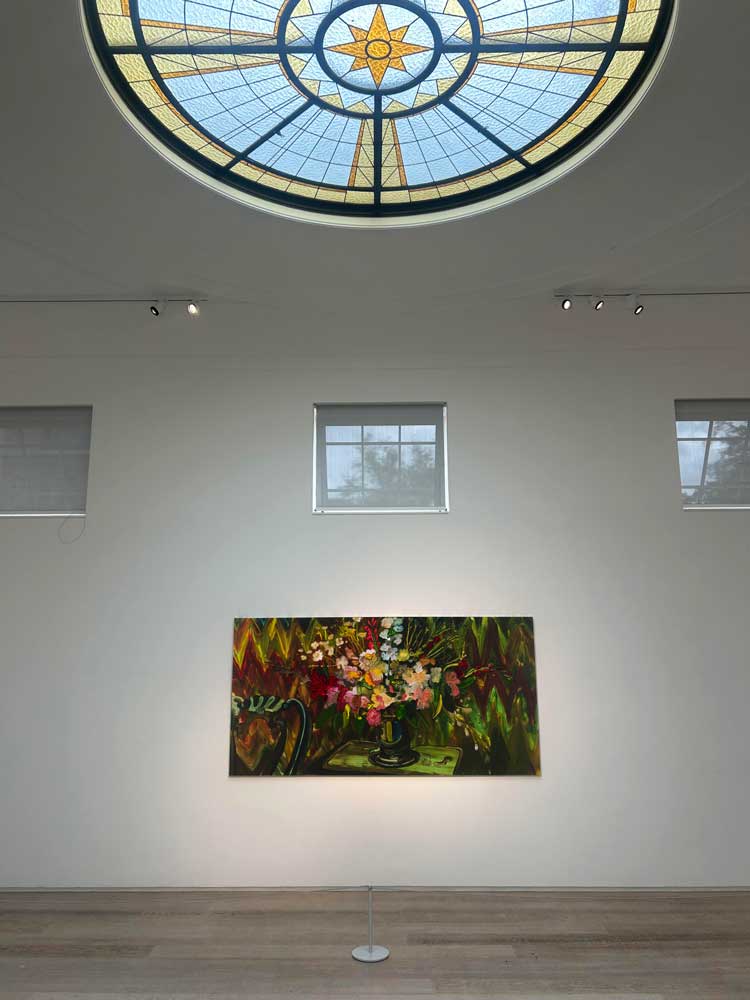
Clare Woods, Nothing Permanent, 2025, installation view, Pitzhanger Museum & Gallery, London. Photo: Sabine Casparie.
Curatorially, the works in the main gallery respond spectacularly to their setting: Soane’s skylit glass dome, with its intricate lines and star-shaped centre is in dialogue with Under the Dome; the row of small windows with silhouettes of the trees in the park behind the gallery mirrors the windows in Initial Wave. Three collages in the north gallery – poetically titled Collage for the Stand, Collage for the Farewells and Collage for Losing the Garden – give another way into Woods’s floral universe. Composed of fragments of oil paint on paper, these works are flatter, less oily and less visceral, but the diluted brushstrokes provide an interesting texture not unlike the grains of wood.
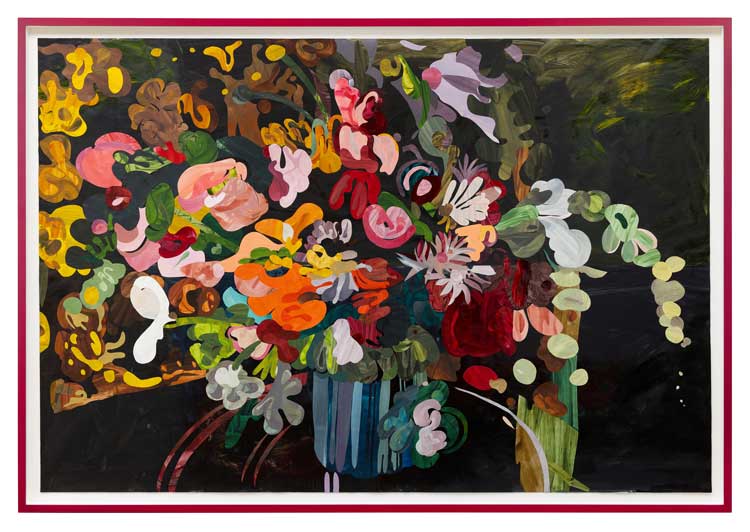
Clare Woods, Collage for Losing the Garden, 2026. Oil on paper, 183 x 270.5 cm. © Clare Woods. Courtesy the artist and Cristea Roberts Gallery, London.
But this is more than an exhibition about the joys of the botanical world. The 29 works were all created over the last four years, and many during the pandemic, a time of sickness in Woods’s personal life and on the global stage. Woods was interested in the heightened resonance of familiar objects, our worlds reduced to our homes and gardens. The subtitle, Garden Without Seasons, also hints at the darker undertones of the present: the terrifying acceleration of climate change; the capitalist notions of flowers (and other products) available everywhere and at all times.
In the main house, a closeup painting of a bouquet in the large drawing room is slightly underwhelming above the fireplace in the Georgian Eating Room, especially after witnessing the luminosity of the paintings in the main gallery. The rest of the house is mainly filled with Woods’s screenprints. Two closeup images of chandeliers adorn another fireplace in the Small Drawing Room, and a series of vases and vessels installed in grid formation in the Soane Gallery is pleasant enough. But where the collages show an interesting new angle to Woods’s process, the uniqueness and directness of her technique get lost in the prints. Like fresh flowers, Woods’s paint is much better preserved in the moment, instead of recreated in reproduction.
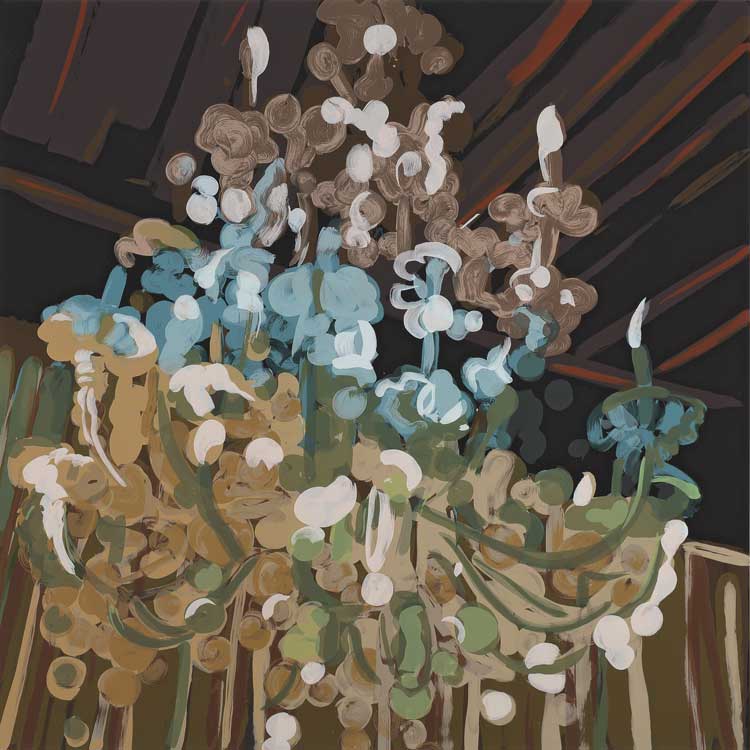
Clare Woods, Blow Away, 2025. Screenprint on Somerset Satin 410gsm paper, 90 x 90 cm. © Clare Woods. Courtesy the artist and Cristea Roberts Gallery, London.
Overall, though, this exhibition is the artist at her best – a true homage to her practice and to her incredible skill in rendering the floral world, as well as a reminder of the fragility of life. Not long ago I heard of a quote by Soane (relayed by Antoni Malinowski, whose paintings were exhibited at Pitzhanger Manor in 2025). Soan used to say that architecture is a vessel for light. In that analogy, a painting by Woods could be a seen as a vessel for life: sometimes calm and subdued; sometimes restless and nervous; often joyful and jubilant. As I leave the exhibition, a part of me wishes that Woods, one of the best painters of her generation, would veer outside the safe, traditional subject matter of flowers, gardens and botanical architecture. But another part, standing face-to-face with her giant, shimmering paintings, transfixed and pulled head-first into her sensual world, wants to look at these fireworks of nature for ever.
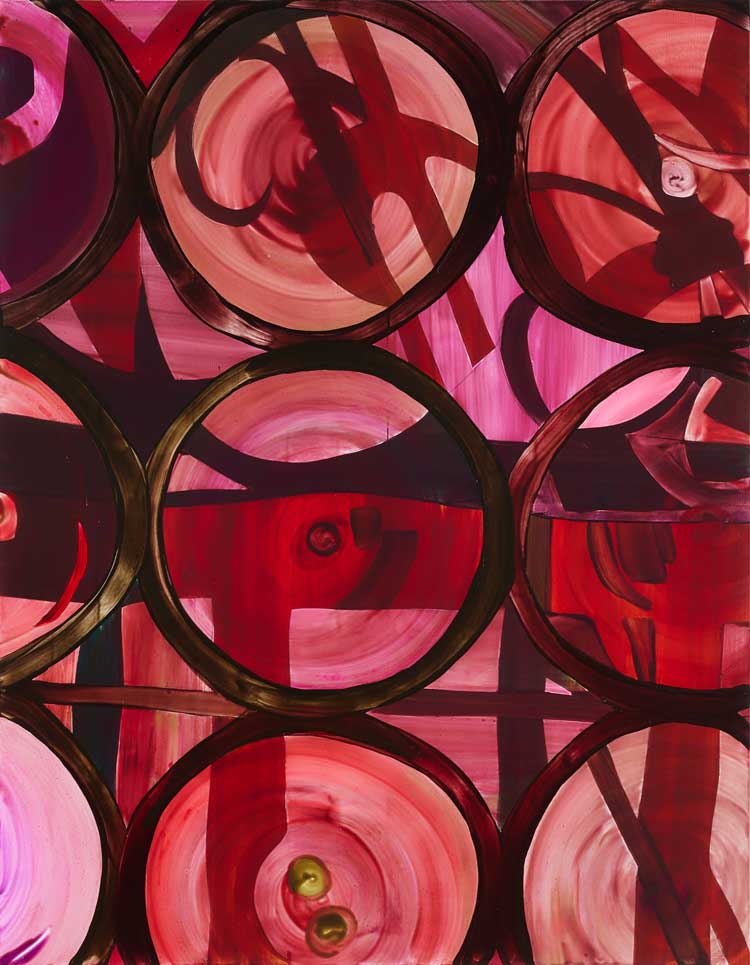
Clare Woods, Cold Case, 2025. Oil on aluminium, 90 x 70 cm. © Clare Woods. Courtesy the artist and Victoria Miro.
Click on the pictures below to enlarge

Copyright © 1893–2026 Studio International Foundation.
The title Studio International is the property of the Studio International Foundation and, together with the content, are bound by copyright. All rights reserved.
 |
 |
 |
|---|
-300.jpg)
 Handpicked: Painting Flowers from 1900 to Today
 Alison Watt – interview: ‘I have spent my whole life working from life, so to work from death was a different experience’
 David Remfry – interview: ‘It’s unprecedented that there were no arguments whatsoever this year’
 Rana Begum: Dappled Light
 The Armory Show 2021