




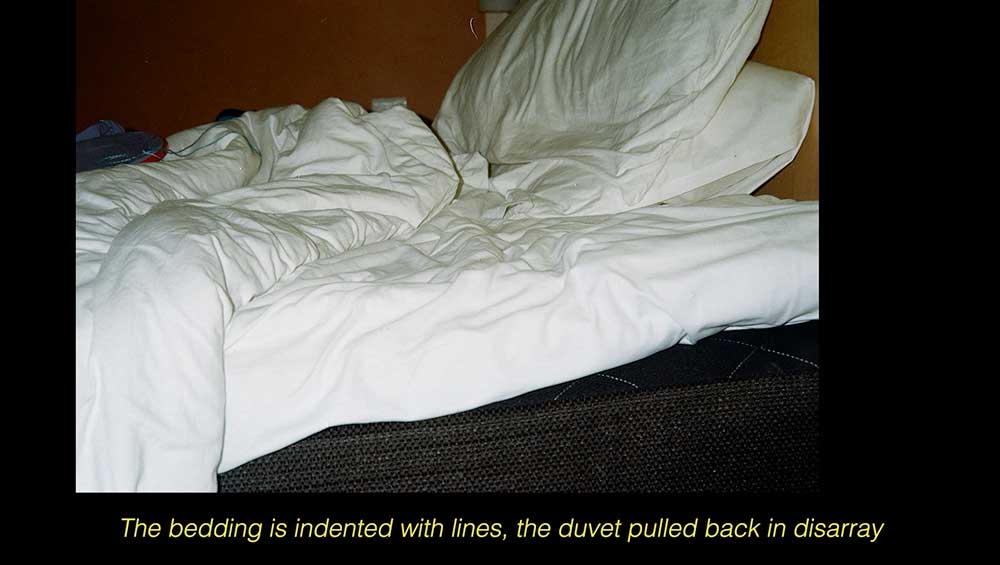
Jamila Prowse, Flare: the muted outline of a body in bed as a camera flash overtakes the scene [still], 2025.
Goldsmiths CCA, London
21 May – 16 August 2026
The precept of this exhibition is that a lot of illness and disability, even with today’s increased advocacy and awareness (for example, the sunflower lanyard scheme), remains invisible to the masses. To quote from the blurb: “Within this exhibition, disability is understood as produced by inaccessible environments, institutions and social attitudes.” It is a little counterintuitive, then, that the exhibition is as demanding – in terms of the sheer quantity of work on display and also the brain power required to parse it all – as it is. This is not wholly a criticism, however, since the content is pretty much all wonderful, intriguing and thought-provoking individually, but I would need to return at least once to fully appreciate it all (and I do not live close enough to render that feasible).
As I say, however, the works on display are, on the whole, marvellous, and they couldn’t get much better than the piece with which – on the advice of the front desk – I began: Jamila Prowse’s film, Flare: The Muted Outline of a Body in Bed as a Camera Flash Overtakes the Scene (2025) (which can be (re-)watched on the artist’s website). Elegiac and poetic, the 13-minute film, which is broken down into chapters, narrates a period of unwellness, or a “flare-up”, of a chronic illness, which makes art-making almost impossible and time run on a different loop. “Sickness narratives,” Alice Hattrick writes in their book, Ill Feelings, “do not always start with symptoms and end in recovery. Treatment does not always follow test. A new diagnosis might arrive at any time, or never. Sick time is not linear time. It is circular. It lapses and relapses, it drags, loops and buffers.”1 The imagery in Prowse’s film centres on the artist’s bed(s) (in a nod, perhaps, to Tracey Emin, whose Bed (1998) also speaks of sanctuary and healing – a place that kept her alive when in the depths of despair) and narrates things she can and cannot do. The voice (not the artist’s; also shown as subtitles) flips between more basic audio-description and complex autobiographical and emotional analysis. (It should be noted, also, that there are excellent audio-descriptions for each work in the show available online, some even in the artist’s own voice.) “Illness was her occupation,” continues Hattrick, “because illness takes up time, the time of not-doing what you want to be doing, the time of explaining why it has taken you a year to reply to a letter. It also changes the quality of time itself, slowing it down, and breaking it up.”2
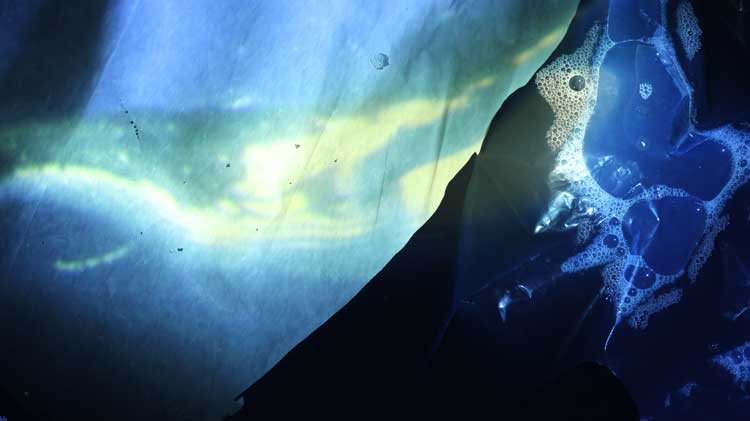
Lizzy Rose, Sick, Blue Sea., 2018 Courtesy of the estate of Lizzy Rose/Christine Luck.
Somewhat annoying in its interference with Prowse’s voiceover, that of Sick, Blue Sea (2018), by Lizzy Rose (who died in 2022, aged 33), can be heard intermittently from around the corner. This frustration echoes that of illness, and certainly of being bedbound in hospital (or indeed at home) and unable to adjust the volume of things going on around you. Rose’s work (also available online) is narrated by – wait for it – a teenage sperm whale (?!) on their Tumblr blog, accompanied by imagery from an endoscopy (Rose lived with intestinal failure caused by Crohn’s disease), a hospital ceiling (iykyk), and under the sea. The film reflects on the significance of online communities for disabled and chronically ill people who might otherwise be physically or experientially isolated from others. It also expresses the tedium with the mantra-like repetition of the words “No thoughts; can’t think; too sick” and the exasperated utterance: “I don’t think anyone’s ever died from feeling sick, but I wish I could sometimes” – a sentiment with which I wholly concur. As Hattrick further writes: “Was I sick of feeling angry all day, or angry at feeling sick?”3
Between these two filmic works hangs a beaded curtain, Untitled (Chemo) (1991), by the Cuban-born American artist Felix Gonzalez-Torres. Its cream, clear and metallic beads make me think of my own experience with lymphoma and the dodgy white blood cells involved. For Gonzales-Torres, chemotherapy was given at the time as a treatment for Aids, and he died from an Aids-related condition in 1996. Similarly Aids-related is Derek Jarman’s visceral and angry painting, Act Up (1992), in which the bodily colours of pink, red and purple rage against one another and into which is scratched the title, which references the activist organisation Aids Coalition to Unleash Power. “I want to release some of the anger which everyone with HIV feels,” Jarman said. “The actual physicality of painting will release the violence in me.”4
One of Benoît Piéron’s works (the other, in the upstairs gallery, is a string of pastel-coloured bunting made from hospital-issue sheets) is linked to Jarman, since it is, as the title says, [a] Pillbox of Dungeness Seed Bombs (2018), which contains capsules filled with seeds from Jarman’s garden at Prospect Cottage in Kent. Again possibly referring to chemotherapy, Piéron plays on the idea of healthy floral growth coming from seeds that are toxic to humans. The reason all these artists make illness- and pain-related works can be summarised by Louise Bourgeois, who said: “The subject of pain is the business I am in. To give meaning and shape to frustration and suffering. The existence of pain cannot be denied.”5
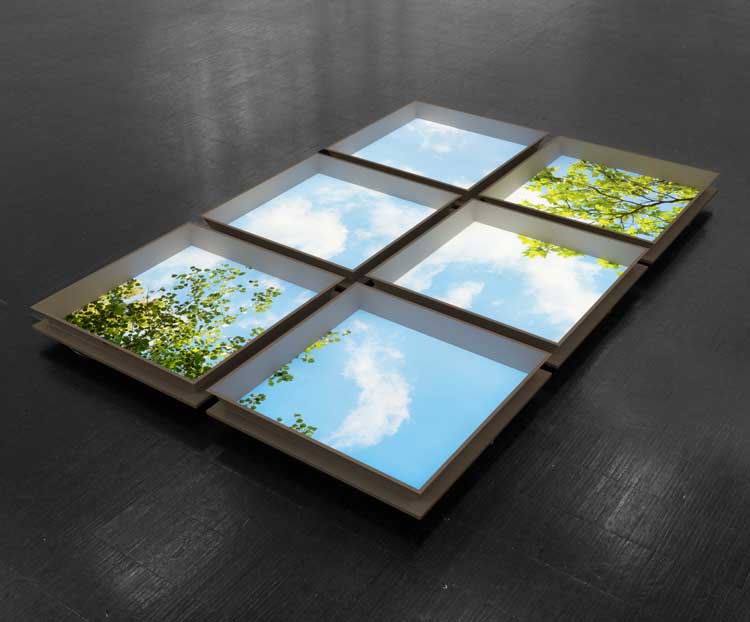
Carolyn Lazard, Into the Wild Blue Yonder, 2025. LED panels with recessed ceiling frames, 12 × 192 × 127 cm (4 3/4 × 75 5/8 × 50 in). Courtesy of the artist and Trautwein Herleth, Berlin
Photo: Joanna Wilk.
Carolyn Lazard also makes reference to hospitals and sick/crip time spent waiting in them with Into the Wide Blue Yonder (2025), which reappropriates the LED panels, so often found as “positive distractions” in waiting rooms, and places them on the ground, reflecting the sky. This interlude of the natural into a space where the exhibits are otherwise largely “indoorsy” space, where you can almost smell the antiseptic, is indeed a pleasant breath of fresh air. Avril Corroon’s Sublet Glory (2026), newly commissioned as part of her ongoing project on substandard housing and structural neglect, however, is quite the opposite. It comprises suspended IV bags, filled with water collected from dehumidifiers in homes affected by damp, which hang in the form of a chandelier. The patient observer will notice the intermittent dripping of the water on to the plush carpet beneath. Is the smell of mould and damp purely imagined?
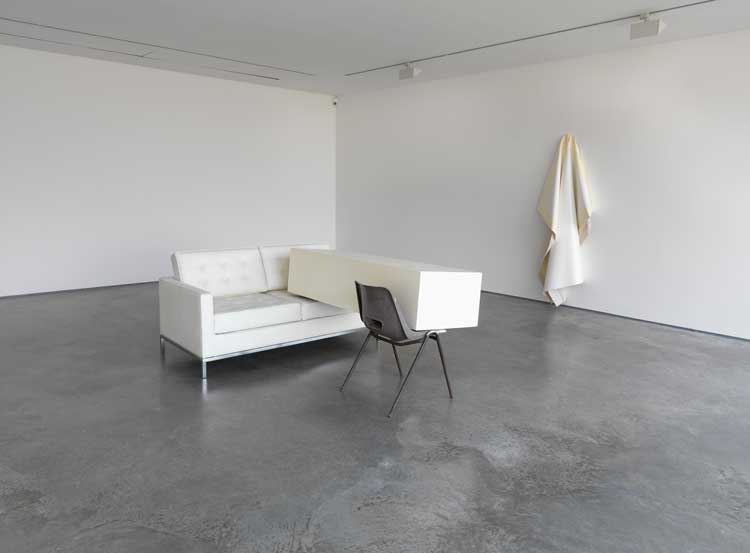
Angela de la Cruz, Transfer (Ivory). Courtesy of Galerie Thomas Schulte, Berlin.
Upstairs, I must admit, is a teeny bit disappointing after such a brilliant beginning. Angela de la Cruz’s Transfer (Ivory) (2011), a chair and a couch connected by a block, calling to mind the difficulties for wheelchair-users wanting to move from their beds or chairs to other surfaces or vehicles, isn’t a patch on her fabulous torn and collapsed canvases. Nevertheless, it is quietly poignant, drawing on the long periods the artist spent in hospital following a stroke in 2005. On the wall in the same gallery is JJJJJerome Ellis’s photographic series, Exposure (2024-ongoing), and pages from his fantastic publication, The Clearing (2022), which explores his stutter as a means of opening up crip spaces, from which words, images and experiences emerge altered. Both the pages, and the accompanying soundtrack, showcase a form of poetic musical score, the repeated consonants creating images on the page. Once more looking to the blurb: “Language is shaped by systems of power that fail to hold certain experiences; it is in these gaps that it is used as a material for poetics, play and improvisation.”
What exactly is going on in the Daskalopoulos Tank Gallery I do not know. It has supposedly “been transformed into an immersive environment of performance and collective expression” by the Freestylers, but, to me, it is just a messy space with nonsense on the screen. Maybe by this point I was too short on spoons to fully engage; maybe I just don’t get it (my friend, after all, seemed to enjoy this room quite a lot).
In the final room, Score for Backing Up (2013) by Park McArthur and Constantina Zavitsanos is a black vinyl wall text, structured like a poetic score, reflecting, again, on the process – and intimacy – of moving a crip body from one surface to another. I am most clearly spoken to, however, by Bella Milroy’s series of altered Department for Work and Pensions (DWP) envelopes, on which she has made charcoal drawings and poems that speak to the disempowerment felt by so many disabled and chronically ill people as they fight to get their dues and be awarded (even that verb is loaded – as highlighted by the drawing Words Wear Uniforms Too, 2019) enough money to live on. Her words truly capture the shame: the shame of needing help and the shame of being ill in the first place. As Hattrick writes: “Shame is the horror of being seen. Shame is toxic or harmful not healing, or that is what we are told. Shame is what makes you want to disappear, to become invisible in the face of others, as invisible as your illness. As attitudes towards gender, sexuality and race have shifted, we have learnt to take pride in the ways we identify, to make ourselves visible in order to deny shame its power over us. But if illness is a source of shame, and perhaps even its expression, then that feeling needs to be attended to, not counteracted with pride. Shame, in this sense, is a valuable emotion. Shame is the fact of living a disapproved life, of living a sick life, an internal experience that is measured and judged by others who say: ‘You look well.’”6
It is for that reason that this exhibition is so necessary: it speaks the shame of long-term illness and disability without any toxically positive flourishes; it speaks the naked truth. Once again to quote from the blurb: “The artists in Flare-Up shift what is usually treated as private experience into shared forms of political collectivity and aesthetic enquiry,” and that is much needed and long overdue.
References
1. Ill Feelings by Alice Hattrick, published by Fitzcarraldo Editions, 2021, page 320.
2. ibid, page 78.
3. ibid, page 30.
4. Cited on the information sheet to accompany the exhibition.
5. Cited in Hattrick, op cit, page 29.
6. ibid, page 61.
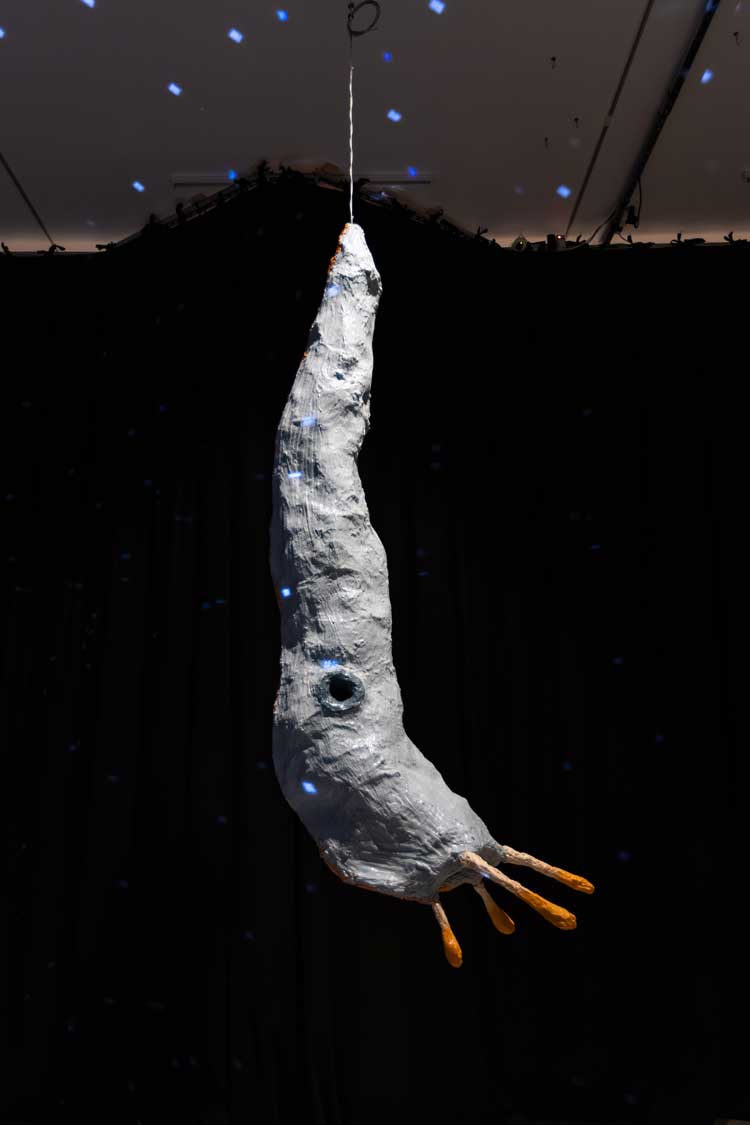
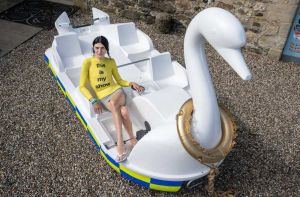
Abi Palmer, Slime Mother. Photo: Jules Lister.
Click on the pictures below to enlarge
![Jamila Prowse, Flare: the muted outline of a body in bed as a camera flash overtakes the scene [still], 2025.](/images/articles/f/035-flare-up-2026/Flare1.jpg)

Copyright © 1893–2026 Studio International Foundation.
The title Studio International is the property of the Studio International Foundation and, together with the content, are bound by copyright. All rights reserved.
 |
 |
 |
|---|

-1000-300.jpg)
 31 Women
 Adventures of the Black Square: Abstract Art and Society 1915 – 2015
 Stephen Farthing: interview
 Fondation Beyeler presents Daros Latinamerica Collection
 Derek Jarman: Pandemonium