The Fitzwilliam Museum, Cambridge
23 October 2026 – 3 May 2027
by ROCHELLE ROBERTS
Everyone knows the Morris & Co designs, the abundant floral motifs in rich colours that signify a kind of decadence. They are everywhere: in museums, but also on everyday items including mugs, teapots, cushions, towels, soap bottles, bags, notebooks and pens. Yet, despite their familiarity, how many people know of the man behind them, his political and social views, his radical ideas about how to live? What do we know of his collaborators, the artists and needleworkers, the models and influencers?
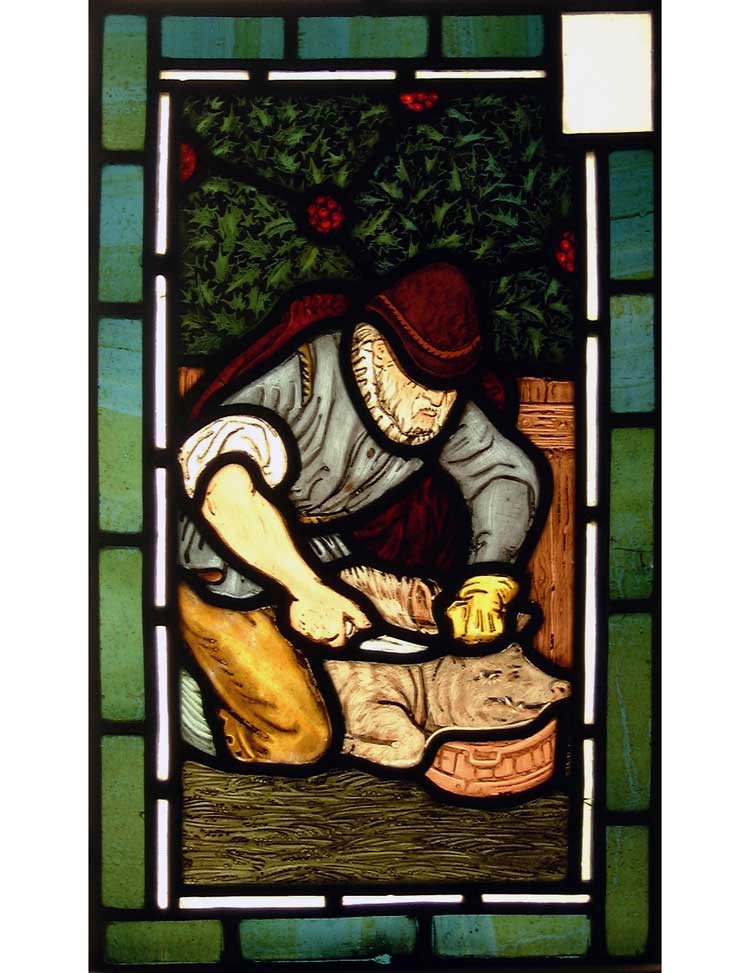
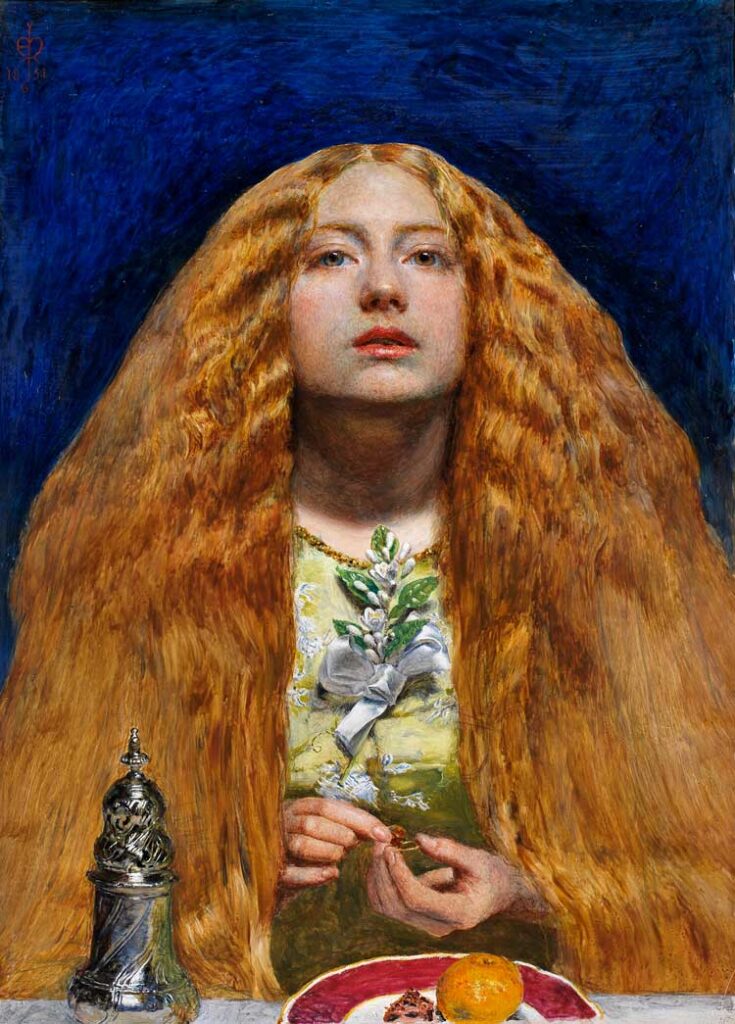
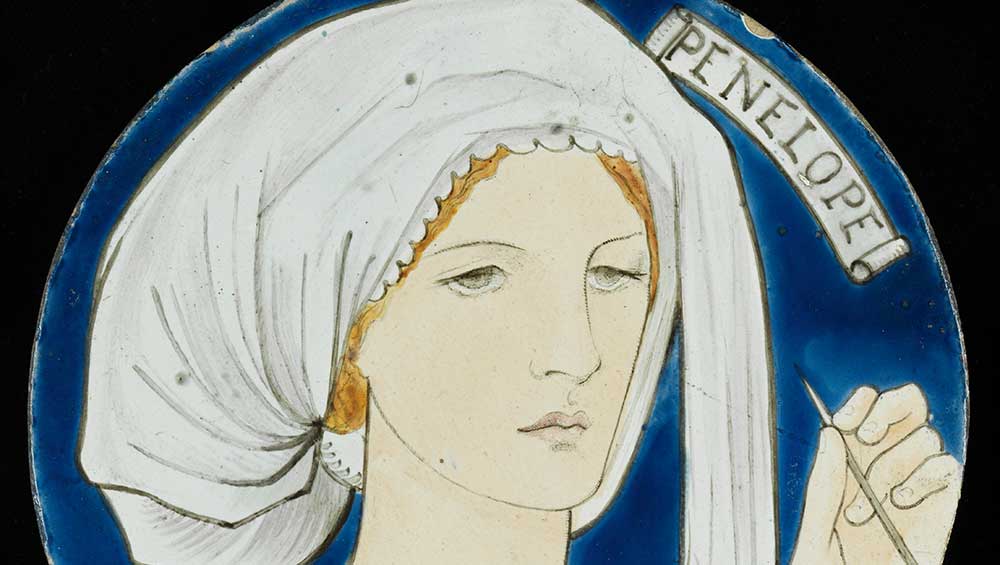
A major new exhibition at the Fitzwilliam Museum in Cambridge seeks to answer these questions, shedding light on the motivations behind the Firm (as Morris & Co was often referred to), its designs and the people who shaped it. A Call to Art: William Morris and the Pre-Raphaelites presents an abundance of works, including paintings, drawings, furniture, textiles, wallpapers, stained glass, ceramics and ephemera, some never-before-exhibited, by familiar names from the pre-Raphaelites such as Gabriel Rossetti, Edward Burne-Jones, Elizabeth Siddal and John Everett Millais, alongside lesser-known collaborators including Kate Faulkner.
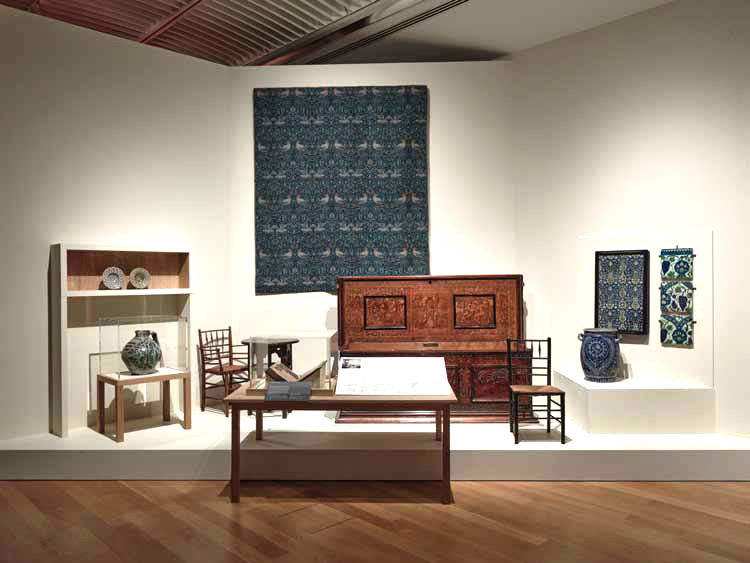
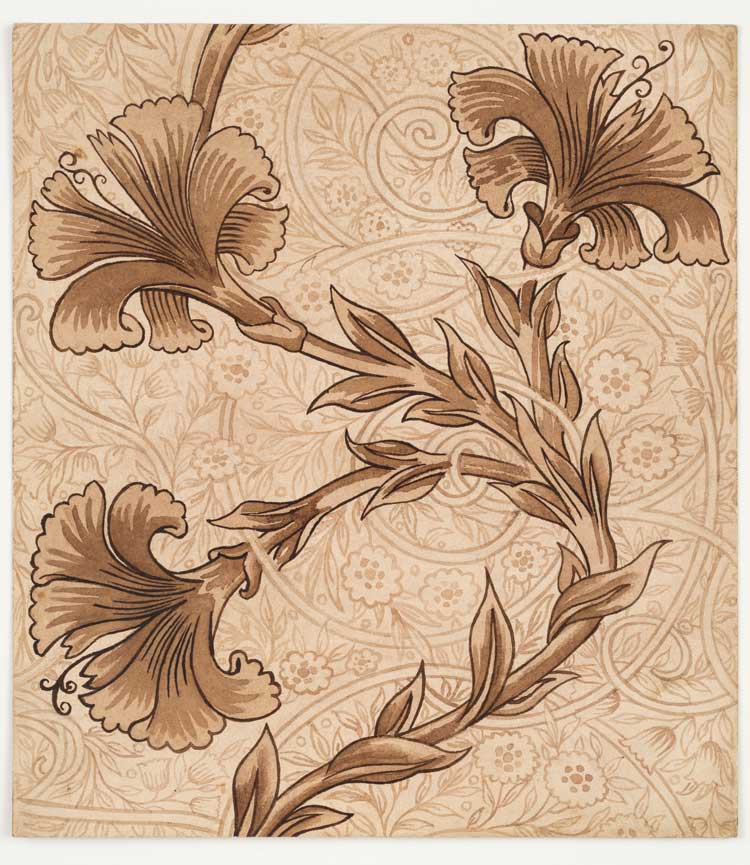
A key theme of the exhibition are the women who contributed to and sustained the Firm, as well as those associated with the Pre-Raphaelite Brotherhood. This is unsurprising given that the exhibition was curated by Jan Marsh, a William Morris and pre-Raphaelite expert who previously curated the Pre-Raphaelite Sisters exhibition at the National Portrait Gallery in 2019 – the first major exhibition to celebrate the contributions of the Pre-Raphaelite women – and who has written extensively on the women of the group, including books on Siddal, Christina Rossetti and Jane and May Morris. Significantly, the exhibition includes several works by Kate Faulkner, whose work with the Firm has previously been under-appreciated. Faulkner was one of only four designers, apart from Morris, who created patterns for the Firm. The exhibition features some of her fabric and ceramic designs, as well as the paintings she and her sister, Lucy, executed to the designs of Morris and Edward Burne-Jones.
There is also Morris’s own family: his wife, Jane, who appears in so many of the most well-known pre-Raphaelite paintings, and their daughters Jenny and May. All three were skilled embroiderers, Jenny and May having learned from a young age. They were also designers in their own right. Their work, along with that of a host of other women, including Georgiana Burne-Jones, Elizabeth “Bessie” Burden, Annie Jack, Elizabeth Wardle and Eliza Campfield, brought Morris’s (and later Burne-Jones and May Morris’s) designs to life.
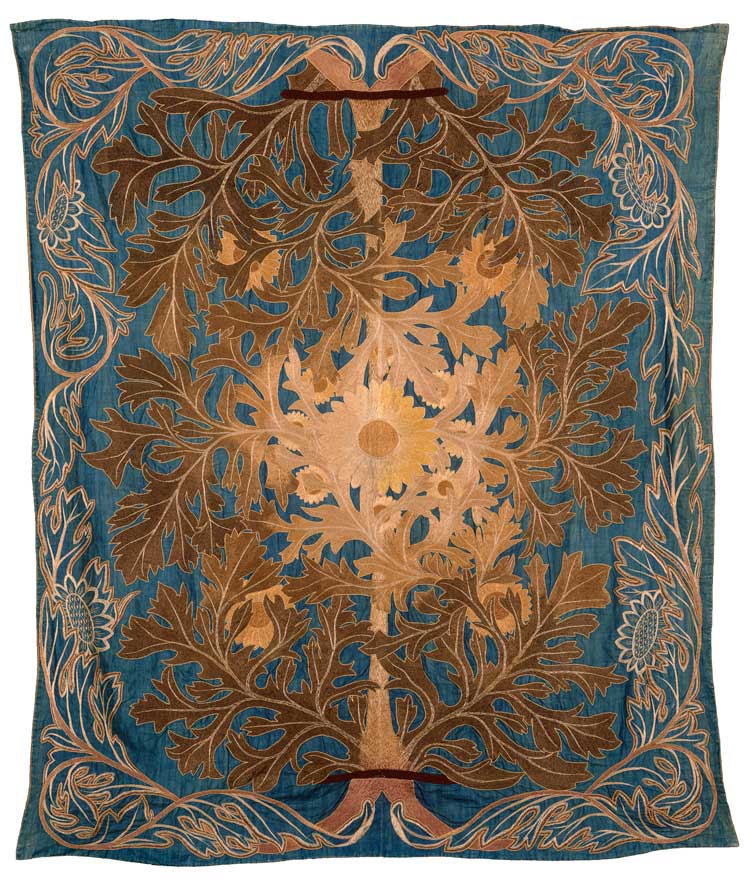
As the Firm established itself and demand for its products grew, the technical skill, largely performed by the women, increased. These women were highly skilled professional workers, without whom the Firm could not have sustained itself. This is clear to see with the size and detail of many of the tapestries, wall hangings and furniture; the intricacy of the stitches, the decadence of the decoration. Some of the most beautiful examples include the “Artichoke” wall hanging designed by Morris and embroidered by Ada Phoebe Godman, the Reredos designed by Morris and decorated by Kate Faulkner, and the “Sunflower” bed cover designed by Morris and embroidered by Catherine Holiday.
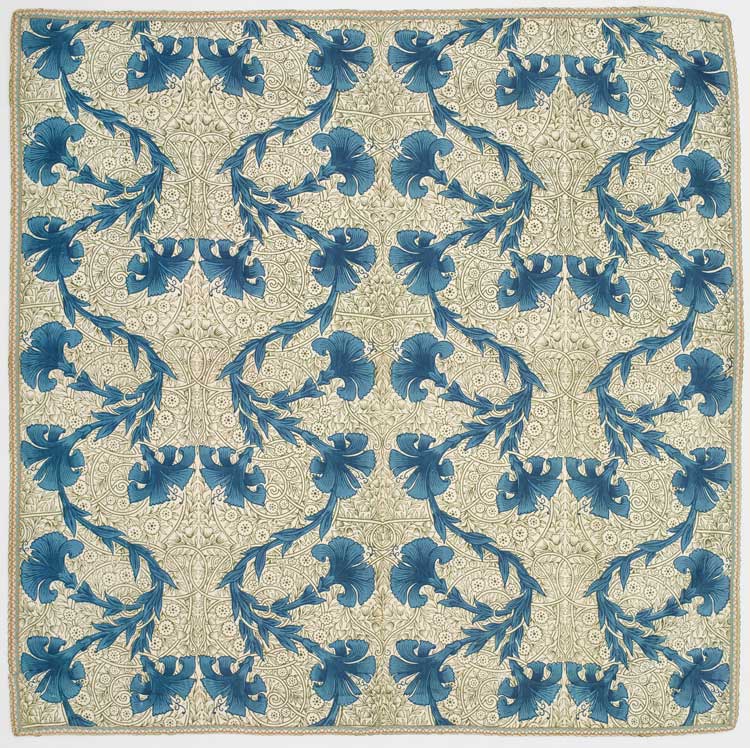
Another key theme of the exhibition is Morris’s political and social concerns. In 1883, he became a Marxist, joining the Social Democratic Federation and a year later formed the Socialist League with Karl Marx’s daughter Eleanor. Morris believed in taking an active rather than passive role in society. He wrote political texts and manifestos, delivered lectures (at least 1,000 over a six-year period), and actively campaigned for workers’ rights and free education. Within his own firm, he provided his workers with a library, sanitary working conditions and paid above average wages.
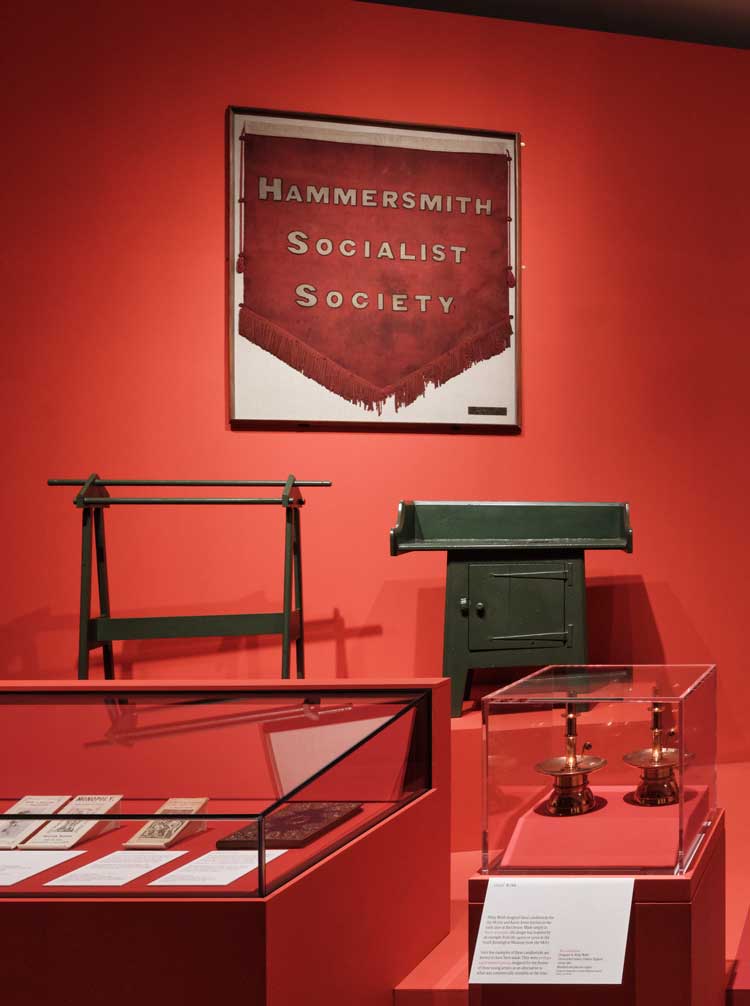
The pre-Raphaelites, who were influential to Morris, believed that art should be beautiful and socially engaged. Morris also believed craftsmanship should restore pride in the worker, acting as an antidote to the horror of the Victorian factory with is poor working conditions and polluted air. These ideas, radical for their time, would come to underpin the development of the Arts and Crafts movement, which centred on hand-crafted designs, rejecting the churn of mass production. The exhibition includes the Hammersmith Socialist Society banner, as well as Morris’s political pamphlets and works by Marx.
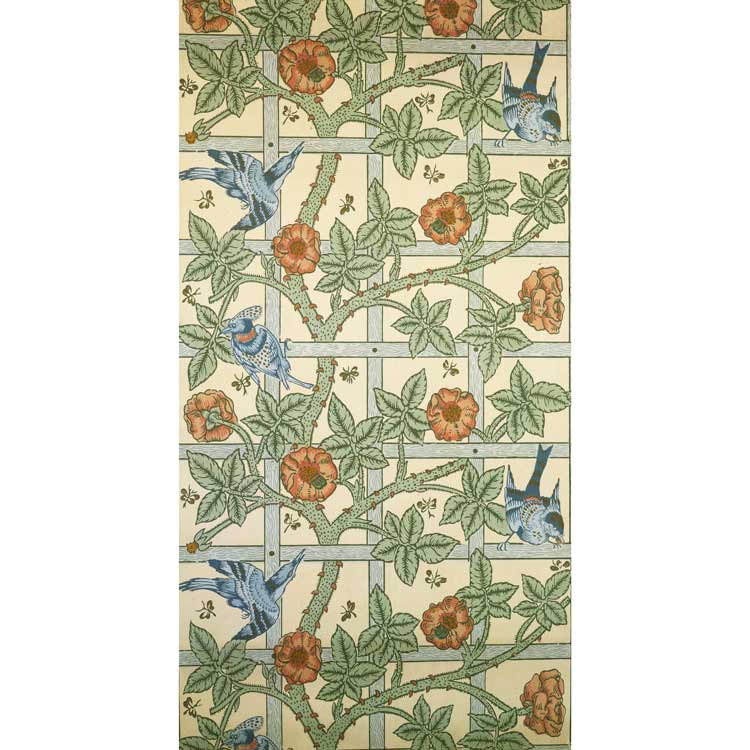
As well as being a socialist, Morris was also an environmentalist, influenced by the teaching of John Ruskin, who advised his students “to go to Nature”. Morris was vocal about the negative impact of industrialisation on the natural world, causing pollution and the destruction of the countryside. Plants and nature were exceedingly important to him. He would spend hours in his garden at the Red House in Kent, observing the flowers and making sketches that eventually turned into wallpaper and textile designs, such as Trellis which depicts the roses in the garden. At the Red House, the distinction between inside and out, nature and domesticity was made thin by how closely nature was allowed to come into contact with the home. Supposedly, the apple trees grew so close to the walls of the house that apples would fall through the open windows.

It is interesting the think of Morris in the context of contemporary life, since so many of the things that concerned him are still relevant. Today, we are facing the very real consequences of global warming, and the threat it is causing to nature, to wildlife and to ourselves. Morris truly believed in the power of art and nature to offer hope for the future. This exhibition brings to light his resonance with the now, 130 years after his death. As the artist Jeremy Deller imagines, if Morris were alive today, he would probably have designed the iPhone and been leader of the Green party.
Nobody is perfect, of course, and despite Morris’s convictions that art should be for all, Morris & Co’s products were so expensive that only the wealthy upper class could afford them, and, although he cared deeply for the environment, his workshop pumped harmful dyes into the nearby river. Yet we may still admire him for his actions, for choosing to be vocal about what he believed mattered, for his striving for an equal society, for his anti-war campaigns and calls for global peace. These ideals feel particularly resonant given how fractured our world is, with the rise of the far right, the prevalence of social and economic inequality and the inability of some well-known individuals to publicly acknowledge the atrocities happening in the world, or to deny them altogether.