Depot Boijmans Van Beuningen, Rotterdam
9 October 2027 — 29 March 2027
By JOE LLOYD
Disappearance is the default. For every artist whose name reverberates through generations, countless others are consigned to oblivion; today’s market stars and critical favourites may have even briefer primes than their predecessors. But the case of sculptor María Sol Escobar (1930-2016), known as Marisol, is surprising. At the peak of her success in the 1960s, Marisol was an artist and a celebrity. She appeared in fashion magazines, had liaisons with Willem de Kooning and Heinz Mack, and hung out with Andy Warhol. In 1968, she exhibited at Documenta and the Venice Biennale. The Daily Telegraph – hard to imagine now – brought her to London to sculpt the Royal Family. And yet by the mid-70s Marisol was out of focus. She had begun to vanish in the prime of life.
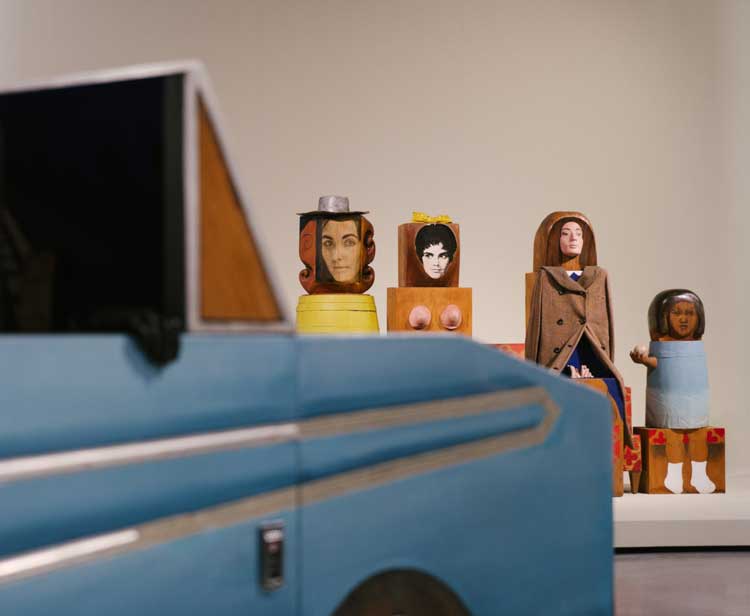
Decades of neglect followed, until her last years saw something of a resurgence – an appearance at a group show of Latin American artists at MoMA in 2004, a solo survey in 2014. On her death, Marisol donated her archive, including many major works, to the Buffalo AKG Art Museum in upstate New York. A touring retrospective across North America followed. That show has now landed in the Netherlands, at the gleaming reflective flowerpot that is Rotterdam’s Depot Museum Boijmans Van Beuningen. It is something of a homecoming: the Boijmans Van Beuningen organised Marisol’s first solo museum exhibition in 1968 and is one of only two institutions in Europe to own one of her works. Depot has arranged Marisol’s work well, allowing visitors to come across her large-scale sculptures one by one, so that each encounter is a surprise.
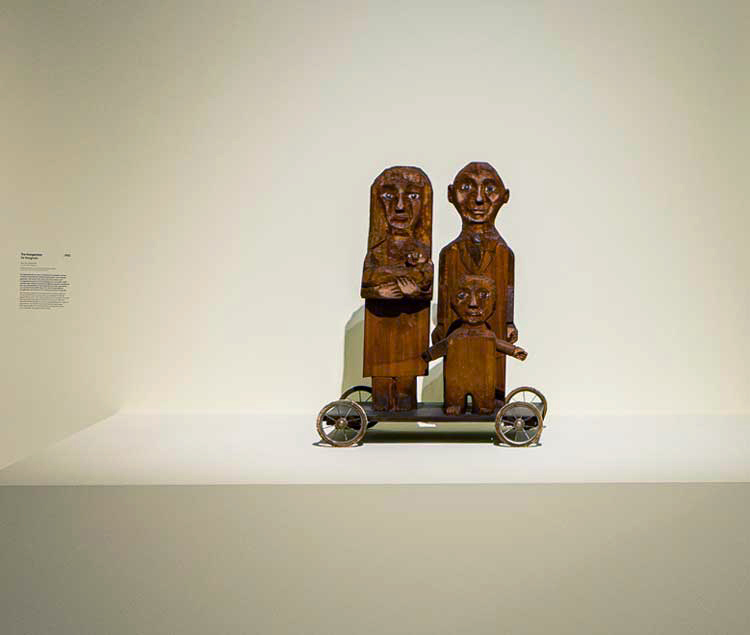
The artist was born in Paris to millionaire Venezuelan parents and spent her childhood travelling around Europe and the Americas. When she was 11 her mother died by suicide and Marisol – she had already gained her nickname – spent almost a decade refusing to speak. Art and religion became her escape. She studied art in Los Angeles, Paris and New York, where she was taught by the abstract expressionist pioneer Hans Hofmann. By the mid-50s she was creating wood, terracotta and bronze sculptures inspired by pre-Columbian folk art. The single example at Depot, The Hungarians (1955), features a crudely rendered family carved from wood. They stand on a cart, an overt nod to their experience as emigrants.
Marisol’s early works were exhibited at Leo Castelli Gallery in 1957, where they were hailed as a revival of craft and figuration. A promising career beckoned. But Marisol balked at the attention, especially as much of it focused on her appearance and mystique over her art – a problem compounded by her reticence to speak. She broke with an incredulous Castelli and moved to Rome, where she had a mental breakdown. When she returned to New York 18months later, she had found a mode that would make her even more famous. Her sculptures became bigger, bolder and less straightforwardly representational. Starting with Tea for Three (1960), a totem topped with a trio of clown-like heads and painted in the tricolour of the Venezuelan flag, she began to integrate photographs and plaster casts of her own body parts.
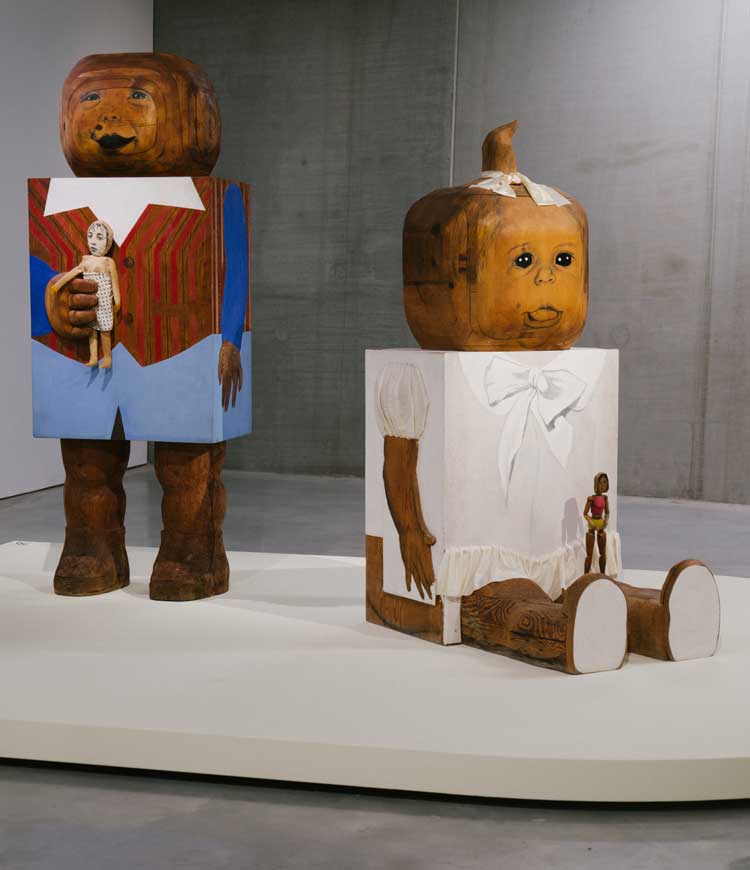
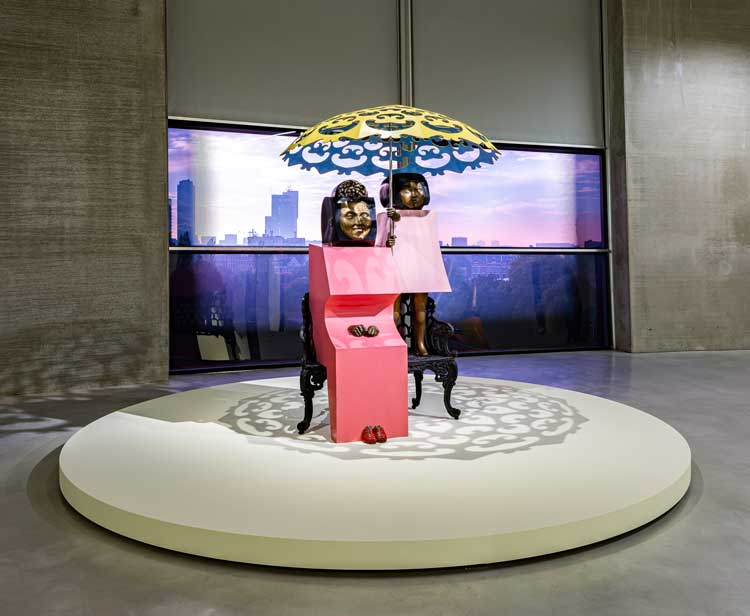
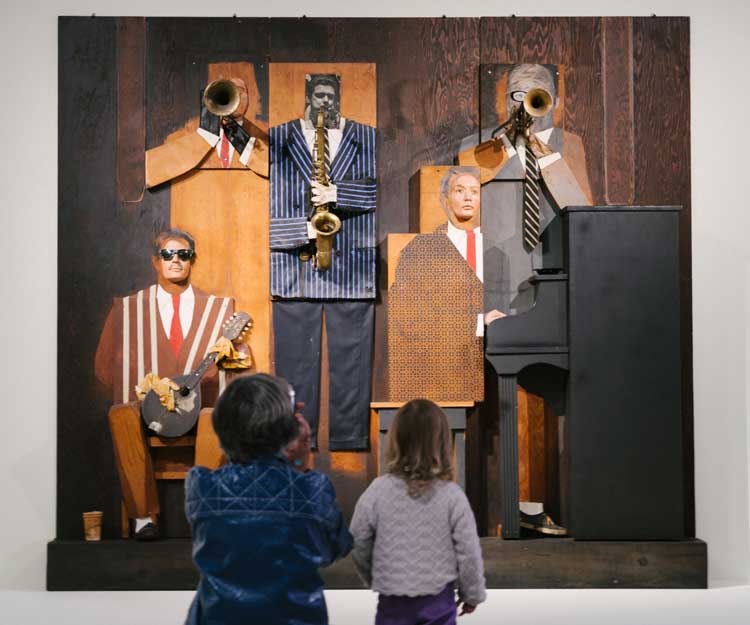
The focus on her own form unleashed a blizzard of creativity. One Self-Portrait (1962) juxtaposes a drawing of the artist with two suggestive fried eggs painted on a plate, a droll pre-echo of Sarah Lucas’s famous 1996 photograph. Marisol began to play with the notion that identities are constructed. She could be an angry child, an elegant gentleman, a male jazz musician. Marisol’s 1960s sculptures blend the brashness and referentially of pop art with the authenticity of the handcrafted. Her technique of drawing directly on to wood gives them distinctive uncanniness, as well as a psychological penetration that belies their blocky forms. Many are wryly comic. Witness her enormous pair of American imperialist babies, big enough to crush an adult, handling dolls of the artist’s face (1963), or The Sun Bathers (1967), in which three women using aluminium tanning collars resemble alien visitors.
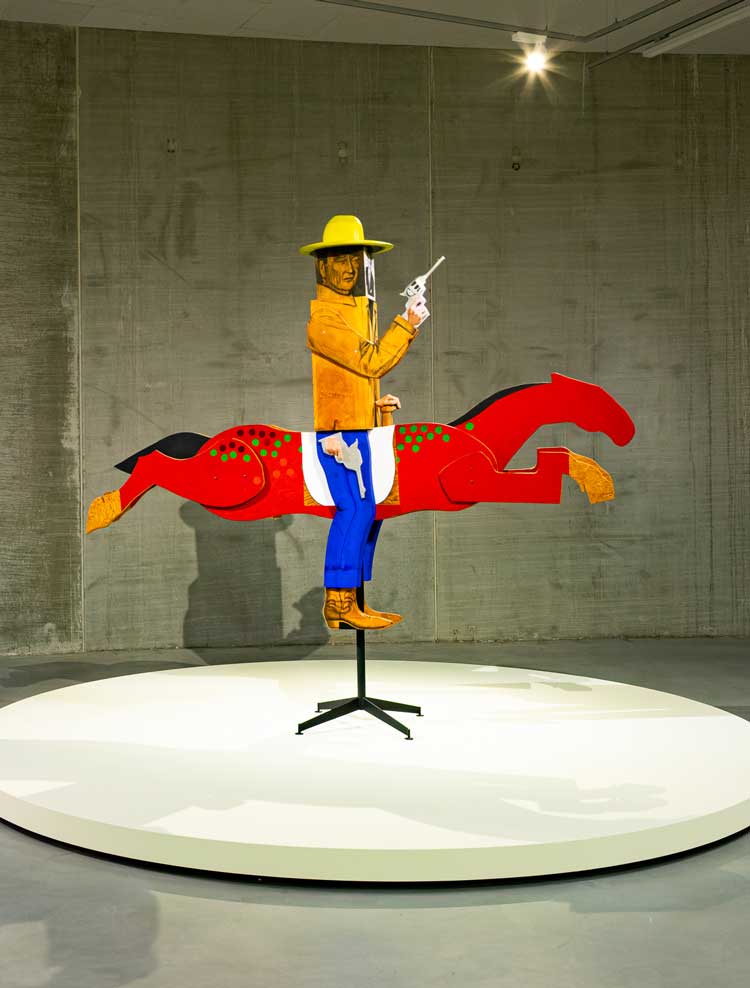
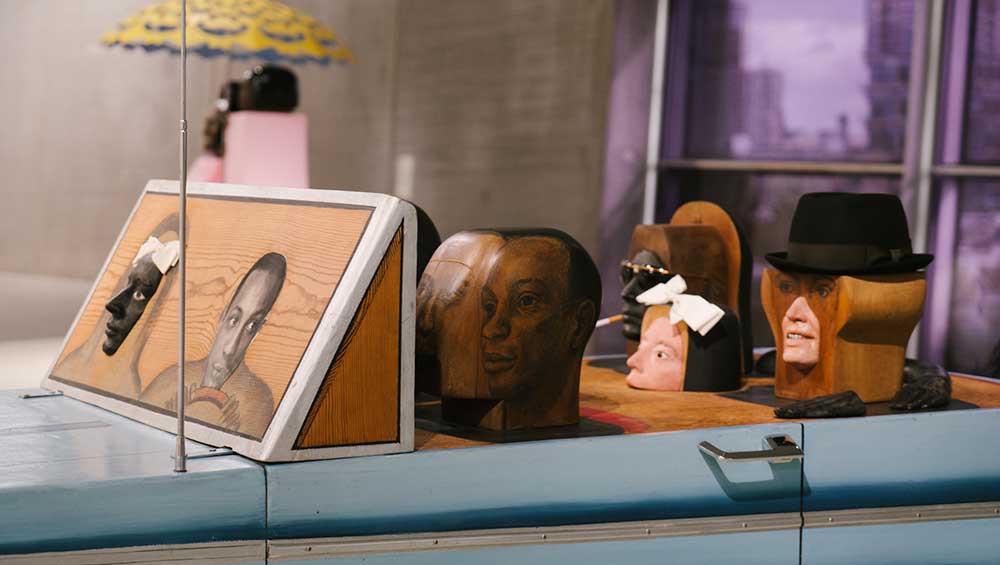
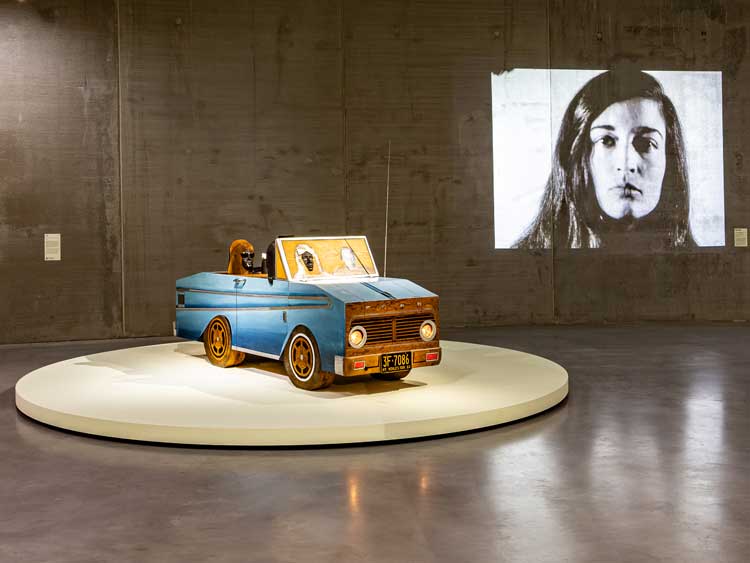
Marisol differed from her pure-pop contemporaries both in embracing craft and inserting clear political messaging. John Wayne (1963) cuts a ludicrous figure on a weathervane like pony. He is at once larger than life and flat, as if his presentation of masculinity lacks depth. She had a talent for disguising messages within her carnivalesque world. LBJ (1967) holds three tiny wrens with the face of his wife “Lady Bird” Johnson: a whimsical play on the nickname or a critique of gender imbalance? The Boijmans Van Beuningen’s own The Car (1964) depicts an interracial family in a Ford convertible. Marriage between races was then illegal in many US states. Marisol’s immovable vehicle suggests that not everyone enjoys the freedom promised by the car. She soured on the US in general. Later works included grotesque masks weighed down and disfigured by commercial objects such as cola bottles and beer cans.
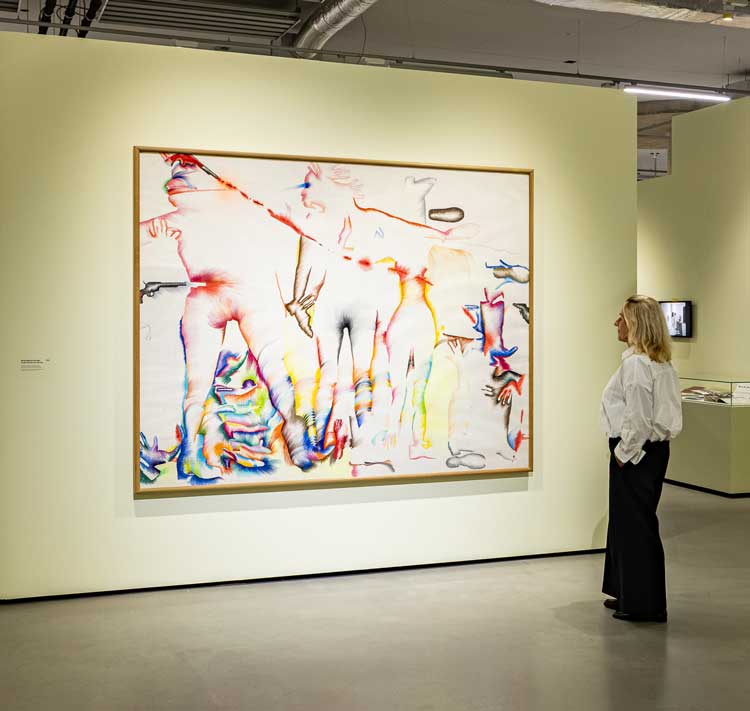
After the annus mirabilis of 1968, Marisol once again turned her back on fame, the art world and the US. She was particularly horrified by the repression of anti-Vietnam war protests. She travelled in Asia before settling in Tahiti, discovering the joys of diving, and becoming engaged with ecological conservation. When she returned to art, she did so with a set of sculptures resembling predatory fish, once again featuring casts of the artist’s own face. Slick and smooth where Marisol’s previous work often looks homespun, these works have a powerful presence. Some of the fish resemble missiles and submarines, evoking at once the animality of human violence and the threat faced by natural habitats.
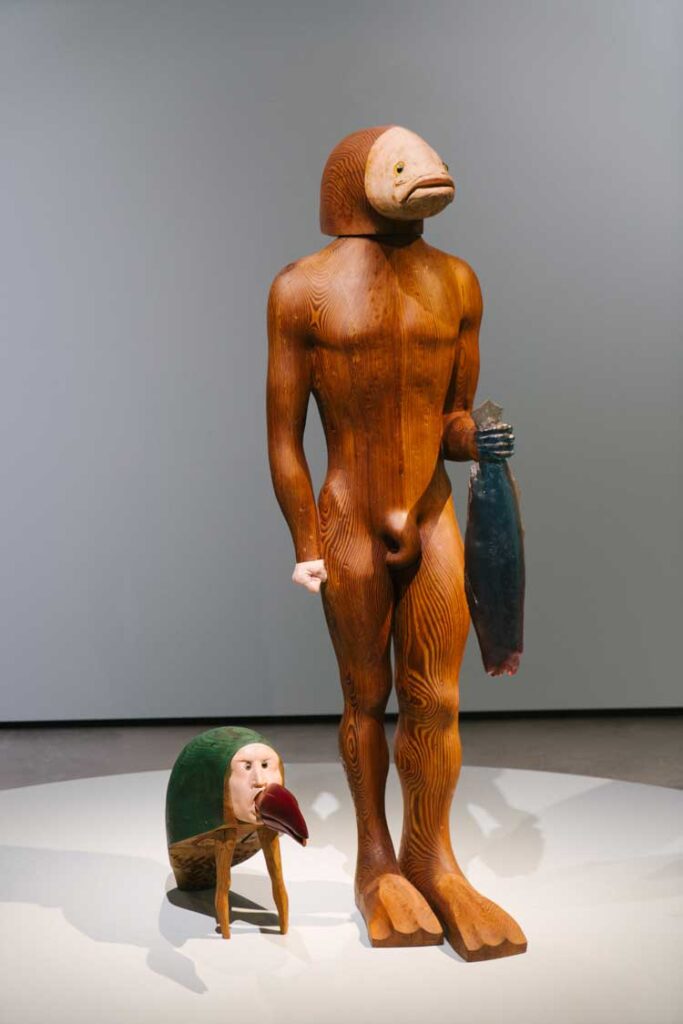
At the time, these works met a frosty reception, all but tanking their creator’s career. Looking at something like The Fishman (1973) one can see why: this fish-headed man accompanied by a creature from Bosch is equal parts strikingly crafted and overwhelmingly kitsch, with none of the sprightly wit of Marisol’s earlier work. The decline was not to be arrested. Marisol moved away from the self-reflection of the 60s. Her political work became more overt, such as sculptures of native Americans promoting indigenous rights. While her gallery career waned, Marisol became a prolific public artist, especially in Venezuela, a turn that perhaps influenced this move from critique to earnestness.
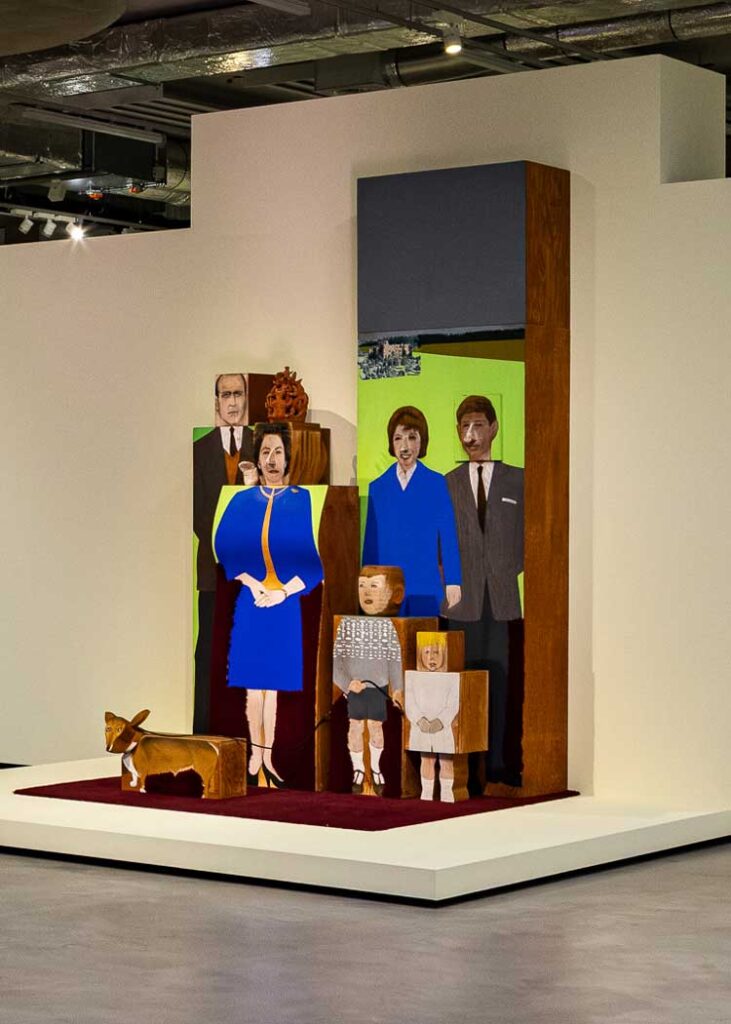
Many of her sculptures became portraits of her artistic heroes: a goblin-like Picasso with a heart encased in nails, a wizened Georgia O’Keeffe squatting with her chow dogs. The playfulness that had animated her glory days had largely gone, but occasionally the old magic resurfaced. In Desmond Tutu (1988), his head, hand and crook protrude from a large purple board, as if he is a living barrier against injustice. The Funeral (1996) captures the three-year-old John F Kennedy Jr presiding over his father’s memorial procession, a parade of wooden toys. Marisol was drawn to a famous photograph of the event, and the adult “despair” she divined in Kennedy’s face. Much of Marisol’s work is linked by this propensity for sympathy, visible all the way back in The Hungarians, even in her portrayal of Britain’s ghoulish Royal Family (1967). This intense feeling might be Marisol’s most radical position.