Whitechapel Gallery, London
7 October 2026 – 14 February 2027
by JOE LLOYD
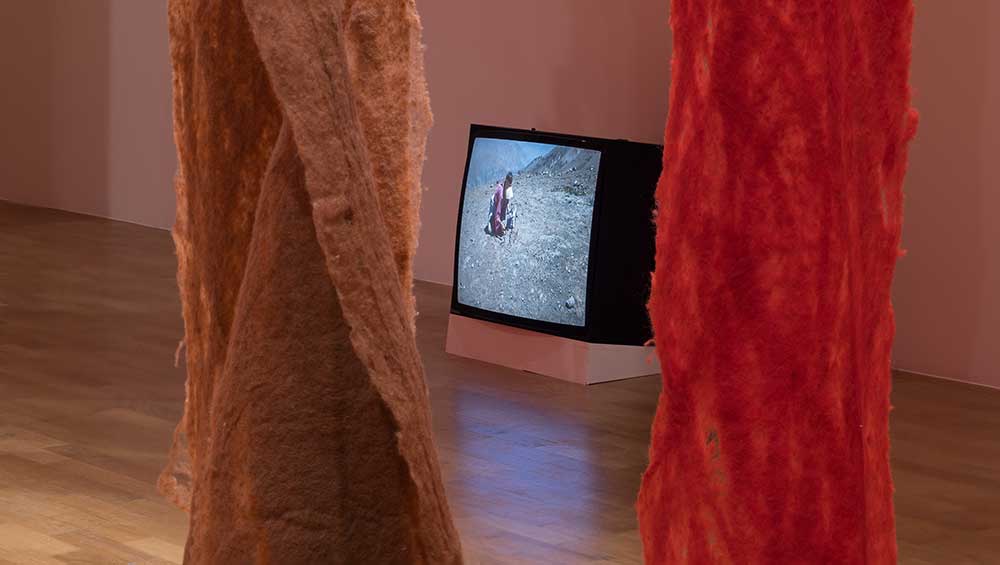
Living Threads, the Whitechapel Gallery’s retrospective of the six-decade-long career of the Chilean artist and poet Cecilia Vicuña (b1948), opens with a forest of unspun wool, hung from the ceiling. A symphony in pink and red, it almost fills a whole room. As one moves around, these fabric columns sway like branches in a breeze, enacting a delicate dance. The individual strands are themselves compelling. Some are thick and fluffy, like a well-used rug; others are ragged and pockmarked. A few are thin enough to reveal the white of the wall behind them, like waves of stray hair. Vicuña’s textiles also have an organicity, like strips of meat hung to cure, or the pelts of a slain animal, or even flayed and bloody skin. Despite the installation’s monumental scale, it suggests transience rather than sculptural permanence, and the processes of coming into being and then deteriorating.
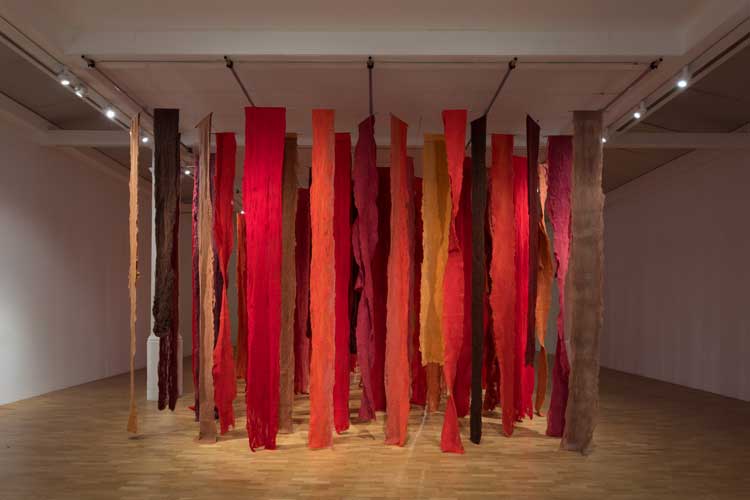
Titled Quipu Menstrual 1 (2006-24), this work emerged from a 2006 performance in which Vicuña laid thin red threads at the foot of an Andean glacier, forging a connection between menstruation and the melting of ice caps. Vicuña was protesting the proposed sale of the glacier’s site to a mining company that planned to move it. Installations of wool have followed in the years since, steadily growing in scale. Vicuña takes her idea of the quipu from indigenous Andean cultures such as the Inca empire. These quipus were combinations of knotted cords used to keep records. Some were numerical, using colour, knots and material to count numbers; the largest ever found is more than five metres long and consists of more than 1,800 cords. Others might have recorded other information, such as stories. Their usage gradually declined after the Spanish conquest. Fewer than 1,500 survive.
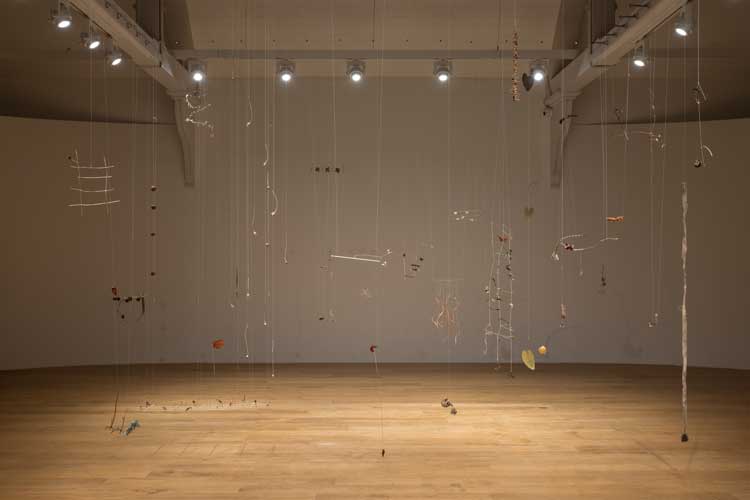
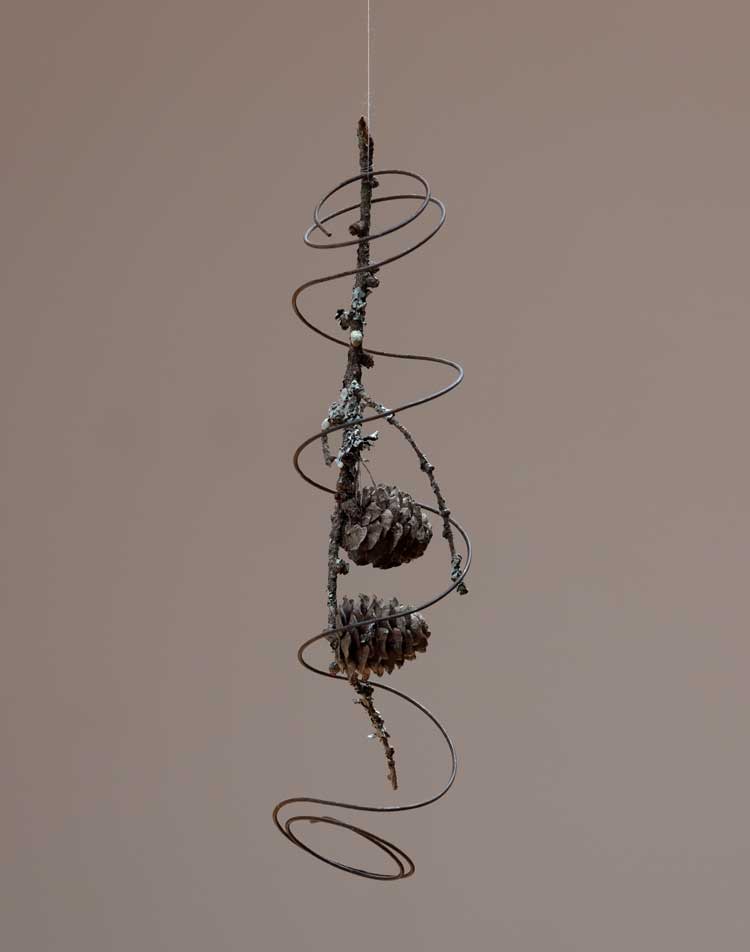
For Vicuña, the idea of the quipu is something that transcends its physical form. In an interview with Asymptote she claimed there was also a sort of invisible quipu, “a system of responsibilities and care for the land and the water”, and a ritual quipu, where people united in a collective performance for unknown ends. As well as a device for recording knowledge, the quipu becomes “a metaphor for collectiveness, for unity, for sensing what is around you”, defending our relationship to the land. Foraging Quipu (2025-26), which ends Living Threads, makes this clear: it is a collection of found objects from nature, such as leaves, chillis, mushrooms, berries and orange peel, suspended in a web of near-invisible strings. Gathered by local people through an open call, these fragments suggest the beginnings of a new forest, a seed bank, for a revived nature, which shifts as some items decompose and new ones are added.
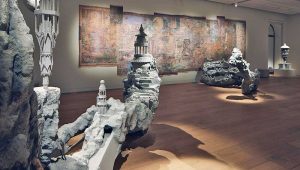
If Living Threads had featured a succession of these bewitching hanging works, it would have been a quiet triumph. Instead, its curators have chosen to encompass Vicuña’s varied oeuvre, and in doing so present a knottier story, one that shows an artist who ranged widely across mediums. From 1966, she began creating “precarios” (precarious works), which began as miniature sculptures made of castoff materials, designed to fade away like a sandcastle in the waves. A slideshow of photographs shows some of these installed in various landscapes, like miniature ritual objects. The set Precarios: A Journal of Objects for the Chilean Resistance (1973-74) comprises a newspaper clipping and mementos concerning the 1973 military coup that deposed the democratically elected leader Salvador Allende. Like ancient quipus, they have diminished in number: only a handful survive of the original 400. Vicuña suggests that gathering these insignificant objects can serve as a locus for activism, items that can strengthen the soul against injustice. As unimportant as each object is, assembled they are like relics for a magical ritual.
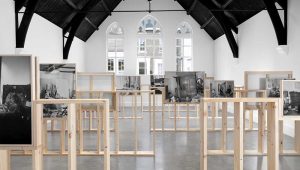
Vicuña moved to London in 1972 for a short scholarship at the Slade, but found herself trapped in exile after the coup. Significant space is given over to her activities in the 70s with the Chile Solidarity Campaign and as a founder of the Artists for Democracy organisation. She gave talks, spearheaded a mural in Camden, north London, and organised an exhibition of Chilean popular art. Boldly, the exhibition has chosen to decentre its subject, opting to instead tell the tale of these intertwined political movements.
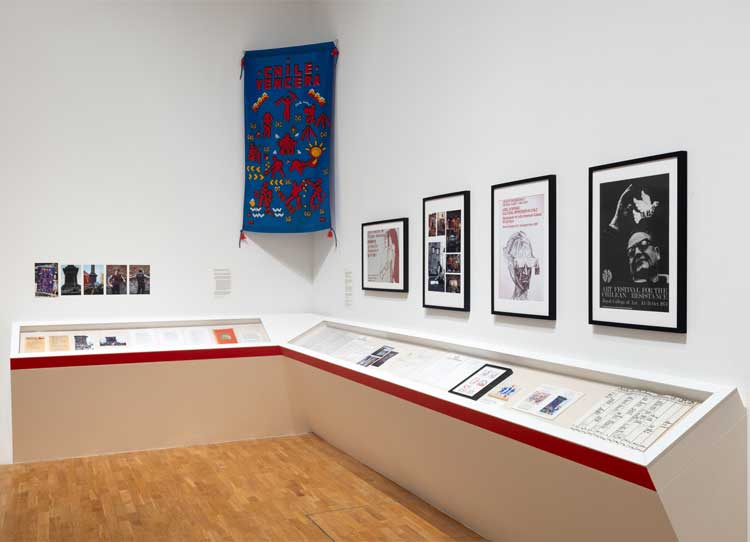
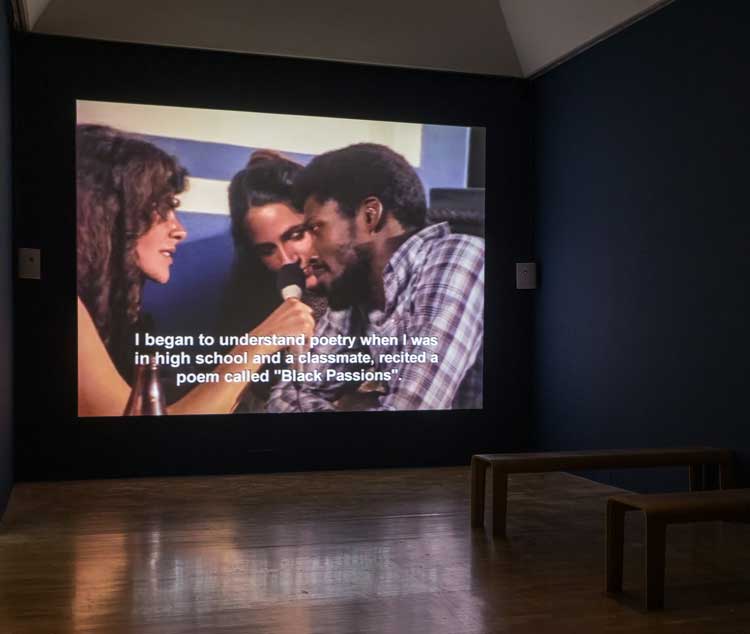
One section focuses on a banner designed by fellow artist John Dugger, inspired by Vicuña’s narratives of life in Chile. Vicuña used her scholarship money to create textile screen prints of the original. The banner’s story conceives art as a collective endeavour rather than the work of an individual genius. A similar removal of the artistic ego animates the film What Is Poetry to You? (1980). Vicuña pops the titular question to the people of Bogotá, where she moved in 1975. Partygoers, policemen and prostitutes alike reveal their views on the medium, gathering a vivid picture of the range of meanings people attach to poetry. This is art as a conduit for a collective voice.
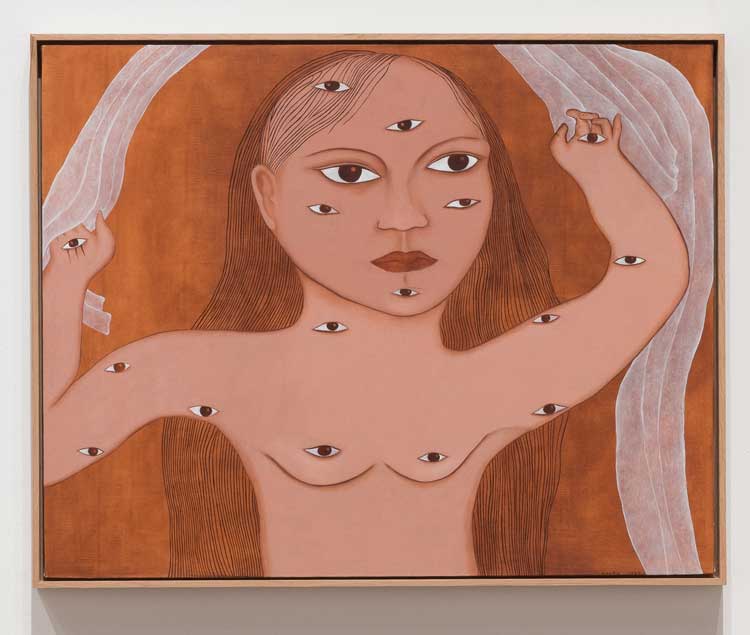
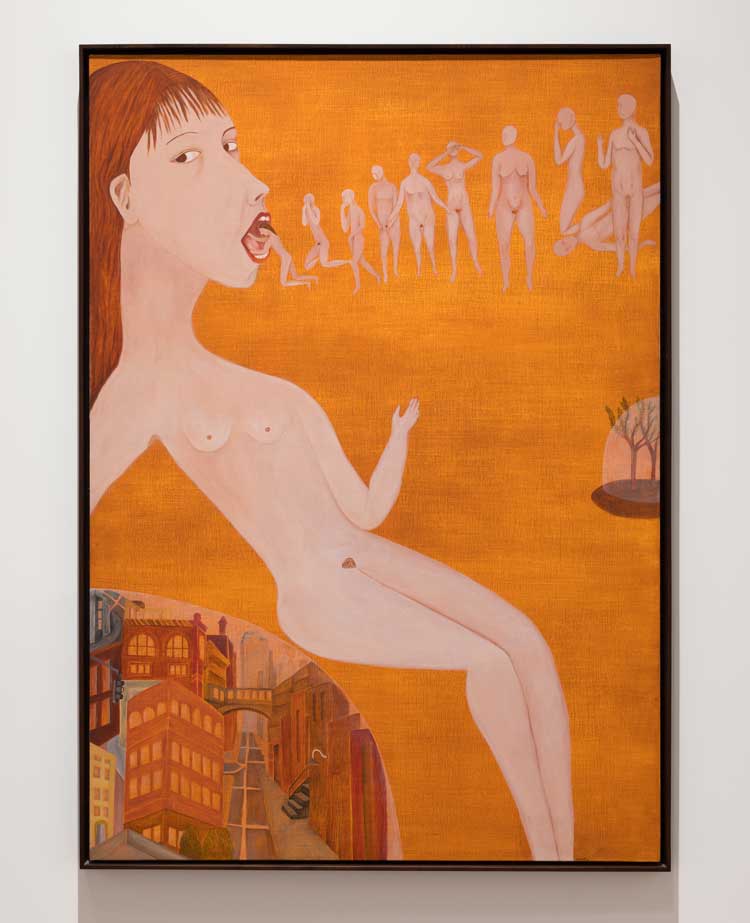
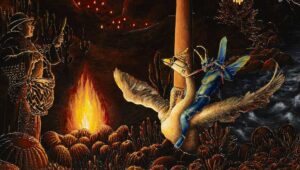
The opposite is the case in many of her paintings. She painted prolifically until the mid-70s, then paused until the 2010s. The majority have a dream-like atmosphere redolent of surrealists such as Remedios Varo and Leonora Carrington, albeit without their old master-like attention to detail and enigmatic layering of meaning. There is a nude woman with eyes all over her torso; another who perches above a city while devouring various miniature people; and one who sprouts several heads from the nape of her neck. They are deeply felt expressions of the personal – the many-headed one, for instance, stems from Vicuña’s sense of dislocation and confusion during her unplanned London exile. More interesting than many of the paintings is their provenance. Many were lost over the years, left with friends who did not appreciate their value until it was too late. Vicuña has recreated them, as undoing the process of their destruction: another sort of magical ritual.
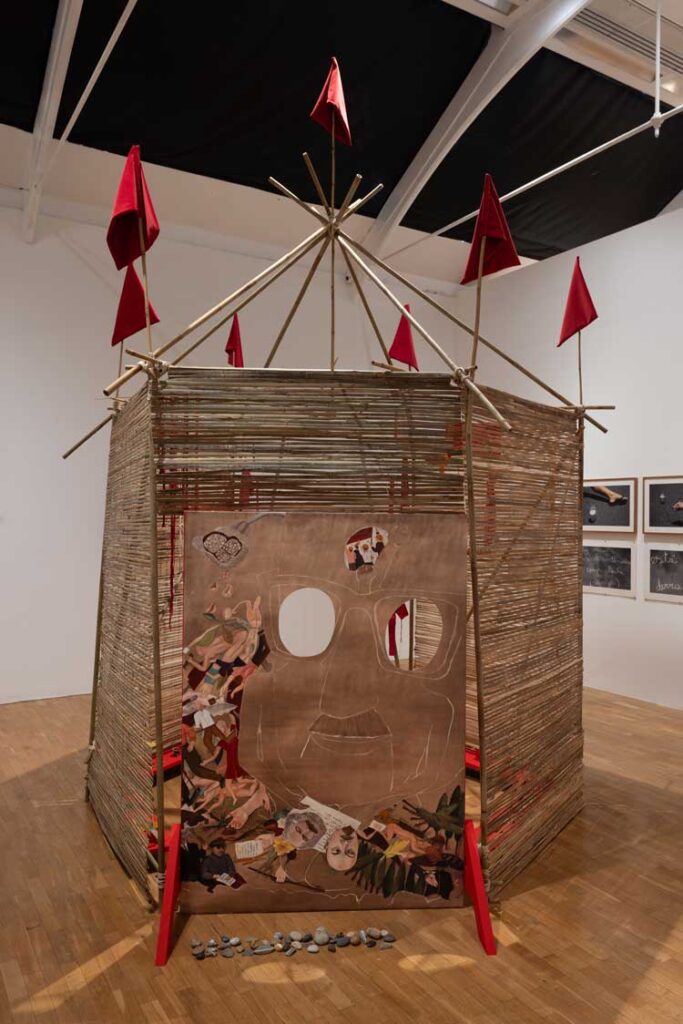
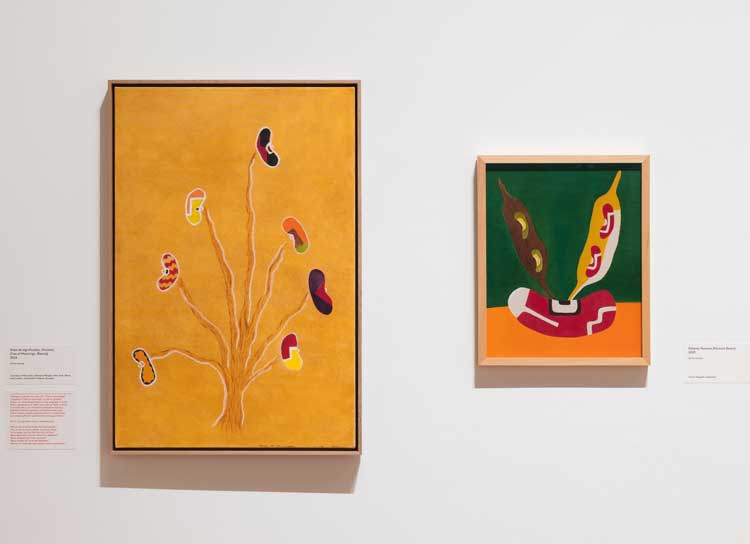
A more original contribution to art in two dimensions are the Palabrarmas (1974-). Named as a portmanteau of Spanish words for words and arms/weapons, these are fusions of line drawing and a single word, executed in a blobby graphic mode. As well as bridging the gap between Vicuña’s artistic practice and her parallel career as a poet, they argue for the power of words as a vehicle for resistance. And they also enact an interweaving of the visual and the linguistic. “A word is like a traveller,” Vicuña told MoMA in 2022, “a migrant that has been travelling from person to person and generation after generation. Words contain an image and this is what allows a word to continue.” Like the quipus and the precarios, words can be testaments of survival.