Nicoletta Fiorucci Foundation, London
9 October 2026 — 23 January 2027
by JOE LLOYD
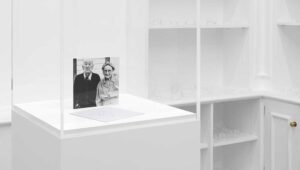
I remember when Amy Winehouse died, if not the day itself then one immediately after. My train to King’s Cross was filled with mournful fans with beehive haircuts, ferrying bouquets of flowers to place outside her final residence. The pavement outside that house, on Camden Square in north London, is still covered in black marker-pen messages showing love from her devotees. Occasionally when I pass, I see a bibelot left on the front garden wall, no doubt swiftly removed by the present occupiers. Signed Otherwise (2026), perhaps the most affecting work in Alex Margo Arden’s exhibition Nothing Personal at the Nicoletta Fiorucci Foundation, reminds me of this evolving shrine of public grief. It is two ballet slippers inscribed with four messages from fans. Maria and Cheryl wish Amy a peaceful sleep; Mat thanks her for the music; and Gem salutes her love for “Camden’s sweetheart”.
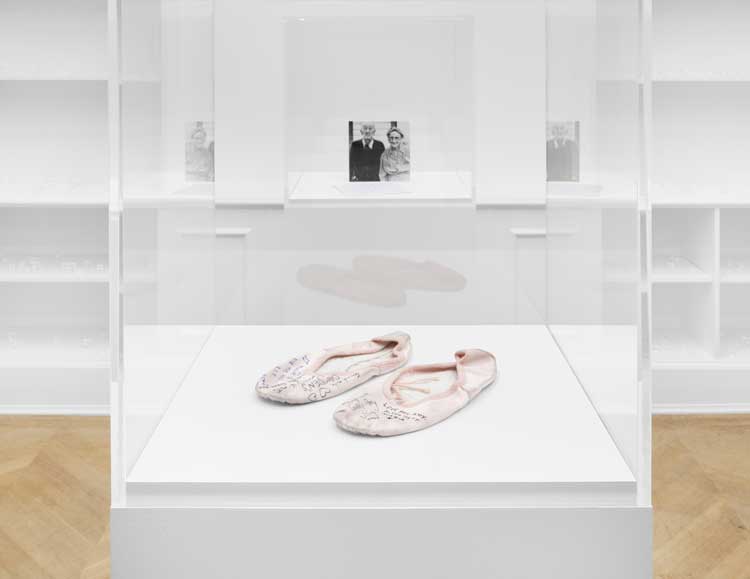
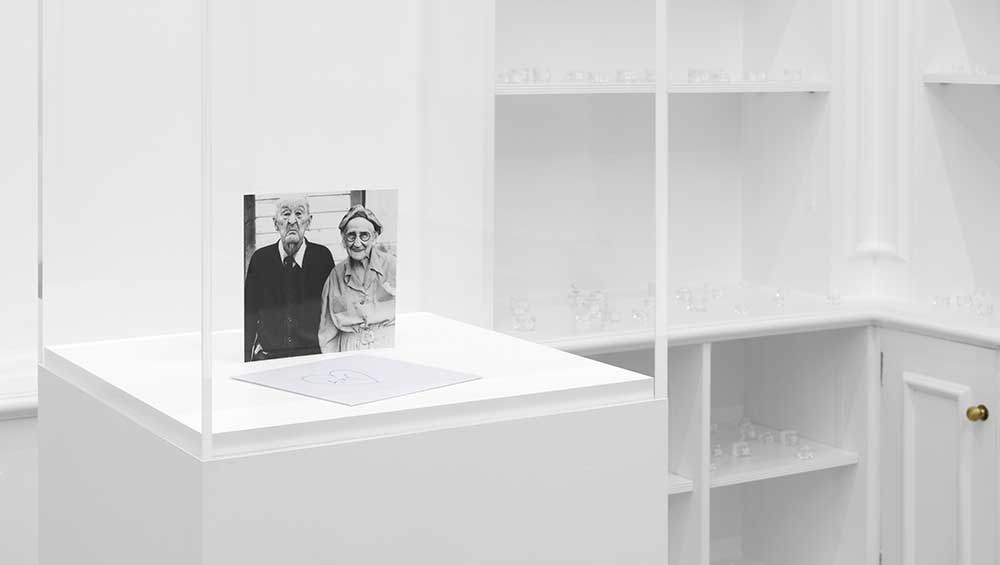
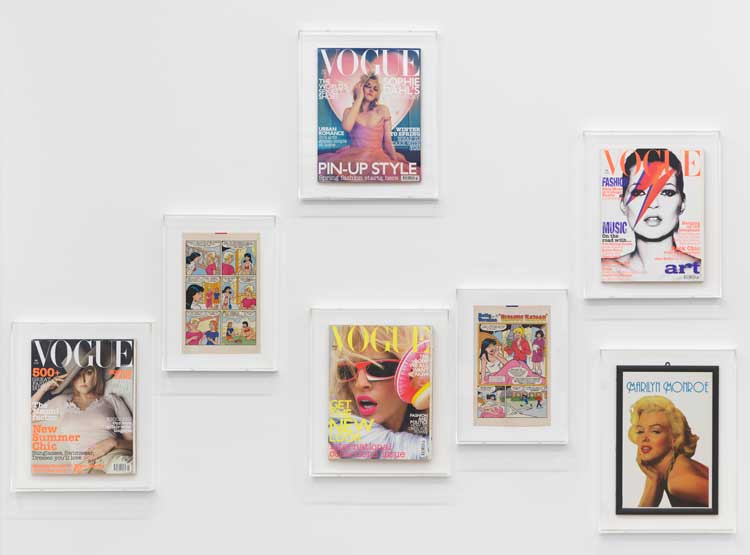
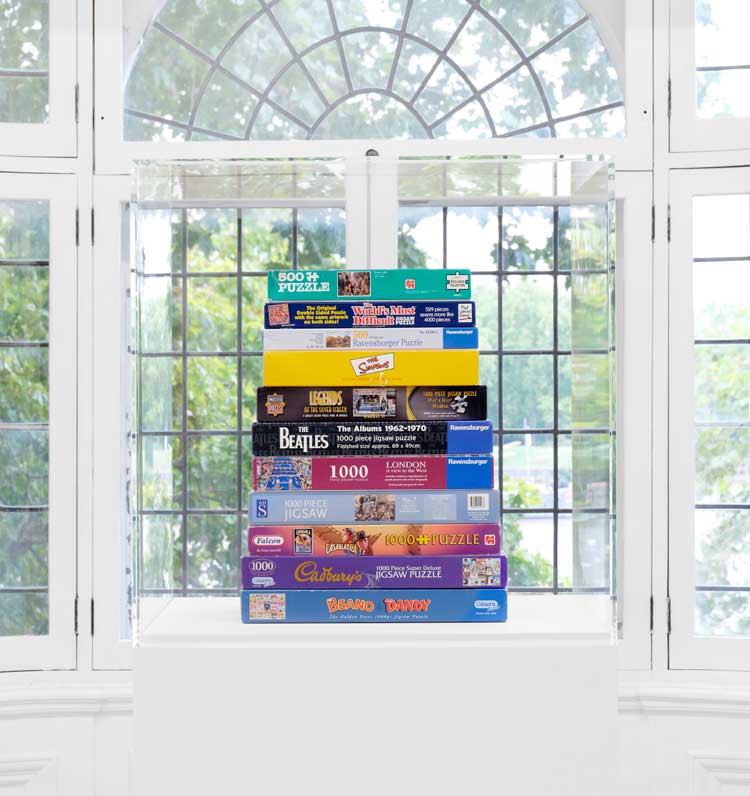
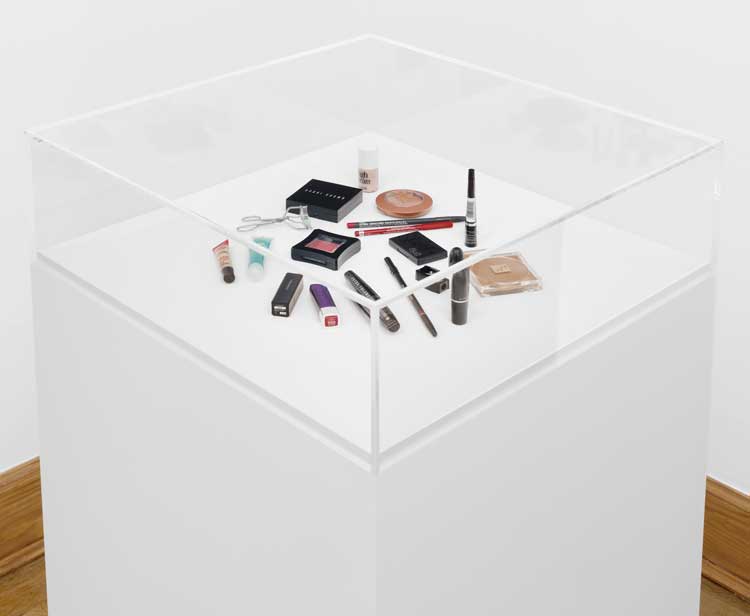
Signed Otherwise was not pilfered from Camden Square, but is reconstruction. It sits in a vitrine, like those used to store antiques in museums, in the foundation’s period apartment. Nearby is a birthday card, Sent Otherwise (2026), sent to Winehouse by Adele and producer Mark Ronson, but left unreceived after the singer skipped her own birthday party. Arden has, after a years-long process of research using auction catalogues, photographs and interviews with Winehouse, recreated some of the objects that formed the everyday background to the late singer’s life. There are imitations of items that Winehouse owned – issues of Vogue, pages from the Betty and Veronica comic book series, makeup products, a pile of 11 jigsaw puzzles and, most expansively, a library of more than 400 secondhand books, all in the same edition as those once owned by Winehouse. The Vogue covers and comic sheets are hung above a fireplace, as they did in the house where Winehouse lived at the peak of her fame. The exhibition is even scented by perfume said to have belonged to the singer.
The subject of Winehouse necessarily implies a sense of absence. Arden has avoided images of the singer herself, or the music that made her famous. There is something uneasy about gazing at these feigned relics of one so tragically deceased, who has no ability to respond. Winehouse was hounded by paparazzi in life; now she is fetishised in death: as I write, the website First Class Memorabilia is selling Adidas jackets, a primary school jumper and pink short shorts previously worn by Winehouse. Those objects have acquired meaning and value to fans through their physical proximity to the deceased. Arden’s replicas cannot claim the same. Yet they still gain a sort of value-by-association. At the same time, their presence in a gallery imparts further value, as secondhand books and battered boardgames gain the lustre of the artwork. Quotidian objects become found objects; books owned by anonymous readers become conduits to celebrity.
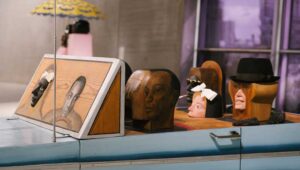
Arden, who graduated from Goldsmiths in 2016 and the Royal Academy Schools in 2025, has produced a series of exhibitions that share overlapping concerns across a broad range of subject matter. Nothing Personal is the result of the inaugural Nicoletta Fiorucci Foundation Prize at Frieze London, which awards “non-traditional media and unconventional forms of presentation at the fair”. The garlanded work By All Accounts was an installation of mannequins from the National Motor Museum that had been earmarked for landfill. Arden roped together nine of these men into an uncomfortable huddle. Shorn of their intended role, and with bits lopped off during their retirement and removal, they become forlorn, lost figures. Although created to serve to help illustrate a museum’s historical objects, they have now become historical objects themselves, telling the story of how institutions interpret history.
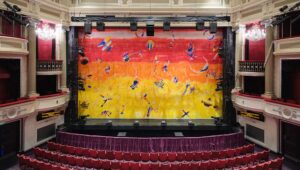
This concern with the purpose of museums and their holdings has become a recurring strand in Arden’s work. Last year’s Safety Curtain, at Auto Italia in east London, featured reproductions of old master paintings which that been defaced by protests: the Mona Lisa with cream cake smeared by a man disguised as an elderly lady, Van Gogh’s Sunflowers splattered with soup by a pair of Just Stop Oil activists. While the 20th century saw paintings slashed with blades and splashed with acid, these attacks damaged protective screens rather than the artwork themselves, bringing attention while preserving the art object. The paintings were assessed, cleaned and returned to their places, without record of the incident, preserving them paradoxically as examples of art history that seek to hide their own history as objects in time.
Arden has often returned to the scene of crimes and the artefacts that they leave behind. Responsibility, Responsibility, Responsibility (2022) shown at Marseille’s annual Art-o-Rama fair, contained commissioned paintings of evidence from the crime scene of the death of cinematographer Halyna Hutchins, shot when a gun held by the actor Alec Baldwin fired on the set of a western. Arden drew from an archive of police material placed publicly online. Rock Paper Scissors (2023), exhibited at the Royal Academy while Arden studied at its schools, replicated the collages that playwright Joe Orton and his partner Kenneth Halliwell created on books from the Islington Public Library between 1958 and 1962. She collected the exact editions of the books that Orton and Halliwell had altered, albeit copies that had remained in circulation in the intervening years. The originals, for which the two men were sent to prison, are now held in Islington’s archives, art historical holdings rather than evidence of obscenity and damage to property.

Nothing Personal crystallises many of the ideas animating these previous works. Her Winehouse imitations become evidence of a life lived while aspiring to the status of museum items. Display Identification Cubes (2026), the one work not directly tied to Winehouse, consists of dozens of transparent acrylic cubes numbered like those that identify smaller objects in museum display cases. They resemble ice cubes in their clearness and scale. Arden has frozen these ephemeral drink-coolers, as the museum attempts to arrest time and grant objects a permanence. The feigned Winehouse-obilia enacts a similar process: the books that comprise Library (2026) were once owned and leafed through by numerous people, housed on myriad bookshelves, before being spirited together. Their histories have been supplanted by that of Winehouse; they now tell a different story to that of their previous owner. Yet they also might speak collectively of an era: of the sort of publications, perfume and puzzles one might find in the 00s house.
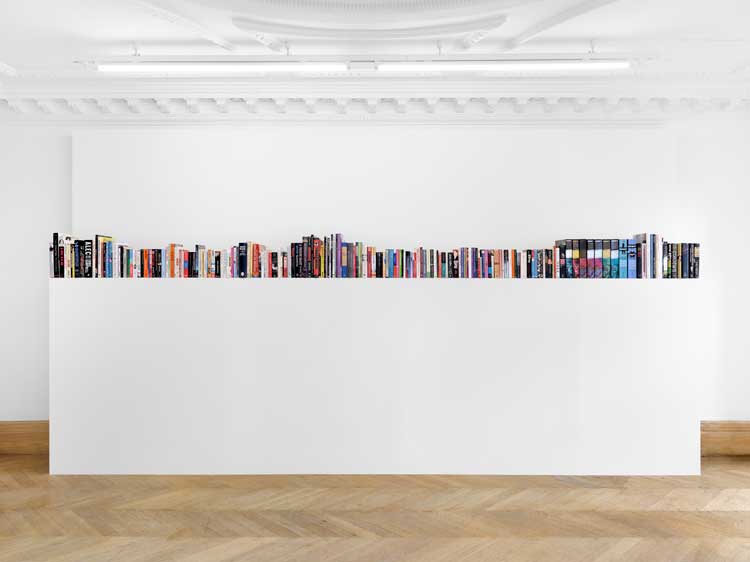
Although Winehouse probably never touched a single one of Arden’s volumes, they do amount to a monument to her. She may not have perused these very books, but she possessed and possibly read their mass-produced simulacra. And what, after all, is a more intimately and closely guarded possession than the books one has read? Nothing Personal grants an insight into Winehouse’s life that might be closer to her daily reality than the stories sprawled over the tabloids and the legends spread by the rump music press. At the same time, it queries the processes by which objects become museum artworks, and the mundane becomes memorabilia. Any Winehouse fan thinking of purchasing her school jumper should visit here instead.