Nahmad Projects, London
14 October – 11 December 2026
by DAVID TRIGG
The artist’s studio is a place of experimentation, reverie and creative discovery, but also anxiety, struggle and failure. Modern masters such as Georges Braque, Pablo Picasso, Raoul Dufy and Henri Matisse all made it their subject, lifting the veil on their inner sanctums while mixing the quotidian with liberal doses of invention and imagination. Taking her cue from these giants of 20th-century painting, Anna Freeman Bentley shifts her attention from the illusory world of film sets to the intimate space of her own studio and those of her friends. Hung in dialogue with selections from the renowned Nahmad Collection, her self-assured paintings capture the many sides of these creative incubators. Together, they reveal the studio to be as much a mental construct as a physical workspace, a romanticised sanctuary as well as the site of real labour.
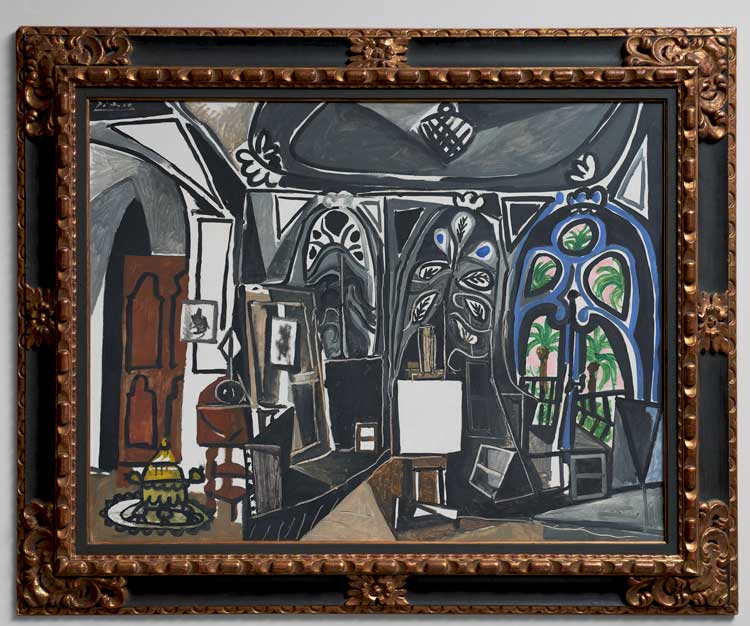
The show’s starting point is Pablo Picasso’s L’Atelier (1956), painted in a single day at La Californie, a belle époque-style villa near Cannes that the artist had purchased the previous year. With its high-ceilinged rooms and elegantly ornamented windows, the spacious studio became the subject of several paintings. In this example, the space is crammed with canvases, but they are upstaged by the studio’s decorative tracery, which is set against passages of fragmentation and cubist angularity to create a sense of instability. At the centre of the composition, where colour has drained away, our eye is led to a blank canvas, its stark white surface suggesting possibility but also uncertainty. “For me, there’s anxiety, even confusion in this painting,” Freeman Bentley tells me. “This is where a ‘genius’ makes his work, and yet something about it feels full of doubt, which is something I’m familiar with.”
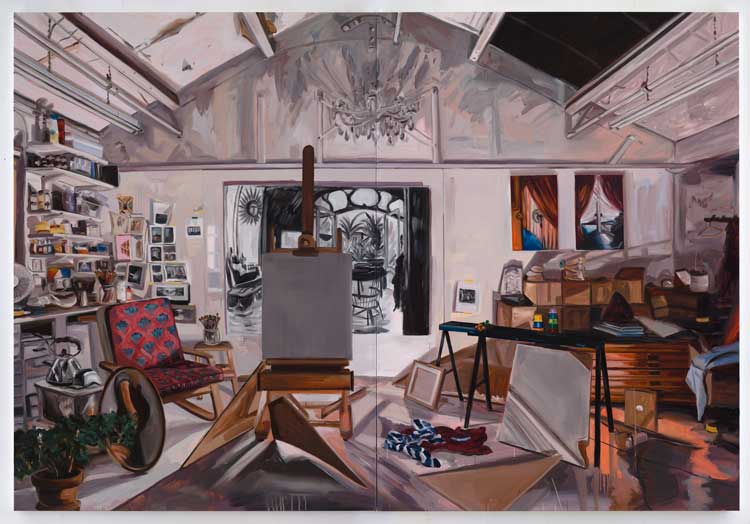
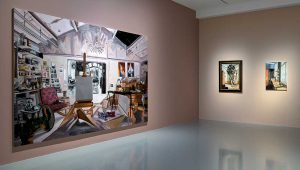
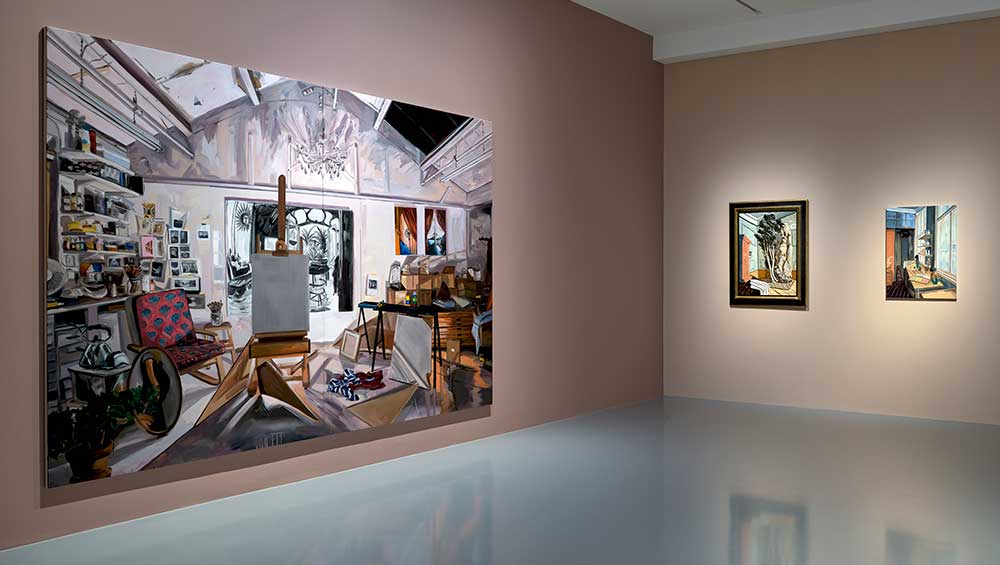
In response, she painted the large diptych Staged Studio (A Real Allegory) (2026), which portrays her studio in Hackney Wick, London, where she has worked for the past 14 years. It showcases her signature stylised naturalism where loose, fluid brushwork and passages of gestural abstraction are held in balance by architectural geometries and structures. While there are clear nods to Picasso’s composition (a blank canvas similarly takes centre stage in the dramatically lit room) it is conversely brimming with vitality, colour and carefully orchestrated elements that reflect her life as an artist, wife, mother, friend and person of faith. For instance, amid the brushes, paints, books and tacked-up reference materials are her husband’s old football shirts used as painting rags; toys played with by her daughter when visiting the studio; a plaster copy of a Romanesque relief depicting the head of Christ; and an oval mirror containing a reflection of the artist when she was eight months pregnant. Alluding to Gustave Courbet’s The Painter’s Studio (1855), this revelatory work is similarly a self-portrait of sorts, and certainly one of her most personal.
“My studio is a safe place,” says Freeman Bentley. “It’s a sort of sanctuary, but also a place of stress, of working out ideas and growing in confidence. I feel like it embodies all those things and I wanted this painting to somehow pick up on those details while directly relating to Picasso’s painting.”
Another prominent object in the composition is a patterned chair borrowed from fellow painter Hannah Brown. “Sitting and looking is a big part of being an artist, but it also references the many conversations I have with the artists in my building,” she says. Although Freeman Bentley’s paintings are unpeopled, they are certainly not absent of life and reflect the multiple relationships that stimulate and energise her practice. “Community is hugely important and I really value the artistic friendships that I have; most are female, which is obviously a contrast to the male artists I’m showing alongside here.” Indeed, if a woman were to be found in any of those artists’ studios, she would most likely have been a muse, subject to the male artist’s gaze.
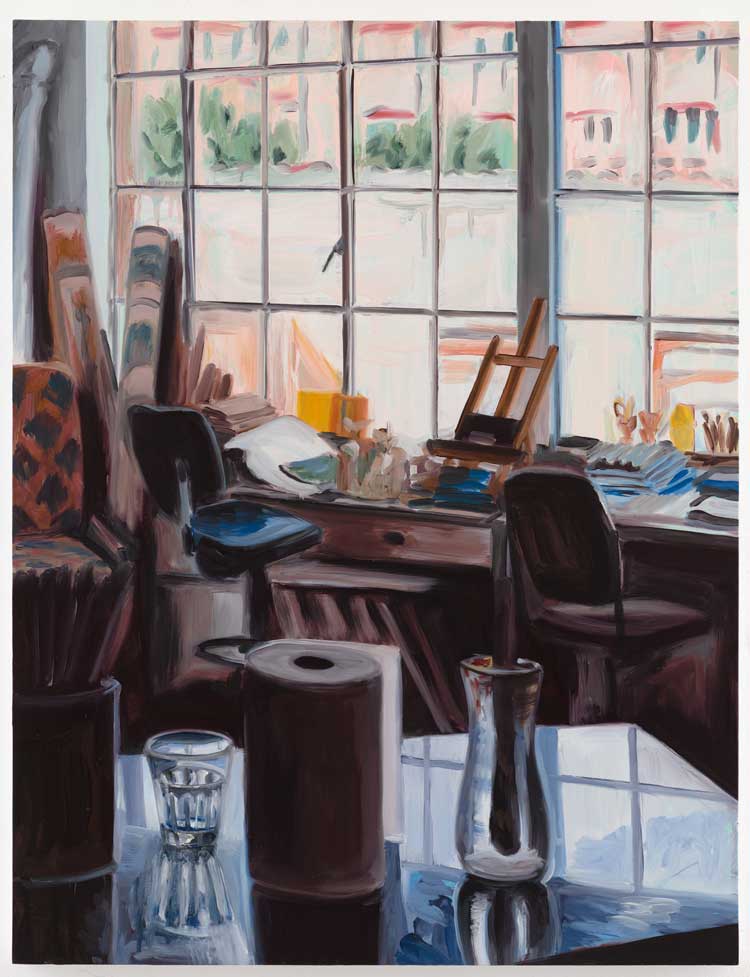
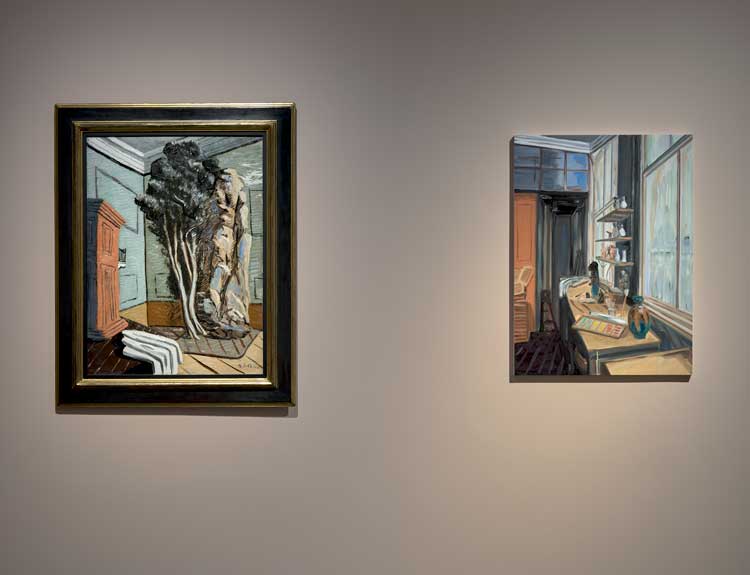
Brown’s chair reappears in HB Studio Glass (2026), which depicts a corner of the artist’s studio, just along the corridor from Freeman Bentley’s. The busy space is filled with painting tools, rolled canvases and piles of papers. Behind an empty easel, panelled windows form a grid, which is echoed by Dufy’s patterned studio floor in the adjacent canvas L’Atelier aux Trois Chevalets (1946). In this painting of Dufy’s modest ground-floor studio in Perpignan, a golden apricot light floods the room, illuminating not one but three easels. The first holds a small work in progress, while the second stands empty. Partially hidden behind these, the third holds a blank canvas, again nodding to the intimidation of endless creative possibility.
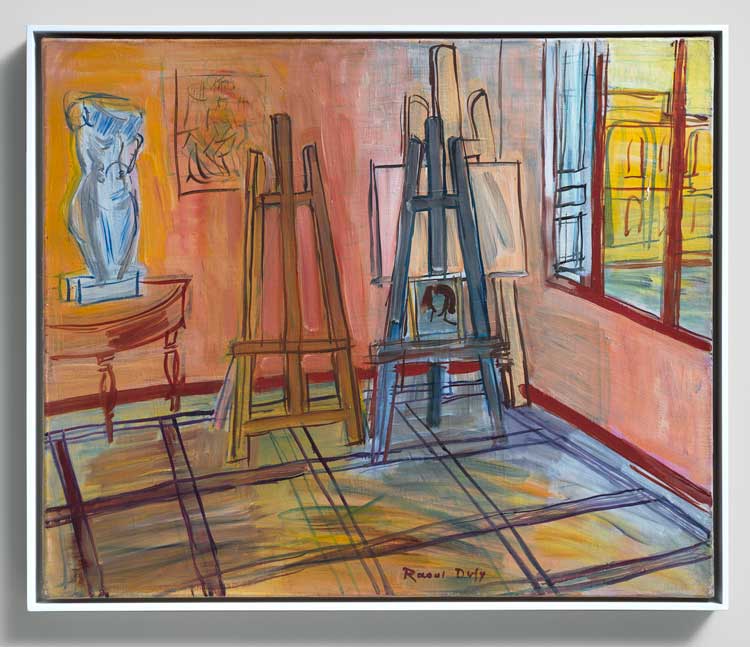
Recalling the paintings of Matisse’s Parisian studio, there is an orderliness to Dufy’s composition, a sense of serenity that is absent from Picasso’s L’Atelier. We find this peaceful quality again in Freeman Bentley’s paintings of Caroline Walker’s studio, based on photographs taken when the Scottish artist was living and working in London. “I studied with Caroline and she’s one of my best friends,” she explains. “We used to visit each other’s studios all the time and now she’s moved to Scotland we still talk on the phone for hours on end while we’re painting. Our conversations will cover anything from artworks, materials and processes to the art market and galleries, but also stories about our children and general life chat.” Being an artist often involves long periods of solitary work but, as Freeman Bentley emphasises, it doesn’t have to be lonely.
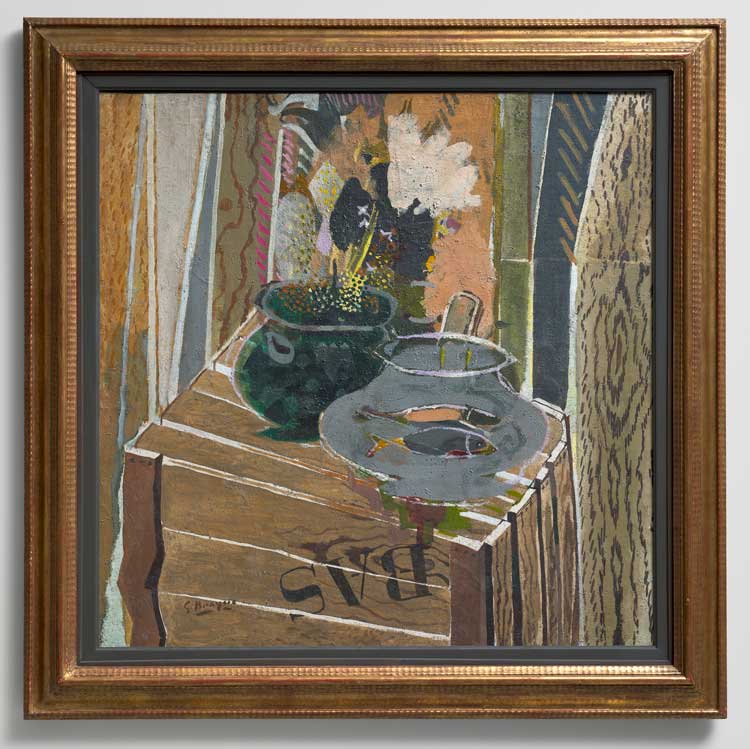
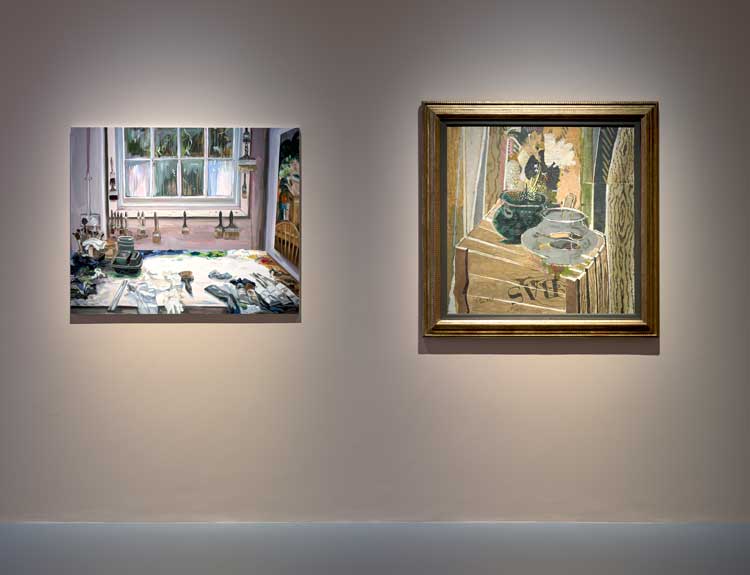
There was a time when Braque and Picasso were constantly in and out of each other’s studios and while Braque’s La Caisse d’Emballage (1947) dates from a later period, it contains faint echoes of the cubist style that he invented with his great friend in 1908. This work is hung next to Freeman Bentley’s CW Window (2026), which more than holds its own here. And though these works ostensibly have little in common – the former is a still life with a fishbowl, flowers and a packing crate, the latter depicting the artist’s palette and studio window – they are both masterful studies in surface, materiality and mark-making, revelling in their respective renderings of woodgrain and glass.
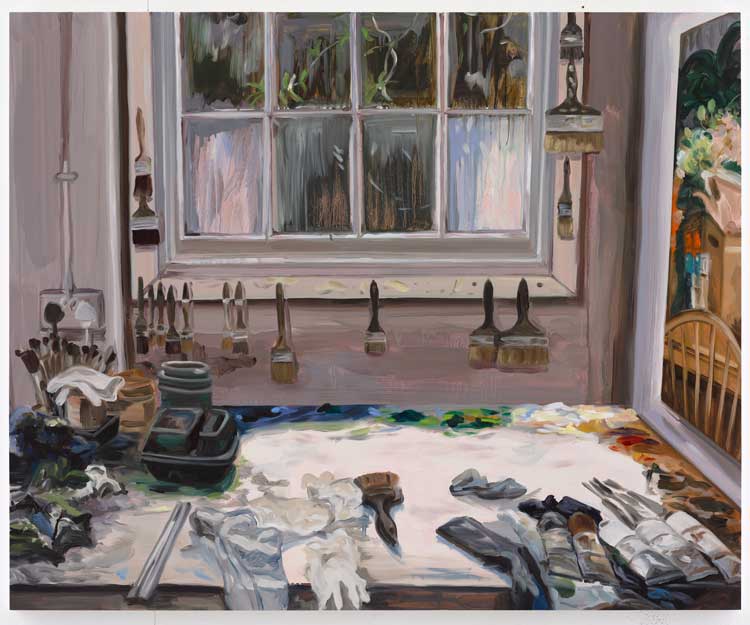
“Going to another artist’s studio is a real privilege,” says Freeman Bentley. “It’s like walking into the mind of an artist and seeing how they work. I think you can tell something about people’s personalities through the way they organise or don’t organise their studios.”
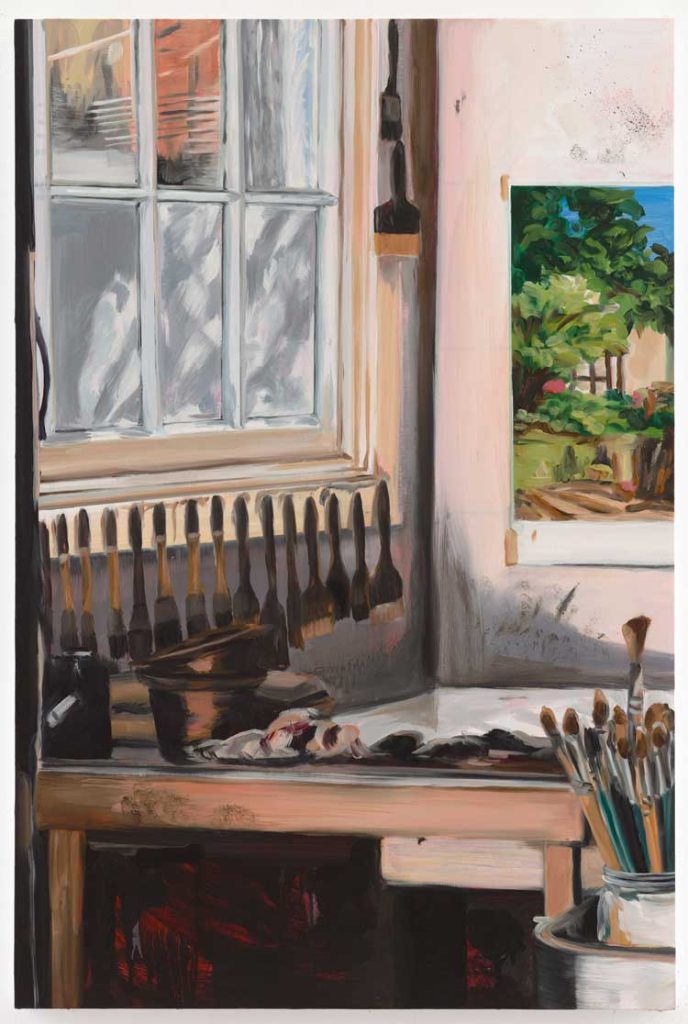
Elsewhere, in CW Peabody Studio (2026), we see Walker’s brushes neatly arranged in her uncluttered workspace. This is contrasted by the messy table in Gough Road Window (2026), a composition based on Freeman Bentley’s former home studio that overlooked a cemetery. Here, tacked up around the window and partially obscured by brushes, paint, yoghurt pots and a box of tissues, are postcard reproductions: influential works by 20th-century artists, including several pieces featured in this show. But there are also allusions to grander themes. Her daughter’s school photo represents the importance of family and the potential of youth, while the conspicuous graveyard view, bathed in a dusky pink light, becomes a poignant memento mori.
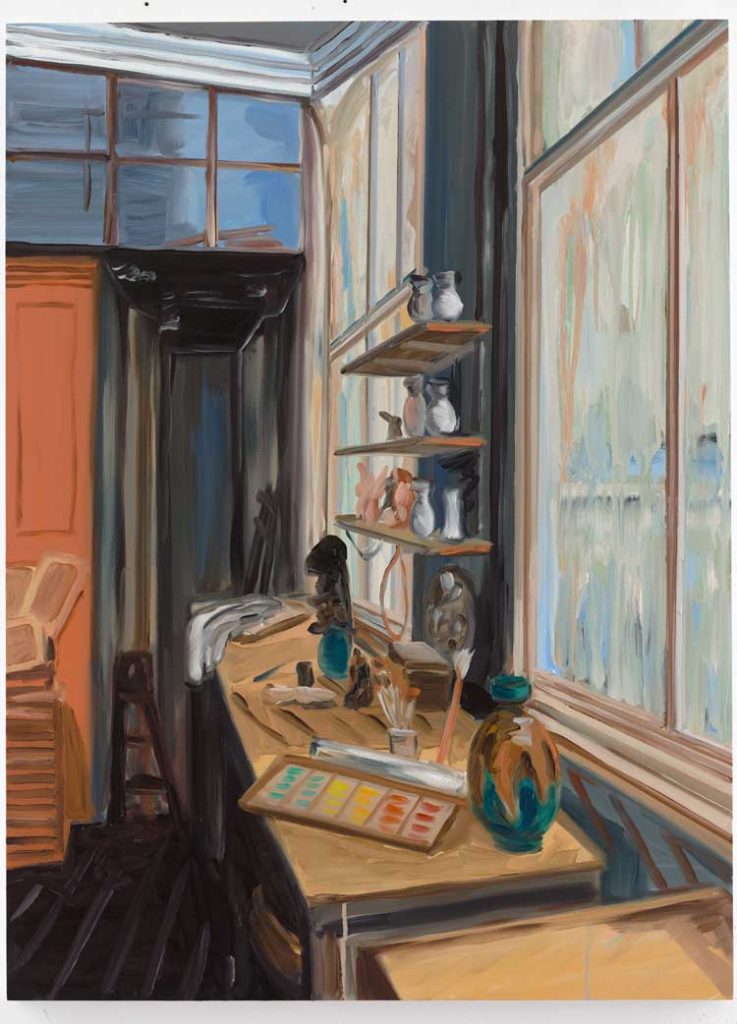
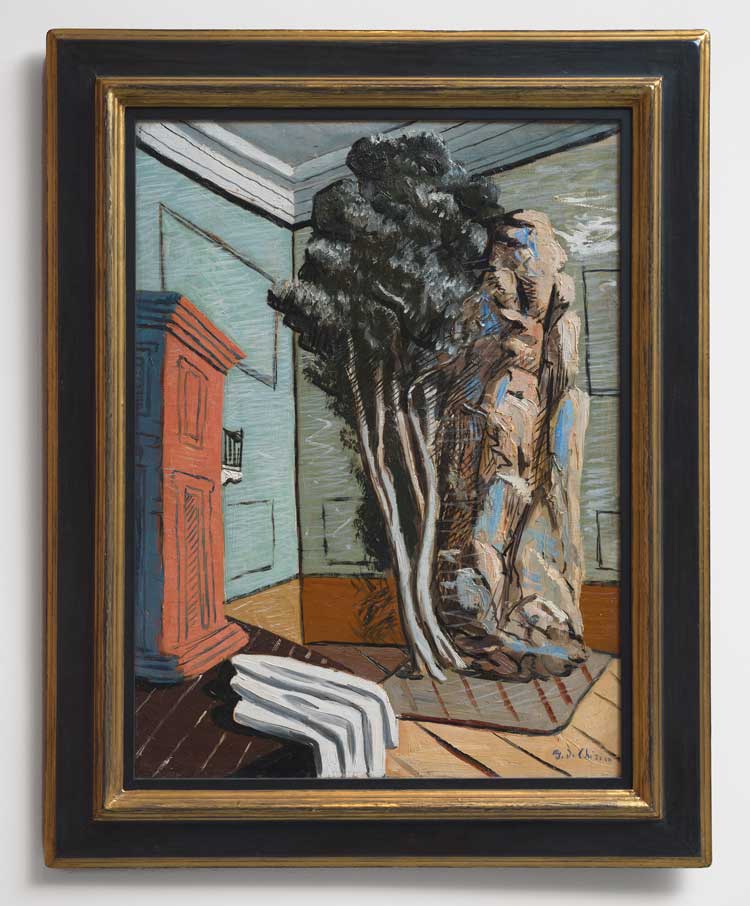
For The Studio of Destiny (2026), Freeman Bentley revisited studies she made on the set of The Colour Room (2021), a film about the English ceramicist Clarice Cliff. This image of a constructed artist’s studio is hung in conversation with Giorgio de Chirico’s mysterious Le Printemps du Destin (1927), one of his interior landscapes in which a sinuous tree and large rock formation have inexplicably appeared in the centre of a panelled room. The fantastical and claustrophobic composition is subtly mirrored by Freeman Bentley’s canvas, which employs the same palette to set up a compelling visual interplay between the two. The compelling pairing prompts us to question the veracity of what we are seeing, reminding us that painting has its own logic and painters are free to invent with impunity whatever they please.
To end the exhibition, Freeman Bentley transports her east London workspace to the French Riviera, melding it with Picasso’s La Californie in the fanciful My Interior Landscape, Reimagined (2026). Here, painted with a restricted palette of purples, greys and teals, the former industrial building morphs into the Spanish artist’s ornate villa, its large doors flung open to reveal a lush garden overflowing with Mediterranean flora. Eagle-eyed viewers will notice that another painting from the set of The Colour Room hangs on the wall – an artifice set within an artifice. “If I could have any studio in the world, it would be that one,” she says of Picasso’s studio. “But you wouldn’t get anything done, you’d just be sitting around, drinking wine on the terrace.” Rather than being distracted, Picasso produced hundreds of paintings, drawings, sculptures and ceramics during his time at La Californie. In fact, his years there marked a return to form, emphasising how the studio can act as a significant catalyst for the imagination.
By turning her gaze upon herself and her colleagues, Freeman Bentley shows us that the studio is so much more than simply the site of production; it is a transformative place where friendships are nurtured, new possibilities are entertained, and where the mundane and the visionary intermingle.