Miriam de Búrca – interview: ‘The sites themselves are very charged: very beautiful but also very tragic’
With her detailed drawings of plants growing on the graves of Ireland’s excommunicates and other unblessed souls, De Búrca, now on show in Protest and Remembrance at Alan Cristea, hopes to restore the dignity of those the Catholic church abandoned
Through her work, Miriam de Búrca (b1972, Munich) seeks to draw attention to burial sites in Ireland known as cilliní, where, as recently as the 1980s, anyone deemed unworthy by the Catholic church of a burial in consecrated ground was laid to rest – or, rather, not to rest, since theology teaches that their unblessed souls remain for ever in limbo. These unfortunate and unknown strangers include stillborn or unbaptised babies, unmarried mothers, those who have taken their own lives, the mentally ill and excommunicates.
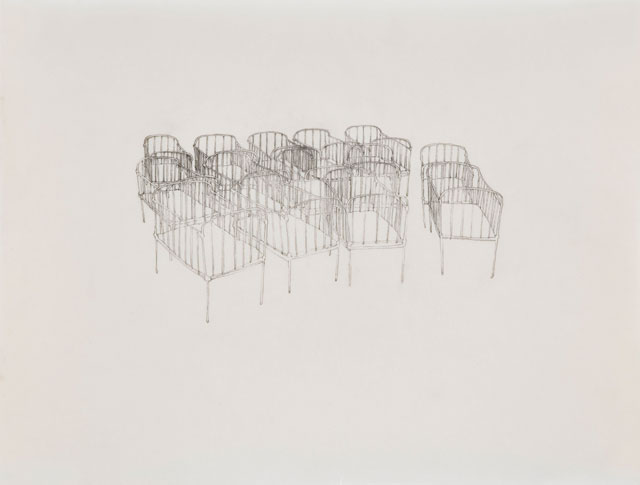
Miriam de Búrca, Anatomy of Chaos I: What Remains?, 2018. Ink drawing on man-made vellum, paper and image 50.5 x 65.8 cm. Photo courtesy Alan Cristea Gallery.
The absence of headstones adds to the wilful desire to make people forget and to suppress this long chapter of Irish history. But De Búrca believes it should be remembered – those buried should be remembered – and, by making careful drawings of the plants growing on the graves and, in the process, paying absolute attention to detail, she seeks to pay back some of the attention that those buried have been denied. Having finished with the sods of earth in her studio, she then returns them to the graves, hoping further to show a sign of respect and return some of the lost dignity.
Miriam de Búrca, Intent on Forgetting, 2018. Acrylic ink on watercolour paper, paper and image 23.9 x 31.9 cm. Photo courtesy Alan Cristea Gallery.
Protest and Remembrance Miriam de Búrca | Joy Gerrard | Mary Griffiths | Barbara Walker Alan Cristea Gallery, London 28 February – 30 March 2019
Interview by ANNA McNAY Filmed by MARTIN KENNEDY
Miriam de Búrca talking to Studio International at the opening of Protest and Remembrance, Alan Cristea Gallery, London. Photo: Martin Kennedy.Miriam de Búrca talking to Studio International at the opening of Protest and Remembrance, Alan Cristea Gallery, London. Photo: Martin Kennedy.Protest and Remembrance: Miriam de Búrca | Joy Gerrard | Mary Griffiths | Barbara Walker, installation view, Alan Cristea Gallery, London, 2019. Photo courtesy Alan Cristea Gallery.Protest and Remembrance: Miriam de Búrca | Joy Gerrard | Mary Griffiths | Barbara Walker, installation view, Alan Cristea Gallery, London, 2019. Photo courtesy Alan Cristea Gallery.Miriam de Búrca, Cluster II: 1961, 2018. Ink drawing on man-made vellum, paper and image 25.5 x 32.0 cm. Photo courtesy Alan Cristea Gallery.Miriam de Búrca, Anatomy of Chaos III: Amnesia Sampled, 2018. Ink drawing on man-made vellum, paper and image 50.5 x 65.8 cm. Photo courtesy Alan Cristea Gallery.
The 170 drawings, etchings and paintings on show here not only lend insight into Freud’s working, but demonstrate how acute observation and prolonged time spent with sitters brings a sympathetic understanding of character
Set in Florence at the turn of the 16th century, this exhibition is a portrait of drawing, every bit as much as it is a lively tale of three renowned artists
Best known for his album covers for the Sex Pistols, Reid was an anarchist who was also fascinated by Druidry. This book is an entrancing tribute to his life and work
The artist explains his fascination with the Book of Enoch, long rejected by the Christian church, and how he aims to give an interpretation of the text from his perspective as a non-believer