Category: Interview
-
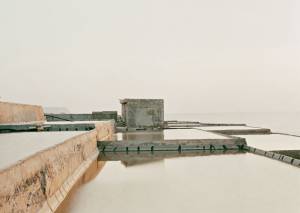
Elger Esser: ‘Beauty is not important; it’s a logical result in my opinion’
After his recent solo exhibition at Parasol Unit in London, Elger Esser talks about the relationship between Lebanon and Syria, having more in common with JMW Turner than Caspar David Friedrich, and how we are programmed to view landscapes as…
-
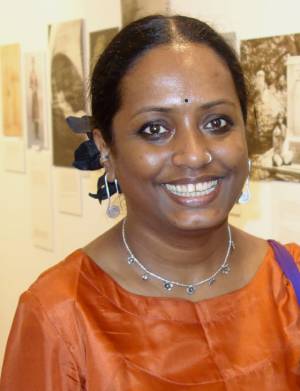
Mithu Sen: ‘I constantly change my mediums so the market will not be able to trap me’
Indian artist Mithu Sen has a quicksilver practice that is difficult to categorise or maintain as a singular narrative. This, she says, is intentional – it is her effort to defy the demands of the market
-
Georgia Horgan: ‘Confident, working women were a threat to the social order’
Georgia Horgan talks about her recent exhibition, All Whores are Jacobites, and how she became intrigued by the lives of three women whose lives were linked by themes of prostitution, textile work and protest
-
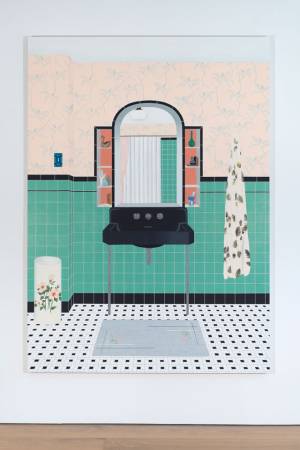
Becky Suss: ‘Putting domestic spaces into the gallery says something about what something is worth’
In her exhibition Homemaker at the Jack Shainman Gallery in New York, Philadelphia-based artist Becky Suss presents a group of paintings that reflect on interiors that include objects of personal significance
-
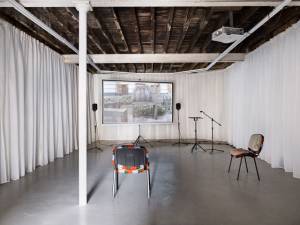
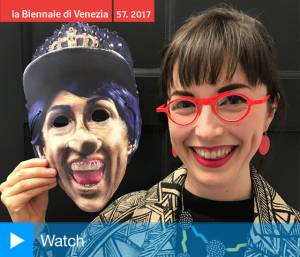
Rachel Maclean: Spite Your Face – Venice Biennale 2017
Rachel Maclean is representing Scotland at the Venice Biennale with her new film, a dark fairytale titled Spite Your Face. She talked to us before the biennale about the film, nationalism, fairytales, and how narratives can be so powerful that…
-
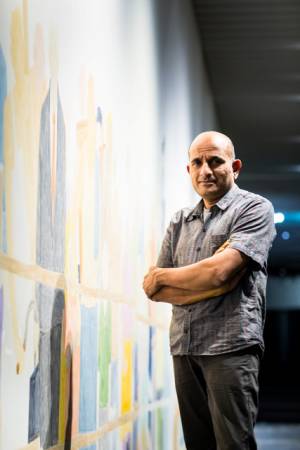
NS Harsha: Charming Journey
Indian artist NS Harsha explains some of the works on show at this retrospective, and why, despite once working for a technology company, he prefers to stick to painting
-
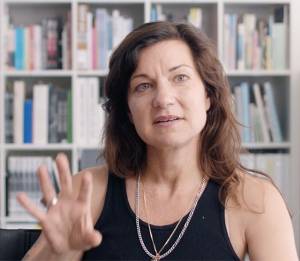
Frances Stark: ‘I am desperately trying to connect outside of the art world’
Frances Stark, the Los Angeles-based interdisciplinary artist and writer, talks about her first opera, an adaptation of Mozart’s Magic Flute,and her desire to cross boundaries
-
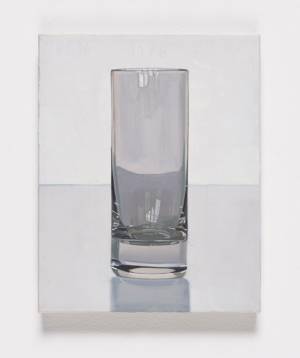
Peter Dreher: ‘In my pictures I underline the act of seeing’
German artist Peter Dreher recounts the trauma of childhood under the Nazi regime, his autonomy from the social ferment of the 60s, and confronting all the problems of art history through the sustained depiction of a single ordinary object
-
Oliver Griffin: ‘The very act of photography makes something interesting’
Oliver Griffin talks about drinking White Russians, his BMX bike, which he has named Susan, taking pictures of tyre marks, and why there is no such thing as a boring photograph
-
James Bridle: ‘There is a huge demand to humanise the technological view of the world’
James Bridle talks about his current show at the Nome Gallery, Berlin, which centres around the self-driving car, technological agency and the relationship of humans to machines, and what we can learn from them